Women's Cold Shoulder Dress Guide
Sleeves stay, shoulders show: the cold shoulder dress cuts an oval out of the upper arm, delivering bare-shoulder glamour that still holds itself up.
Shop Women's Cold Shoulder Dresses Now
Shop Women's Cold Shoulder Dresses on Amazon Shop Women's Cold Shoulder Dresses on eBayThe Amazon and eBay links on this page are affiliate links. If you make a purchase through them, Apparel Search may earn a commission.
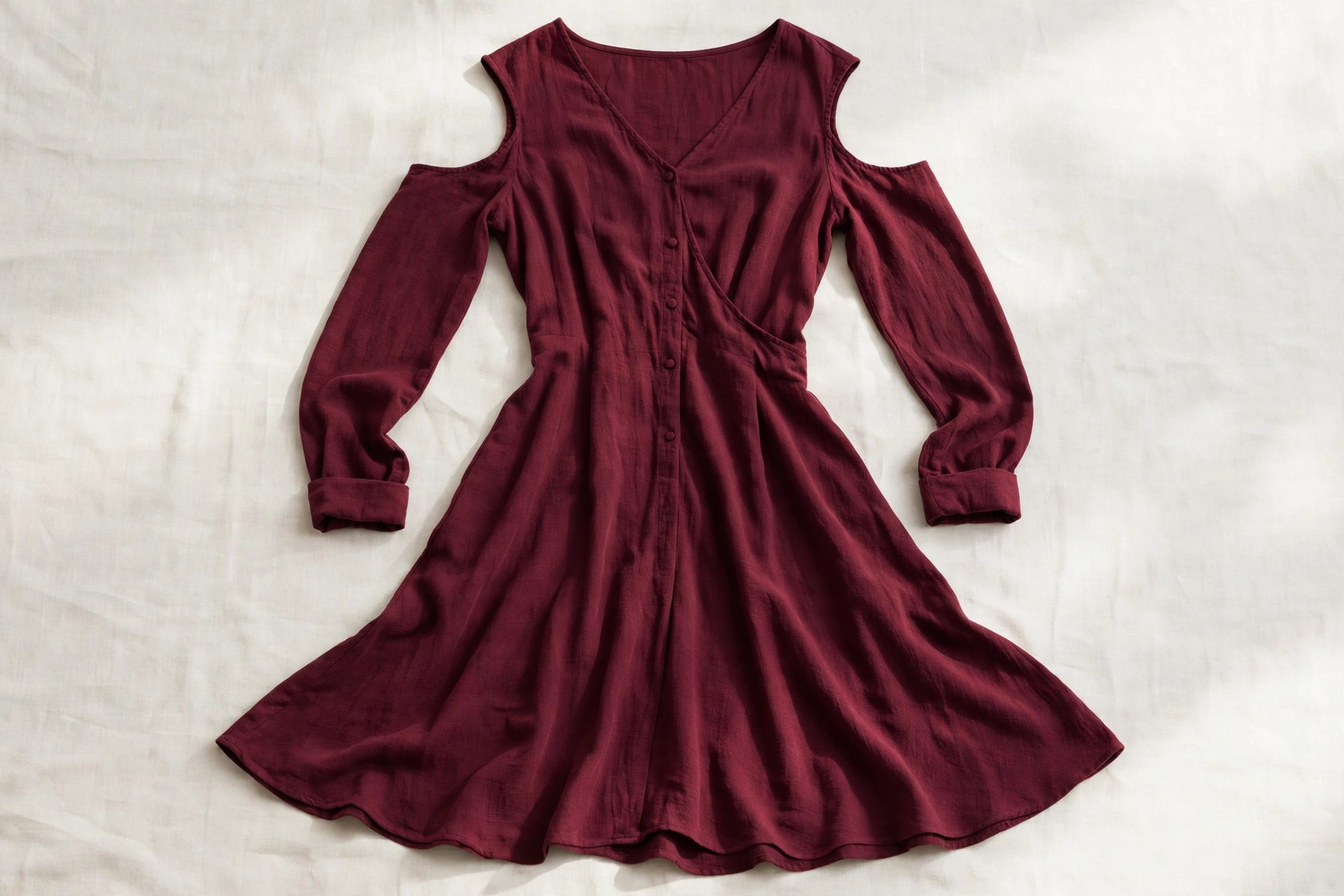
A cold shoulder dress keeps its sleeves and straps — and cuts an opening out of the top of each arm, so the shoulder itself is bare while the dress still hangs from a proper shoulder line. It is the compromise silhouette: the skin of an off-the-shoulder dress with none of the slippage, a neckline that stays exactly where it was put through an entire evening of reaching, dancing and hugging. The detail can sit on any body silhouette, from column to fit and flare, which is why this guide treats the shoulder itself as the subject.
The cut is usually credited to Donna Karan, whose early-1990s designs bared the shoulder deliberately — she argued it was the one part of a woman that never gained weight and always looked elegant. The style peaked as a mass trend in the mid-2010s, when cold shoulder tops and dresses filled every rail, and has since settled into a permanent occasion-dress option: less ubiquitous, more chosen.
Cold Shoulder, Off-the-Shoulder, One-Shoulder
Three ways to bare a shoulder, three different engineering problems. Off-the-shoulder (bardot) removes the shoulder entirely — the neckline sits across the upper arms and relies on elastic or structure to stay. One-shoulder bares one side completely on a diagonal. Cold shoulder keeps a strap or yoke over the shoulder point and opens a window below it. That retained structure is the whole advantage: the dress is supported normally, the sleeve hangs normally, and the cut-out is pure display.
Cut-out geometry decides whether the dress looks designed or damaged. The opening should be an oval or soft teardrop that follows the arm's curve, positioned so its top edge sits on the shoulder's slope — too high and it crowds the neckline, too low and it reads as a torn sleeve. Symmetry matters on a dress (unlike a one-shoulder style): compare both sides in the mirror, because uneven cut-outs are a common cheap-construction tell.
The Practical Questions: Bras, Fit, Movement
The bra question answers itself in this silhouette's favour: because the shoulder line and straps remain, most cold shoulder dresses accommodate an ordinary bra, or at worst a strapless one, without straps wandering into the cut-out. Check in the mirror that straps sit inside the dress's own shoulder band — if the band is narrow, a strapless bra or strap keepers solve it. This is precisely the advantage that kept the style alive after off-the-shoulder fatigue set in.
Fit around the cut-out is the second check. The opening's edges should lie flat against the arm, neither gaping (too large, or the armhole is cut deep) nor binding when you raise your arms — raise them fully, as if dancing or reaching a shelf, because the cut removes fabric exactly where the arm pivots. On a pear body shape the exposed shoulder is a genuine styling asset: it draws the eye to the top of the frame and balances the hip line, the same trick our body-shape guide recommends with neckline emphasis.
Fabrics, Occasions and Styling
The cut-out needs fabric that holds an edge: crepe, ponte, scuba and lined wovens finish the opening cleanly, sometimes with a facing or binding. In slinky jersey the window stretches and migrates; in chiffon sleeve versions — the boho branch of the family — the opening sits in a loose flutter sleeve and behaves more forgivingly. Ruffled edges around the cut-out are the dressy variant; plain bound edges read modern and minimal.
Style around the shoulder as the feature: earrings rather than necklaces (a necklace competes with the neckline's geometry), hair up or swept to one side, and sleeves left unadorned. The dress suits weddings, cocktail settings and evenings out precisely because it reads glamorous while remaining genuinely comfortable and secure — the rare party dress nobody spends the night adjusting. For the opposite shoulder strategy, all coverage and line, compare our sheath dress guide.
Common Questions
What is a cold shoulder dress?
A dress that keeps its straps or shoulder line and sleeves, but cuts an opening over each shoulder so the shoulder itself is bare. The style is credited to Donna Karan in the early 1990s. Because the dress still hangs from the shoulders, it stays in place far better than an off-the-shoulder dress while giving a similar bare-shoulder effect.
Can you wear a bra with a cold shoulder dress?
Usually yes — the retained shoulder band covers ordinary bra straps on many designs, which is the style's practical advantage. If the band is narrow or your straps drift toward the cut-out, a strapless bra or adhesive strap keepers solve it. Check both shoulders in a mirror before an event, since the cut-outs should sit symmetrically.
What is the difference between cold shoulder and off-the-shoulder?
Support. An off-the-shoulder dress removes the shoulder completely, sitting across the upper arms and relying on elastic to stay up. A cold shoulder dress keeps the shoulder structure and sleeves, opening only a window over the shoulder point — so it offers similar exposure with normal support, normal sleeves and far less adjusting.
Dress & Skirt Silhouette Guides
Every dress and skirt silhouette guide in this cluster — the new guides plus the classic silhouettes already on Apparel Search — in alphabetical order:
- Women's Asymmetric Skirt
- Women's Bubble Dress
- Women's Circle Skirt
- Women's Column Dress
- Women's Empire Dress
- Women's Fit and Flare Dress
- Women's Prairie Dress
- Women's Prairie Skirt
- Women's Sheath Dress
- Women's Shift Dress
- Women's Skater Dress
- Women's Slip Dress
- Women's Surplice Dress
- Women's Swing Dress
- Women's Tea Length Dress
- Women's Tent Dress
- Women's Tiered Dress
- Women's Tiered Skirt
- Women's Tulip Skirt
- Women's Wrap Dress
- Women's Wrap Skirt
More to Explore on Apparel Search
Looking for Women's Clothing Stores?
This guide helps you choose women's cold shoulder dresses. To browse where to buy, visit our womens clothing store directory, where you can find retailers that carry them.