Women's Surplice Dress Guide
Two panels crossing diagonally over the torso into a V — the surplice bodice borrows the wrap dress's flattery and sews it permanently in place.
Shop Women's Surplice Dresses Now
Shop Women's Surplice Dresses on Amazon Shop Women's Surplice Dresses on eBayThe Amazon and eBay links on this page are affiliate links. If you make a purchase through them, Apparel Search may earn a commission.
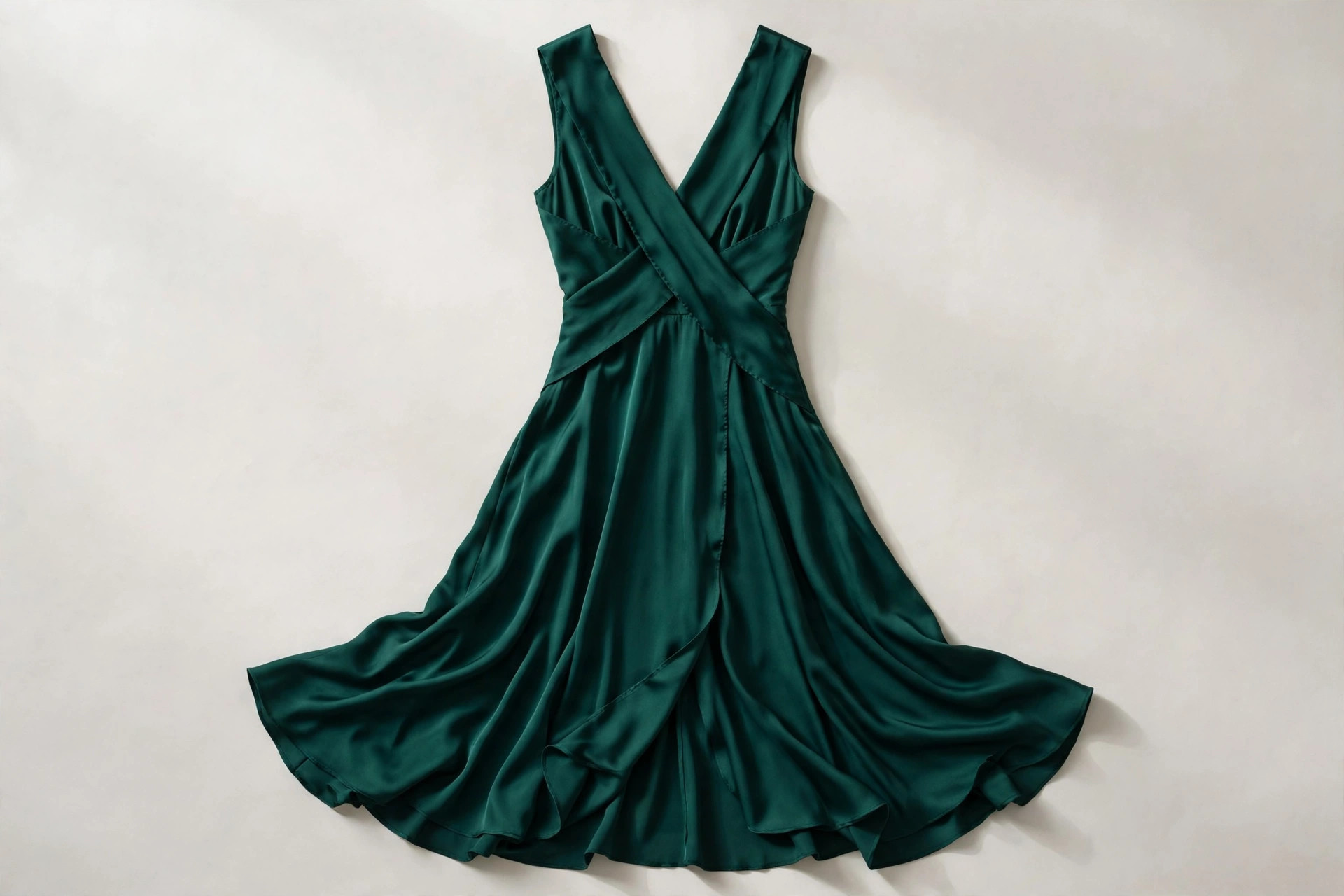
A surplice dress is built around a cross-over bodice: two panels of fabric overlap diagonally across the torso, meeting at the waist on the opposite side and forming a deep V neckline. The name comes from the surplice, the white vestment worn over a cassock, whose crossed front the neckline resembles. In modern retail the same dress is sold as a faux wrap — it has the wrap dress's lines, but the crossing is sewn fixed rather than tied, which changes both its fit and its behaviour.
The comparison with our wrap dress guide is the essential one. Diane von Furstenberg's 1974 wrap ties shut and adjusts to the body wearing it; a surplice is a finished garment with a set size, a fixed neckline depth and usually a zip or pull-on closure. What it keeps is everything visual: the diagonal line that lengthens the torso, the V that frames the bust, and the soft gathering where the panels meet the waist.
Why the Diagonal Flatters
The surplice bodice works on geometry. The diagonal seam leads the eye across and down, lengthening the torso's appearance; the V neckline opens the chest and gives the bust a defined frame without compression; and the overlap creates natural soft folds — ruching — at the waist, which skim a midsection instead of outlining it. It is one of the most reliably kind bodices in this cluster for an hourglass shape, where it follows the curves it crosses, and for an apple shape, where those diagonal folds do the disguising work a plain fitted bodice cannot.
Fuller busts benefit most of all, because the cross-over accommodates by construction: the panels lie across the bust rather than buttoning over it, so there is no gaping button line and no squashed uniboob of a too-small fitted bodice. The related risk is the opposite one — a neckline that falls too open. Better surplice dresses anchor the crossing with a small snap, a modesty panel or careful stitching at the deepest point of the V; check for one, or plan a camisole layer.
Surplice Variations: Waist, Skirt, Sleeve
Below the bodice, anything goes. The classic surplice dress pairs the cross-over top with a flowing A-line or gently flared skirt in the same jersey — the direct faux-wrap homage. Fitted skirt versions read as cocktail dresses; empire versions, where the crossing panels meet just under the bust, suit pregnancy and high-waisted comfort; surplice tops also appear on jumpsuits and rompers in the wider cluster of one-piece dressing. The bodice is the constant; everything below it is a styling choice.
Sleeve and neckline details tune the formality. A sleeveless surplice with a deep V is evening wear; a three-quarter sleeve in matte jersey is the office version that made the style a workwear staple; flutter sleeves and floral prints take it bohemian. Watch the waist treatment: a self-belt or side tie nods to the wrap original and lets you tune the fit slightly, while a plain seamed waist in a knit relies entirely on the size being right.
Fit Checks and Fabrics
Because a surplice cannot be re-tied tighter, fit checks carry more weight than on a true wrap. The neckline should stay closed when you bend forward — the single most important test. The panels should lie flat without the under-panel peeking out at the edge, and the waist seam should sit at your waist rather than creeping upward, which signals the bodice is too short for your torso. Size for the bust first; the waist in a knit surplice forgives, the neckline does not.
Fabrics are the wrap family's usual suspects: matte jersey and ITY knit drape the crossing softly and travel without wrinkling, which is why surplice dresses dominate work-trip packing lists. Crepe and woven versions hold a sharper, more formal line but lose all adjustability and demand exact sizing. Care is simple for the knits — wash cold, dry flat so the diagonal panels do not stretch out of true — and the dress earns its keep as the one that always looks deliberate with zero morning effort.
Common Questions
What is a surplice dress?
A dress whose bodice is made of two panels crossing diagonally over the torso into a V neckline, sewn fixed in place. It is also sold as a faux-wrap dress: it copies the wrap dress's flattering diagonal lines but does not tie or adjust. The name comes from the crossed front of a clerical surplice vestment.
What is the difference between a surplice dress and a wrap dress?
Adjustability. A true wrap dress opens fully and ties at the waist, so it adjusts to your body and its neckline depth can be tuned. A surplice dress is sewn shut with the cross-over fixed: it has a set size and neckline, closes with a zip or pulls on, and cannot gap open or come untied — but cannot be let out either.
Are surplice dresses good for a large bust?
They are one of the best options, because the cross-over panels lie across the bust instead of buttoning or pulling over it, giving definition without gaping or compression. The check that matters is neckline security when bending forward; look for a snap, modesty panel or stitch anchoring the deepest point of the V.
Dress & Skirt Silhouette Guides
Every dress and skirt silhouette guide in this cluster — the new guides plus the classic silhouettes already on Apparel Search — in alphabetical order:
- Women's Asymmetric Skirt
- Women's Bubble Dress
- Women's Circle Skirt
- Women's Cold Shoulder Dress
- Women's Column Dress
- Women's Empire Dress
- Women's Fit and Flare Dress
- Women's Prairie Dress
- Women's Prairie Skirt
- Women's Sheath Dress
- Women's Shift Dress
- Women's Skater Dress
- Women's Slip Dress
- Women's Swing Dress
- Women's Tea Length Dress
- Women's Tent Dress
- Women's Tiered Dress
- Women's Tiered Skirt
- Women's Tulip Skirt
- Women's Wrap Dress
- Women's Wrap Skirt
More to Explore on Apparel Search
Looking for Women's Clothing Stores?
This guide helps you choose women's surplice dresses. To browse where to buy, visit our womens clothing store directory, where you can find retailers that carry them.