Women's Pantsuit Guide
A jacket and trousers cut from the same cloth: the pantsuit's history, fits and fabrics, and how to wear one suit five ways.
Shop Women's Pantsuits Now
Shop Women's Pantsuits on Amazon Shop Women's Pantsuits on eBayThe Amazon and eBay links on this page are affiliate links. If you make a purchase through them, Apparel Search may earn a commission.
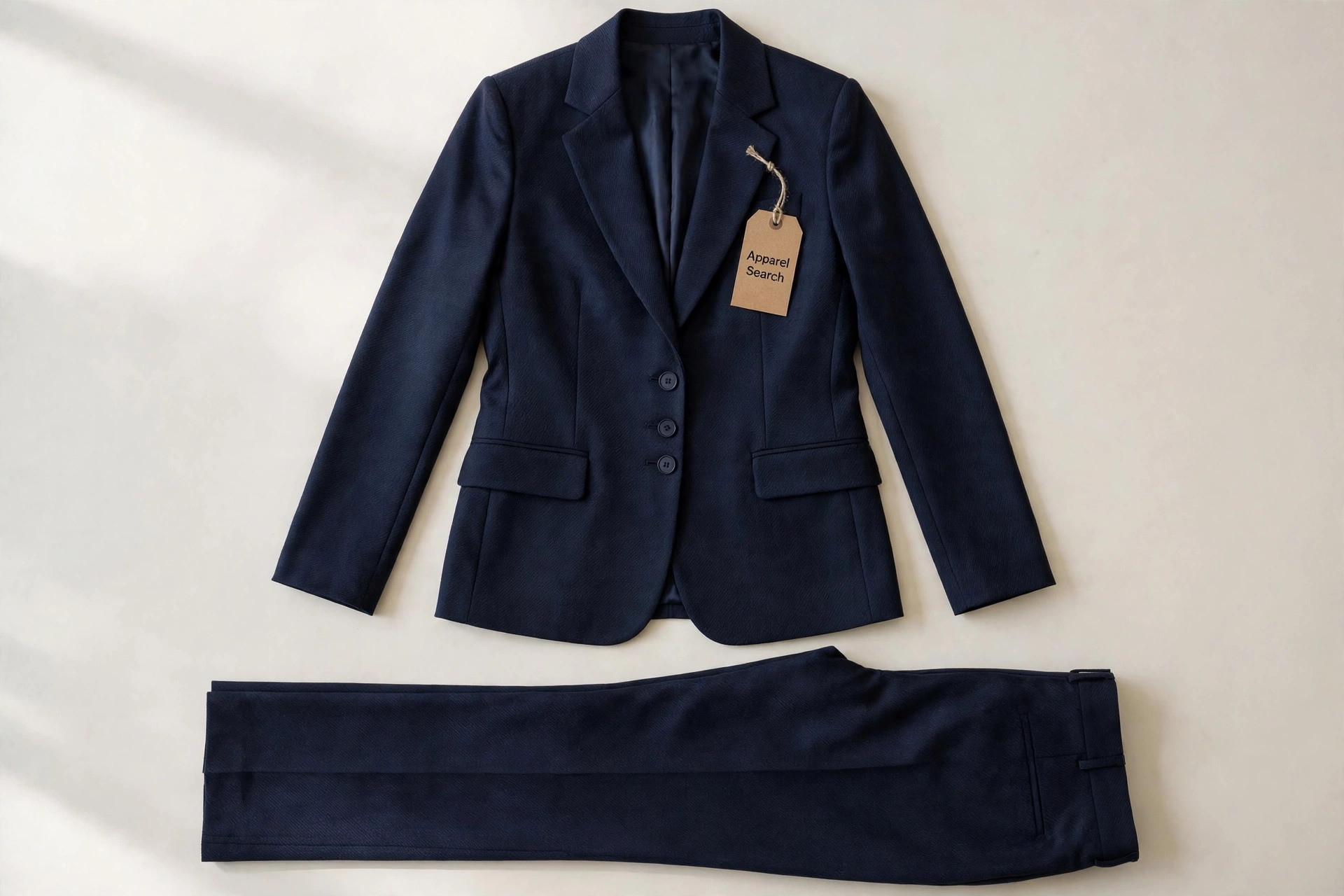
A pantsuit — also called a trouser suit — is a matched set: a jacket and trousers made from the same fabric, designed to be worn together as a suit. Women wore tailored trouser suits as riding and travel dress in the late 1800s, Marlene Dietrich made the tuxedo version famous in the 1930s, and Yves Saint Laurent's 1966 'Le Smoking' put a woman's evening pantsuit on the fashion map for good. By the 1980s the pantsuit was office uniform; today it is equally a wedding, evening and fashion choice.
The pantsuit's practical advantage over its one-piece cousin, the women's jumpsuit, is fit: two pieces can be bought and altered in two sizes, so a woman whose jacket and trouser sizes differ is no longer forced into a compromise. This guide covers the fits, the fabrics, and how one good suit becomes the hardest-working rotation in a wardrobe.
Jacket and Trouser Fits
Jacket cuts set the suit's character. A single-breasted, one-button jacket is the versatile classic; a double-breasted jacket reads bolder and more formal; a collarless or open-front jacket softens the suit for creative workplaces and events. Shoulder fit is the non-negotiable: the shoulder seam should sit at your shoulder point, because it is the one part a tailor cannot economically change. Sleeves should show a sliver of shirt cuff or wrist, and the jacket should close without pulling across the bust.
Trousers come in the same leg shapes as standalone trousers — straight, wide-leg, tapered and cropped — and the suit's mood follows the leg: wide-leg trousers make the outfit fashion-forward and evening-ready, tapered trousers make it sharp and office-classic, a cropped leg makes it modern and shoe-friendly. The two pieces are also sold as suit separates by many makers, letting you order each in its own size; a 'matching set' sold as one SKU, like the styles in our co-ord set guide, rarely offers that flexibility.
Suiting Fabrics and Colour
Traditional suiting is wool and wool blends: breathable, crease-resistant and structured enough to hold a lapel. Crepe suits drape more softly and travel well; linen suits summer but wrinkles by design; velvet and satin pantsuits are evening garments, not office ones. Weight follows season — a tropical-weight wool works three seasons, flannel is winter. Whatever the fabric, jacket and trousers must be the identical cloth and dye lot, which is why suits are bought as a pair even when sized separately.
Colour strategy is simple: a first pantsuit earns most in navy, charcoal or black, the shades that split into separates most easily — the jacket over dresses and jeans, the trousers with knitwear. A second suit is where colour pays: burgundy, forest, cream or a bold red turns the same tailoring into event dressing, and monochrome styling (matching shoes or a tonal top) keeps a bright suit elegant rather than loud.
Styling One Suit, Five Ways — and Care
Together with a camisole or fine knit, the suit is office dress. Together with a silk shirt and heels, it is evening. The jacket alone, over a dress or dark jeans, is smart-casual; the trousers alone, with a tucked tee and trainers, are weekend polish. At weddings a crepe or satin pantsuit is a respected guest and parent-of-the-couple choice — see our mother of the groom guide and the wedding guest attire hub for dress-code notes. Add a belt over a closed jacket to change the silhouette a sixth way.
Care for a suit as a pair: dry-clean or wash both pieces together, always, so they age at the same rate, and rest the suit a day between wearings on a wide jacket hanger. Trousers last longest hung by the hem or folded over a bar hanger. Because the trousers take more wear than the jacket, some tailors recommend buying a second pair of trousers with a suit you expect to wear weekly — advice worth taking while the same dye lot exists.
Common Questions
What is the difference between a pantsuit and a trouser suit?
Nothing — they are two names for the same garment: a matched jacket and trousers in identical fabric, worn as a suit. 'Pantsuit' is the common American term; 'trouser suit' is more common in British English. Both differ from a co-ord set, which matches by design but is not tailored suiting.
Can I buy a pantsuit jacket and trousers in different sizes?
Often, yes — look for ranges sold as suit separates, where jacket and trousers are priced and sized individually in the same fabric. One-SKU matching sets usually force a single size for both pieces. Alterations can refine either piece, but shoulder fit on the jacket should be right off the rail.
Are pantsuits appropriate for weddings and formal events?
Yes. A crepe, satin or velvet pantsuit in a dressy colour is accepted wedding-guest and evening wear at most dress codes, including many black-tie-optional events when styled with heels and jewellery. It is a particularly practical choice for mothers of the couple and for guests who prefer not to wear a dress.
More Women's Jumpsuit, Suits & Sets Guides
The other guides in this cluster — one-piece jumpsuits and boiler suits, tailored pantsuits and skirt suits, and matching co-ord and tracksuit sets:
More to Explore on Apparel Search
Same tailoring, different bottom half: continue to the skirt suit guide for the jacket-and-skirt classic.
Next: Women's Skirt Suit Guide: The Classic Jacket & Skirt Set »Looking for Women's Clothing Stores?
This guide helps you choose a women's pantsuit that fits both pieces and the occasion. To browse where to buy, visit our womens clothing store directory, where you can find retailers that carry them.