Women's Tea Length Dress Guide
Ending between the knee and the ankle, the tea length is the hemline of 1950s party dresses — formal enough for weddings, free enough to dance in.
Shop Women's Tea Length Dresses Now
Shop Women's Tea Length Dresses on Amazon Shop Women's Tea Length Dresses on eBayThe Amazon and eBay links on this page are affiliate links. If you make a purchase through them, Apparel Search may earn a commission.
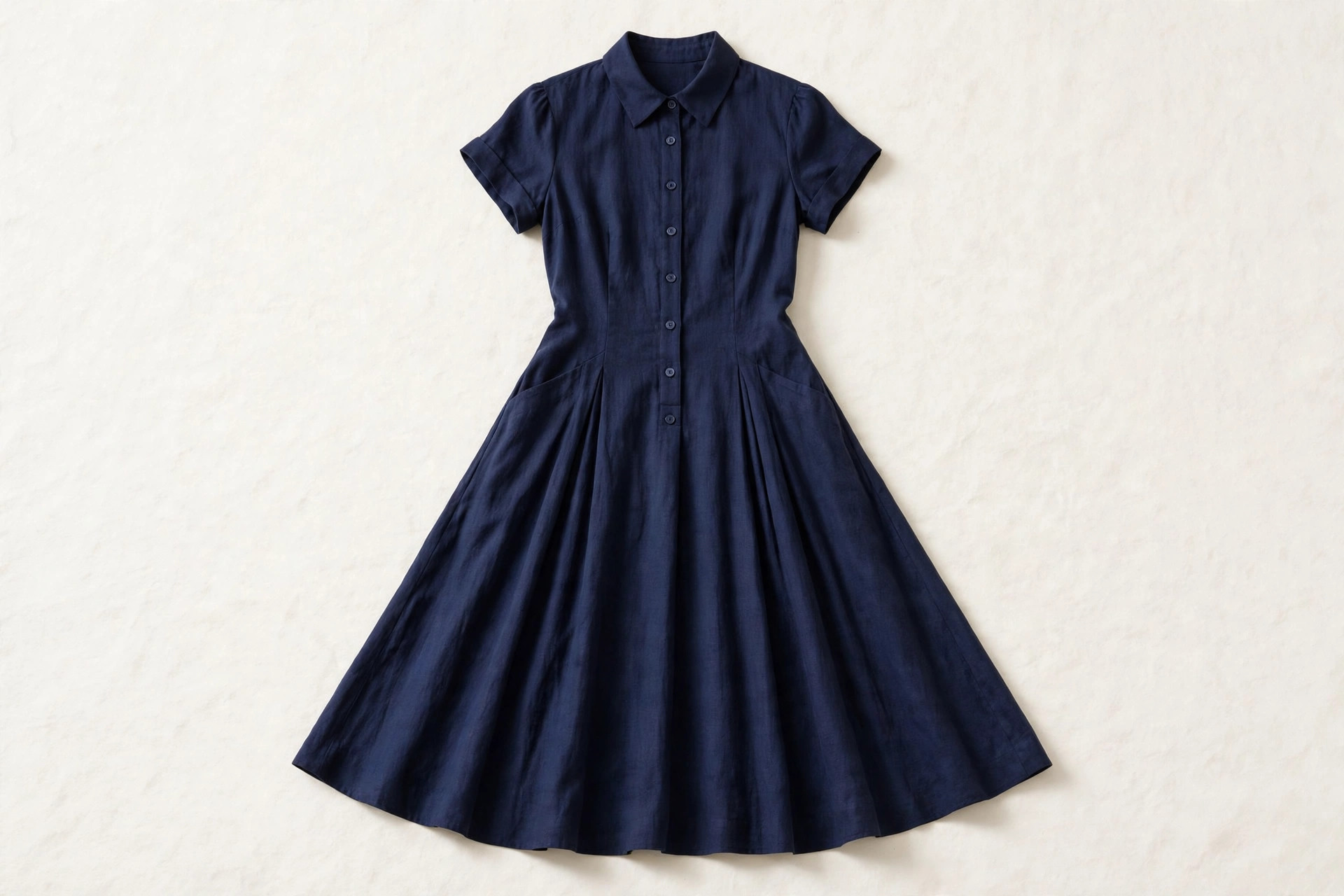
Tea length is a hemline, not a silhouette — and it is the most mislabelled hemline in retail. A true tea length dress ends between the bottom of the knee and the bottom of the calf, classically three to four inches above the ankle. Longer than a knee dress, clearly shorter than a full-length gown, it occupies the elegant middle that the 1950s made famous: full-skirted party dresses, prom dresses and wedding-guest dresses at exactly this length.
The name comes from the tea gown of the late 19th and early 20th centuries — a loose, semi-formal dress women wore for afternoon tea at home, freed from corsetry but not from propriety. The modern tea length keeps the spirit rather than the garment: dressed-up but not formal, pretty but practical, a length chosen when a full gown would be too much and a cocktail dress too little. It pairs with nearly every bodice silhouette in this cluster, most famously the fit and flare.
Placing the Hem: Tea, Midi, Ballerina and Ankle
Four neighbouring lengths need separating. Midi is the loose modern term for anything below the knee to mid-calf; the shortest midis overlap tea length's upper edge. Tea length proper sits lower-mid-calf, roughly three to four inches above the ankle bone. Ballerina length grazes the ankle itself, and full length reaches the floor. Retailers blur all four, so judge by your own leg: a tea hem should end clearly below the calf's widest point and clearly above the ankle — ending exactly at the calf's widest point is the one unflattering option.
That placement rule matters because tea length's charm is proportion: it shows the narrow part of the lower leg and the shoe, while the skirt above keeps its full swing. Petite wearers should take the shorter end of the tea range; taller wearers can carry the longest. If a dress is nearly right, tea length is also the most forgiving hem to alter — a tailor can set it to the exact flattering point on your calf for little cost.
Silhouettes and Occasions
Tea length is most often cut as a fit and flare, because the length was designed for a full skirt: below the knee the flare has room to complete its circle, and the exposed calf keeps the volume light. It also works beautifully on A-line and swing cuts, on shirt-dresses for a polished daytime register, and on lace and tulle occasion dresses where it offers an alternative to the floor-length gown. Slim column and sheath versions exist but are rarer — a narrow tea-length skirt needs a vent and reads more formal, more vintage-pencil in character.
Occasions are where tea length earns its place. It is the default answer for wedding guests who want elegance without competing with full-length bridal parties, for graduations, christenings, garden parties, the races and afternoon formal events of every kind. On an hourglass shape a fitted-bodice tea dress is the classic 1950s proportion; on a pear shape the full tea skirt skims the hip and ends at the leg's narrowest point — the shape and the length were practically designed for each other, as our body-shape guide explains.
The Shoe Rule and Styling
Tea length puts the shoes on stage — they are fully visible and carry the bottom of the outfit's proportion. Heels, especially a pointed pump or a strappy sandal, complete the classic line and add the height that balances a mid-calf hem. Ballet flats work with full-skirted versions and keep the 1950s reference sweet. The one pairing to avoid is a heavy ankle boot that ends where the hem does: two horizontals colliding at the calf shorten the leg visually. If boots are needed, they should end well above or below the hem.
Styling otherwise stays period-flexible: a cropped cardigan or bolero for the vintage register, a tailored blazer or clean clutch for a modern one. Because the length is inherently dressy, fabrics can relax a little — cotton sateen and broderie anglaise tea dresses carry daytime events that a knee-length version in the same cloth might not. Fit check: walk and sit. A full tea skirt should swing clear of your stride and settle around the chair without climbing.
Common Questions
Where exactly does a tea length dress end?
Between the knee and the ankle — classically at lower mid-calf, about three to four inches above the ankle bone. It should end below the widest point of the calf, on the narrowing part of the leg. Retailers often mislabel any midi as tea length, so judge the hem on your own leg rather than by the product name.
Is tea length the same as midi?
They overlap but are not identical. Midi is a loose umbrella term covering everything from just below the knee to mid-calf. Tea length is the specific, longer end of that range — lower calf, clearly above the ankle — with its roots in the 1950s full-skirted party dress. A short midi is not a tea length dress.
What shoes go with a tea length dress?
Shoes that show a clean ankle line: pointed pumps, strappy heeled sandals, or ballet flats with full-skirted styles. The hem exposes footwear completely, so shoes carry real visual weight. Avoid ankle boots that end exactly at the hemline — the double horizontal at the calf shortens the leg.
Dress & Skirt Silhouette Guides
Every dress and skirt silhouette guide in this cluster — the new guides plus the classic silhouettes already on Apparel Search — in alphabetical order:
- Women's Asymmetric Skirt
- Women's Bubble Dress
- Women's Circle Skirt
- Women's Cold Shoulder Dress
- Women's Column Dress
- Women's Empire Dress
- Women's Fit and Flare Dress
- Women's Prairie Dress
- Women's Prairie Skirt
- Women's Sheath Dress
- Women's Shift Dress
- Women's Skater Dress
- Women's Slip Dress
- Women's Surplice Dress
- Women's Swing Dress
- Women's Tent Dress
- Women's Tiered Dress
- Women's Tiered Skirt
- Women's Tulip Skirt
- Women's Wrap Dress
- Women's Wrap Skirt
More to Explore on Apparel Search
- Women's Jumpsuit Guide
- Women's Pantsuit Guide
- Women's Skirt Suit Guide
- Women's Co-ord Set Guide
- Women's Tracksuit Guide
- Women's Boiler Suit Guide
- How to Pick Clothes for Your Body Shape
- Hourglass Body Shape
- Pear Body Shape
- Apple Body Shape
- Rectangle Body Shape
- Inverted Triangle Body Shape
- Dress Lengths Guide
- Midi Dress Guide
Looking for Women's Clothing Stores?
This guide helps you choose women's tea length dresses. To browse where to buy, visit our womens clothing store directory, where you can find retailers that carry them.