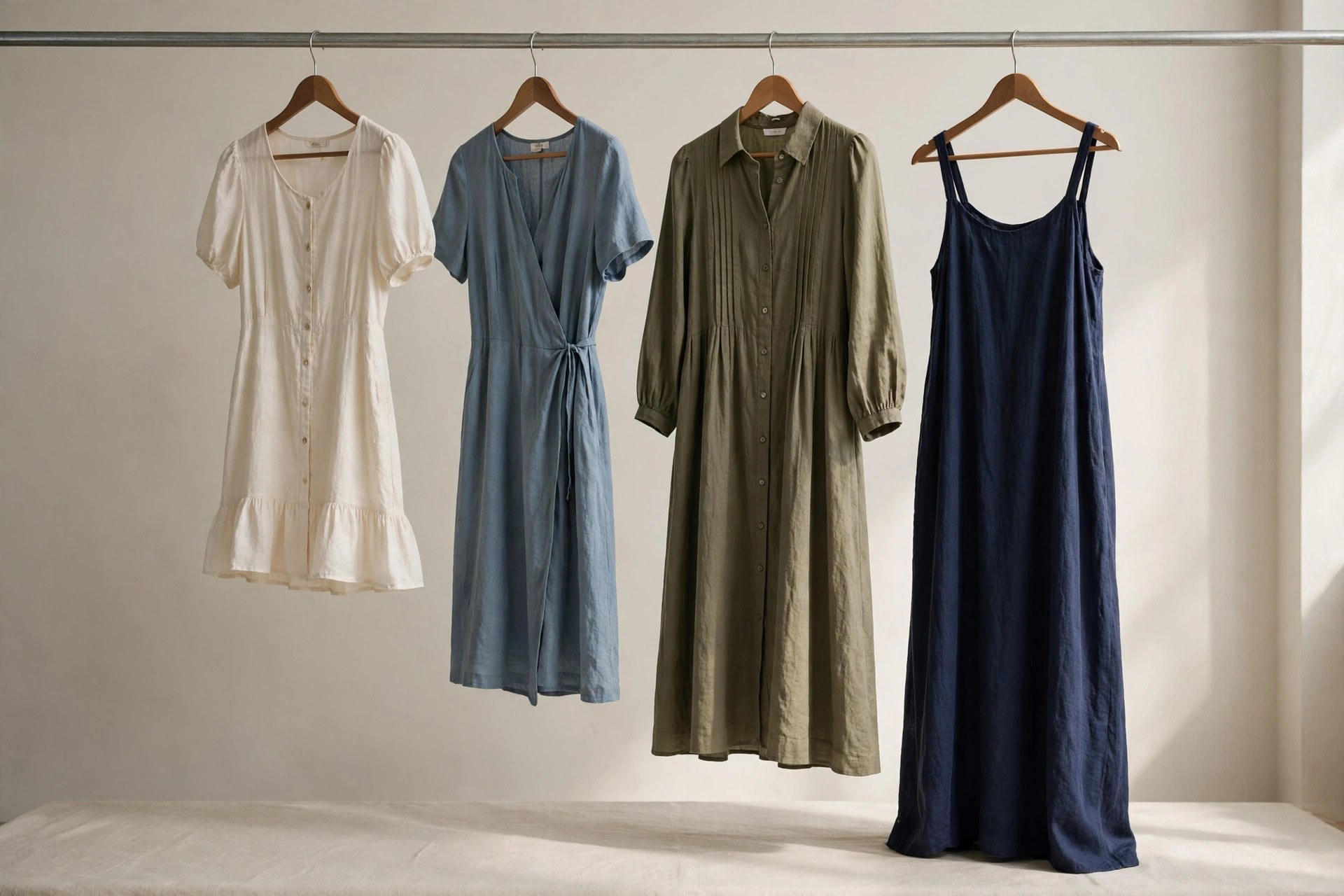
Dress lengths are the named steps that describe where a dress hem falls on the leg: mini at mid-thigh, knee-length at the knee, midi at mid-calf, tea length below the calf and above the ankle, maxi at the ankle, and floor-length touching the floor. The names are proportions, not measurements — the same dress is a knee-length on one wearer and a midi on a shorter one — which is why learning the ladder matters more than memorising inches. This guide defines each length, explains how catalogues actually measure dresses, and shows how to choose a length by occasion, formality and height, so the dress that arrives is the length you pictured.
The Length Ladder: Mini to Floor-Length
The mini ends at mid-thigh or above: the shortest standard length, and the most casual. Knee-length ends at, just above or just below the knee, and remains the versatile classic for work and occasions alike. The midi dress ends between knee and ankle, usually at mid-calf — the modern workhorse length. Tea length sits below the calf and above the ankle, a few inches longer than a midi, and reads more formal and vintage in character.
The maxi dress ends at the ankle, skimming the top of the foot, and floor-length reaches the floor itself, usually reserved for gowns. Between the named steps sit real dresses of every in-between length, and two near neighbours cause the most confusion: midi versus tea length, separated by only a few inches of calf, and maxi versus floor-length, separated by whether the hem clears the ground when you walk.
How Dress Lengths Are Measured
When a catalogue gives a dress length in inches or centimetres, it is almost always measured flat, from the highest point of the shoulder — or, on strapless and some other styles, from the centre back neck — straight down to the hem. Brands differ on the starting point, and product pages do not always say which one they used, so the same number can describe two dresses that fall differently on the body.
That is why a stated measurement only becomes useful against your own body. Measure from your shoulder over the bust to the point on your leg where you want the hem, and compare that with the listed length, allowing for the starting-point difference. Remember that a dress hangs from the shoulder and bust, not from a flat table: fuller busts and hips lift a hem slightly, and bias-cut and knit dresses can grow longer as they hang. When a listing gives both a named length and a measurement, trust the measurement checked against your own.
Choosing by Occasion, Formality and Height
Formality generally rises with length. Minis suit casual and party wear; knee-length covers work, weddings and funerals without risk; midi spans everything from everyday to occasion wear depending on fabric; tea length suits weddings, garden parties and vintage-leaning events; maxi ranges from beach-casual to formal depending on material; and floor-length is for black-tie and formal gowns. Fabric can move any length one step up or down the formality scale — a satin midi out-dresses a cotton maxi.
Height adjusts every length. Petite wearers often find a catalogue midi lands at tea length, and a maxi may need hemming or heels; tall wearers find minis shorter and knee-length dresses riding above the knee. The practical approach is to shop by your own shoulder-to-hem measurement rather than the name, choose hems that end at a narrow point of the leg, and treat hemming as a normal final step — shortening a dress is one of the simplest and cheapest alterations there is.
Common Questions
- What is the difference between midi and tea length?
- A midi ends at mid-calf, while a tea length dress ends lower, below the calf and above the ankle. The difference is usually only a few inches, but tea length reads more formal and has a vintage character, while the midi is the everyday, all-purpose length. On a shorter wearer, a midi from some brands can fall at tea length.
- How are dress lengths measured in catalogues?
- Most brands measure a dress flat from the highest point of the shoulder to the hem; strapless styles are often measured from the centre back neck instead. Because the starting point varies and is not always stated, compare the listed measurement with your own shoulder-to-hem measurement to the point on your leg where you want the hem to fall.
- What is the most common dress length mistake?
- Shopping by the name instead of the measurement. A midi is a proportion, so it lands at different points on different heights, and a dress bought as a midi can arrive as a near-maxi on a petite wearer. Checking the listed length against your own shoulder-to-hem measurement, and avoiding hems that end at the widest point of the calf, prevents most disappointments.
- Which dress length is most versatile?
- Knee-length and midi are the two most versatile lengths. Knee-length suits work, weddings and formal daytime events in almost any fabric. Midi covers the same ground with a more current feel and adds evening and casual range. If a wardrobe can only hold a few dresses, one of each length in seasonless fabrics will cover most occasions.
Dress Lengths & Everyday Dress Guides
This page is part of our series on dress lengths and the everyday dress styles built around them.