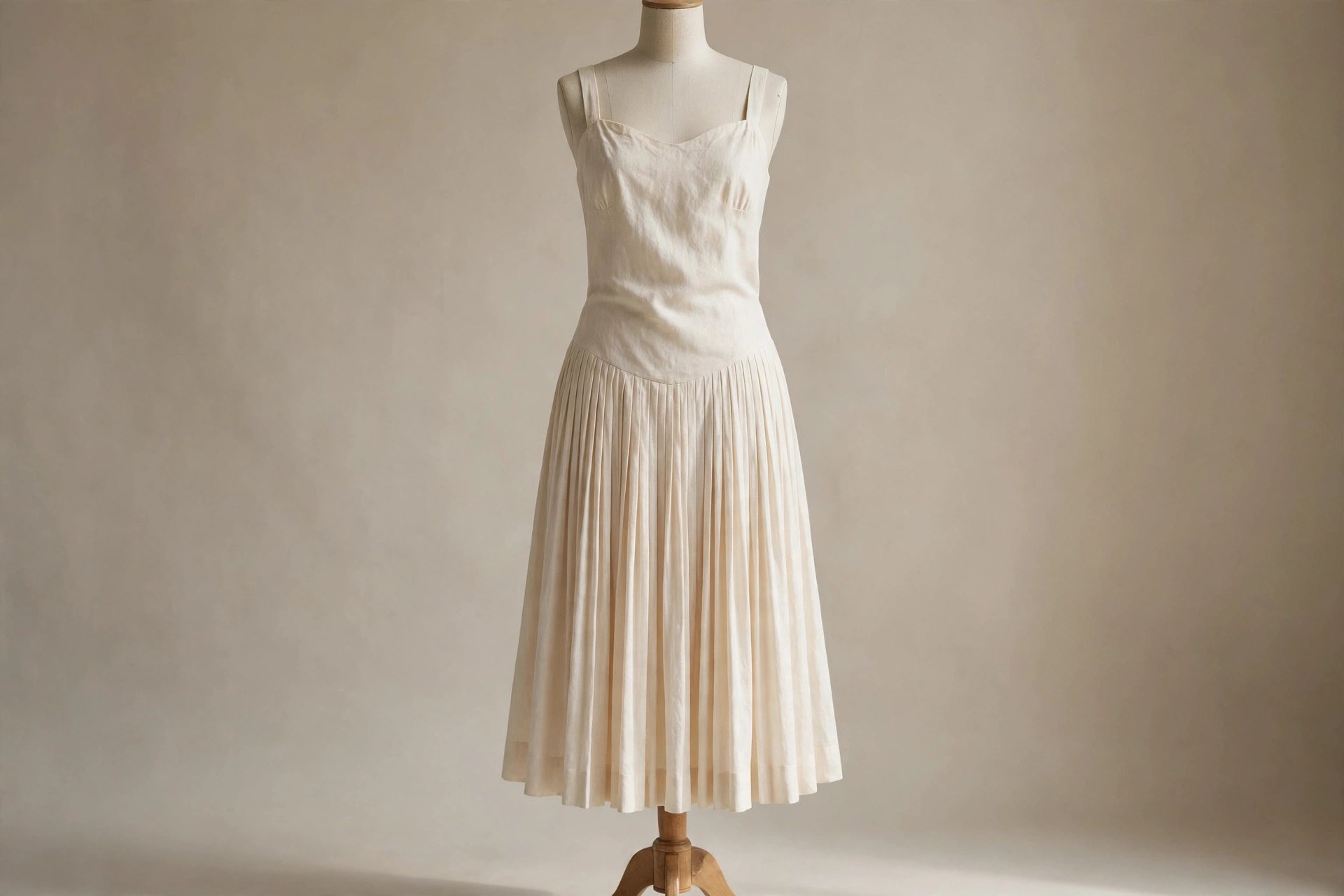
A drop-waist dress is a dress whose waistline — the seam or design line where bodice meets skirt — sits at the hips, several inches below the natural waist. Moving the waistline down lengthens the torso visually and lets the skirt begin lower, which changes the whole proportion of the dress: less waist definition, more long, relaxed line through the body. The style is permanently associated with the 1920s, when it defined the decade's silhouette, but it has returned in every era since, and current versions appear as pleated day dresses, easy shirt dresses and even wedding gowns with low, basque-style waists.
From the 1920s to Modern Revivals
In the 1920s the dropped waist was revolutionary. Dresses abandoned the corseted natural waist for a straight, loose bodice that ended at the hips, with the skirt — often pleated, tiered or fringed for dancing — beginning there. The flapper-era dress was built on this line: easy to move in, modern in outline, and deliberately boyish next to what came before. Photographs of the decade are a catalogue of drop waists at every formality, from day dresses to beaded evening styles.
The line never fully disappears. It resurfaces whenever fashion wants a longer, looser torso — in later decades as a periodic revival, and today in several distinct forms: pleated drop-waist dresses whose skirts open into pleats at the hip, relaxed shirt dresses with the belt or seam worn low, and wedding dresses with elongated bodices that flare into full skirts from the hip. The modern versions are usually softer and less straight than the 1920s originals, with more shaping in the bodice.
Body-Shape Notes
The drop waist elongates the torso and de-emphasises the natural waist, and those two facts decide who loves it. It suits straighter figures, where there is little waist to define and the long line looks intentional; it suits taller wearers, who have the vertical length to spare; and it can suit anyone who prefers a relaxed fit through the middle, since the bodice skims rather than cinches.
It asks more care from petite wearers, whose proportions a long torso can overwhelm, and from those whose best feature is a defined waist, which this style deliberately gives up. Fit matters at the shoulder and hip instead: the bodice should sit cleanly on the shoulders, and the skirt should begin at the hip bone rather than sliding lower. A shorter skirt length often balances the dropped waist on smaller frames, while midi lengths suit taller ones.
Styling and Shoes
Style a drop-waist dress along its own long lines. Long necklaces — the 1920s answer — echo the elongated bodice and still work, as do scarves worn low and loose. Belts, if worn at all, sit at the hip where the seam is, not at the natural waist, which would fight the design. Layers should be long too: a coat or cardigan that ends below the hip keeps the proportion the dress sets up.
Shoes follow the skirt. With shorter drop-waist dresses, Mary Janes and T-strap heels are the period-correct and still-charming choice; ballet flats and loafers keep day versions easy. With midi and pleated versions, a low or block heel adds height without fuss, and ankle boots work in cooler months. Because the dress's line is relaxed, one polished element — good shoes, a structured bag, neat hair — keeps the outfit from reading as shapeless.
Common Questions
- What is a drop-waist dress?
- It is a dress whose waistline seam sits at the hips instead of at the natural waist. The bodice is therefore longer than usual and the skirt begins lower, which lengthens the torso visually and gives the dress a relaxed, straight-through line. The style is most associated with the 1920s but appears in modern day dresses, shirt dresses and wedding gowns.
- Who suits a drop-waist dress?
- Straighter figures and taller wearers suit it best, because the style lengthens the torso and does not rely on waist definition. It also suits anyone who prefers ease through the middle. Petite wearers should choose shorter skirt lengths and a clean fit at the shoulders, and those who like to show a defined waist will usually prefer a natural-waist style instead.
- Are drop-waist dresses only a 1920s style?
- No. The 1920s made the dropped waist famous, in flapper dresses with pleated, tiered or fringed skirts, but the line has returned in every era since. Current versions include pleated day dresses, relaxed shirt dresses with low seams, and wedding dresses with elongated bodices. Modern cuts are generally softer and more shaped than the straight 1920s originals.
- What shoes go with a drop-waist dress?
- Mary Janes and T-strap heels are the classic pairing for shorter drop-waist dresses, echoing the 1920s origin. Ballet flats and loafers suit casual day versions, low block heels work with midi and pleated styles, and ankle boots carry the dress into cooler weather. Because the silhouette is relaxed, neat, polished shoes help the outfit look deliberate.
Dress Lengths & Everyday Dress Guides
This page is part of our series on dress lengths and the everyday dress styles built around them.