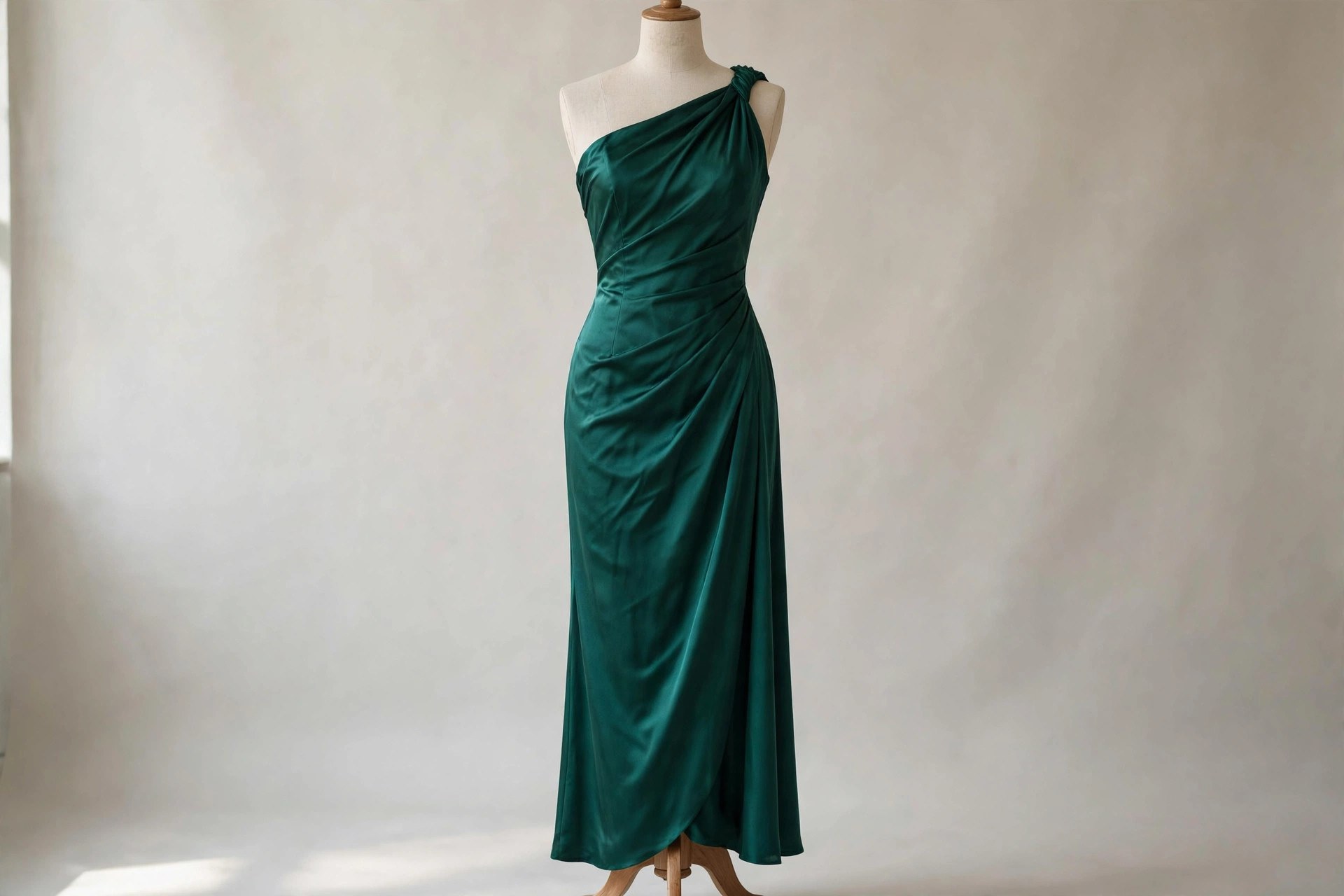
A one-shoulder dress has a neckline that covers one shoulder — with a strap, a sleeve or a band of fabric — and leaves the other shoulder and collarbone bare, usually with a diagonal line running across the chest. The asymmetry is the entire design statement: it shows skin in a more architectural way than a strapless dress, and it holds up better, because one anchored shoulder does the work of keeping the bodice in place. One-shoulder styles appear at every level of formality, from jersey day dresses to full evening gowns, and the diagonal neckline flatters the shoulders and draws the eye upward to the face.
Cocktail, Gown and Casual Versions
The cocktail one-shoulder dress is the most common version: knee or midi length, in satin, crepe or stretch fabrics, often with a single long sleeve on the covered side for balance. It suits weddings, parties and dinners where a strapless dress might feel like too little structure and a sleeved dress too much. Ruching or draping across the bodice is common and helps the diagonal sit smoothly.
The one-shoulder gown takes the same neckline to floor length for formal events, frequently with a slit and a draped or flowing skirt. At the other end, casual one-shoulder dresses in cotton or jersey — short or maxi, sometimes with a ruffled single strap — are a summer staple that reads dressed-up with no effort. In every version, fit across the bust and under the covered arm is what makes the dress comfortable rather than a thing to keep adjusting.
Support: Bras and Built-In Solutions
The bare shoulder rules out an ordinary bra, so support has to be planned. Many one-shoulder dresses include built-in support — padded or boned bodices, interior elastic or a sewn-in bra — and in a well-made dress that is enough on its own. Where it is not, a strapless bra is the usual answer, worn so no strap crosses the bare side; check from behind as well as in front.
Adhesive bras and tape are the fallback for very open or low-backed versions, and they work best on smaller busts and shorter events. Whichever route you choose, test it at home first: raise your arms, sit down and move around. The single shoulder carries the whole bodice, so the dress should feel secure from that side, with the diagonal sitting flat and not digging in. If you are between solutions, a dressmaker can often add cups or an interior band.
Jewellery, Hair and Occasions
Jewellery follows the neckline. Skip the necklace — the diagonal line is the ornament, and a necklace fights it. Earrings take the lead instead: a statement earring, drops or a good hoop frame the bare shoulder and the face. Keep other jewellery simple; a bracelet or cuff adds a finishing point on the wrist without crowding the neckline. Hair swept up or to the covered side shows the asymmetric line at its best, while hair worn down over the bare shoulder hides the design you chose the dress for.
Occasions: one-shoulder cocktail dresses suit weddings (as a guest), parties, dinners and race days; gowns suit black-tie and formal galas; casual versions suit holidays and summer evenings. The style is less suited to conservative workplaces and formal religious settings where covered shoulders are expected — a wrap or shawl solves the ceremony and comes off later. Photographs love this neckline, which is one reason it returns for every party season.
Common Questions
- What bra do you wear with a one-shoulder dress?
- Most wearers use the dress's built-in support if it has padded cups, boning or an interior band. Otherwise a strapless bra is the standard choice, checked from the back so nothing shows on the bare side. Adhesive bras or fashion tape suit very open styles and smaller busts. Test the combination at home by raising your arms and sitting down before the event.
- Should you wear a necklace with a one-shoulder dress?
- Generally no. The diagonal neckline is the dress's main design feature, and a necklace crosses and competes with it. Put the emphasis on earrings instead — statement, drop or hoop styles all work — and keep the neck and collarbone bare. If you want more jewellery, add a bracelet or cuff rather than anything at the neck.
- Is a one-shoulder dress appropriate for a wedding?
- Yes, as a guest it is a reliable choice in cocktail or gown length, in satin, crepe or chiffon. Avoid white and ivory, and carry a wrap or shawl if the ceremony is in a place of worship that expects covered shoulders. The style photographs well and stays comfortable through a long reception because the one shoulder keeps the bodice secure.
- How should hair be worn with a one-shoulder dress?
- Worn up, or swept to the covered side. Both keep the bare shoulder and the diagonal neckline visible, which is the point of the dress. Hair left down over the bare shoulder hides the asymmetry and can catch on earring and neckline edges. An updo with statement earrings is the classic formal pairing for this style.
Dress Lengths & Everyday Dress Guides
This page is part of our series on dress lengths and the everyday dress styles built around them.