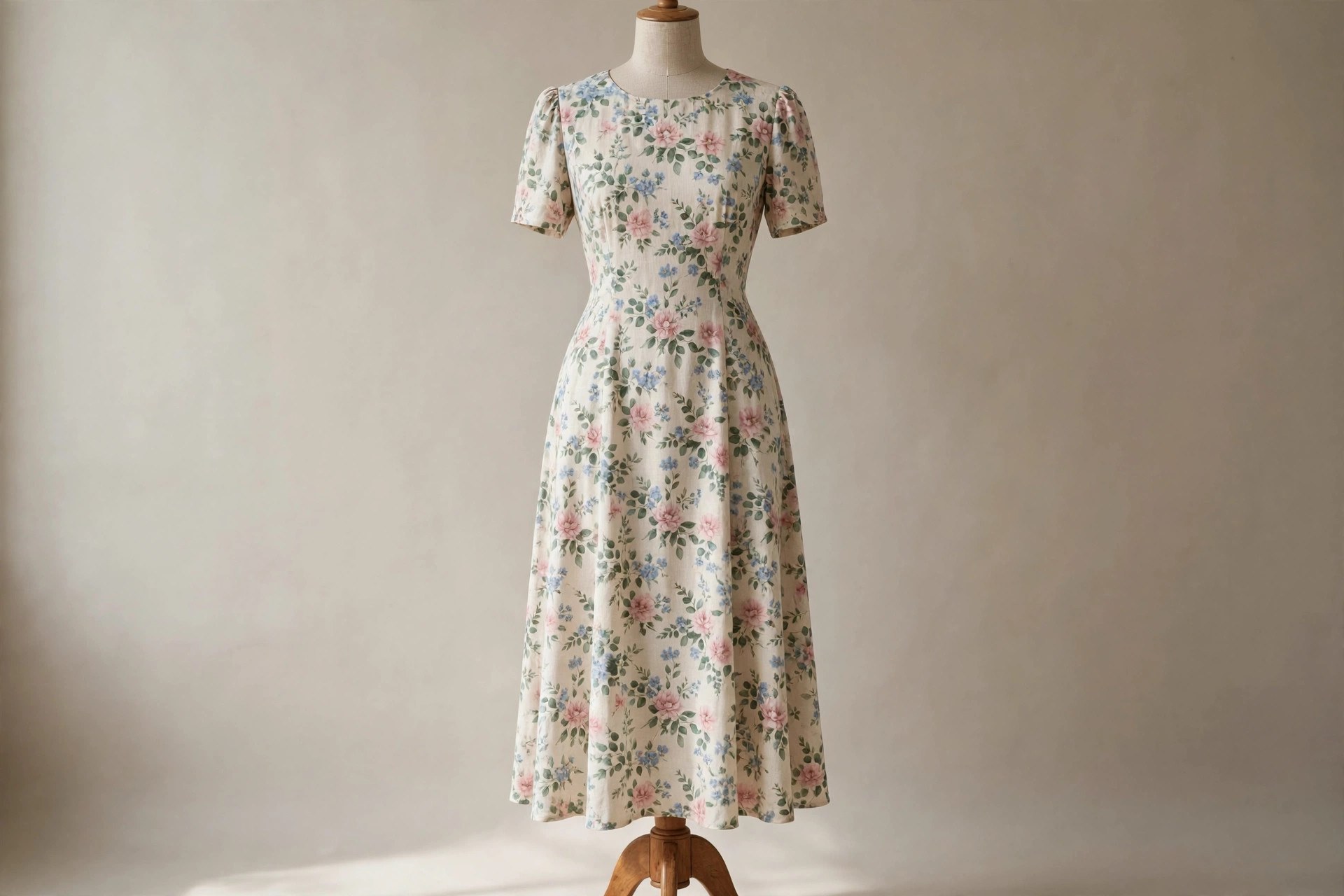
A midi dress is a dress whose hem falls between the knee and the ankle, most often at mid-calf. The name comes from “mid,” for middle: longer than a knee-length dress, shorter than a maxi. That in-between position is exactly why the midi works so hard in a wardrobe. It covers the knee, so it reads polished enough for offices, weddings and dinners, yet it stops well clear of the floor, so it stays practical for walking, commuting and dancing. Midis come in nearly every silhouette, from fluid slips to structured shirt dresses, and in fabrics for every season, which makes the midi less a single style than a length that many different dresses share.
A Short History of the Midi
Longer hemlines returned after the Second World War, when fuller, calf-length skirts replaced the shorter, fabric-saving styles of the war years. Through the 1950s and 1960s, day dresses commonly ended below the knee, so a mid-calf hem was simply what an ordinary dress looked like for much of the post-war period.
When designers promoted the midi as a named fashion length around 1970, it met real resistance: many women had embraced the mini and saw the longer hem as a step backwards, and the so-called midi debate played out in shops and magazines. The length survived the argument. It settled into the wardrobe as a staple rather than a trend, and it has cycled back to the front of the racks regularly ever since, most recently as the default length for everyday dresses.
Midi Dress Styles
The wrap midi ties or wraps at the waist, giving an adjustable fit and a V-neckline that suits most figures. The shirt dress midi borrows a shirt's collar, buttons and cuffs, and reads the smartest of the group. A slip midi is cut slim and simple, often on the bias, in satin or silk-look fabrics. Knit midis in jersey or fine rib are the comfortable everyday option, while the fit-and-flare midi pairs a fitted bodice with a fuller skirt for a defined waist and an easy, swishing hem.
Fabrics set the season. Cotton, linen and rayon midis breathe in summer; crepe and ponte hold their shape for work; satin and silk carry evening versions; and sweater-knit midis with long sleeves take the length through winter. Prints scale well on the extra fabric — florals, checks and stripes all have room to show — while a solid midi in a deep colour is the easiest version to dress up or down. Compare all the standard lengths side by side in our dress lengths guide.
Styling, Shoes and Fit
By occasion: for work, choose a shirt, wrap or knit midi in a substantial fabric and add a blazer or cardigan. For weddings and parties, satin slips and fit-and-flare styles carry the dress code, with a wrap or shawl if the venue is cool. For weekends, a jersey or tiered cotton midi with flat sandals or trainers is the one-piece answer. The midi's coverage makes it a safe choice whenever a dress code is vague.
Shoes decide the proportions. Heels elongate the leg under a mid-calf hem, ankle boots meet the hem neatly in cold weather, and clean sneakers keep a knit or cotton midi casual. Fit notes: petite wearers usually do best when the hem ends just below the knee or high on the calf, and tall wearers can take the hem lower, toward the ankle. Wherever it lands, avoid the widest point of the calf.
Common Questions
- What length is a midi dress, exactly?
- A midi dress ends anywhere between the knee and the ankle, and most midis land at mid-calf. There is no single fixed measurement, because the same dress falls at a different point on different heights. As a working rule, if the hem covers the knee but leaves the ankle and some lower leg showing, it is a midi.
- What shoes look best with a midi dress?
- Heeled shoes lengthen the leg line under a mid-calf hem and suit dressier midis. Ankle boots work well in autumn and winter, especially with knit midis and tights. Flat sandals, loafers and clean white sneakers suit casual cotton and jersey midis. The main thing to avoid is a shoe strap or boot top that cuts the leg at the same point as the hem.
- Can petite women wear midi dresses?
- Yes, with the hem placed deliberately. Petite wearers usually look best in a shorter midi that ends just below the knee or high on the calf, rather than at the calf's widest point. A defined waist, a wrap or fit-and-flare shape, and shoes in a similar tone to the dress or the leg all help keep the proportions balanced.
- Is a midi dress appropriate for a wedding or the office?
- A midi is one of the safest lengths for both. For a wedding, choose satin, silk-look or lace fabrics and avoid white and very casual jersey. For the office, choose a shirt, wrap or knit midi in a fabric that holds its shape, with a hem at or below mid-calf and a neckline and sleeve you do not have to adjust all day.
Dress Lengths & Everyday Dress Guides
This page is part of our series on dress lengths and the everyday dress styles built around them.