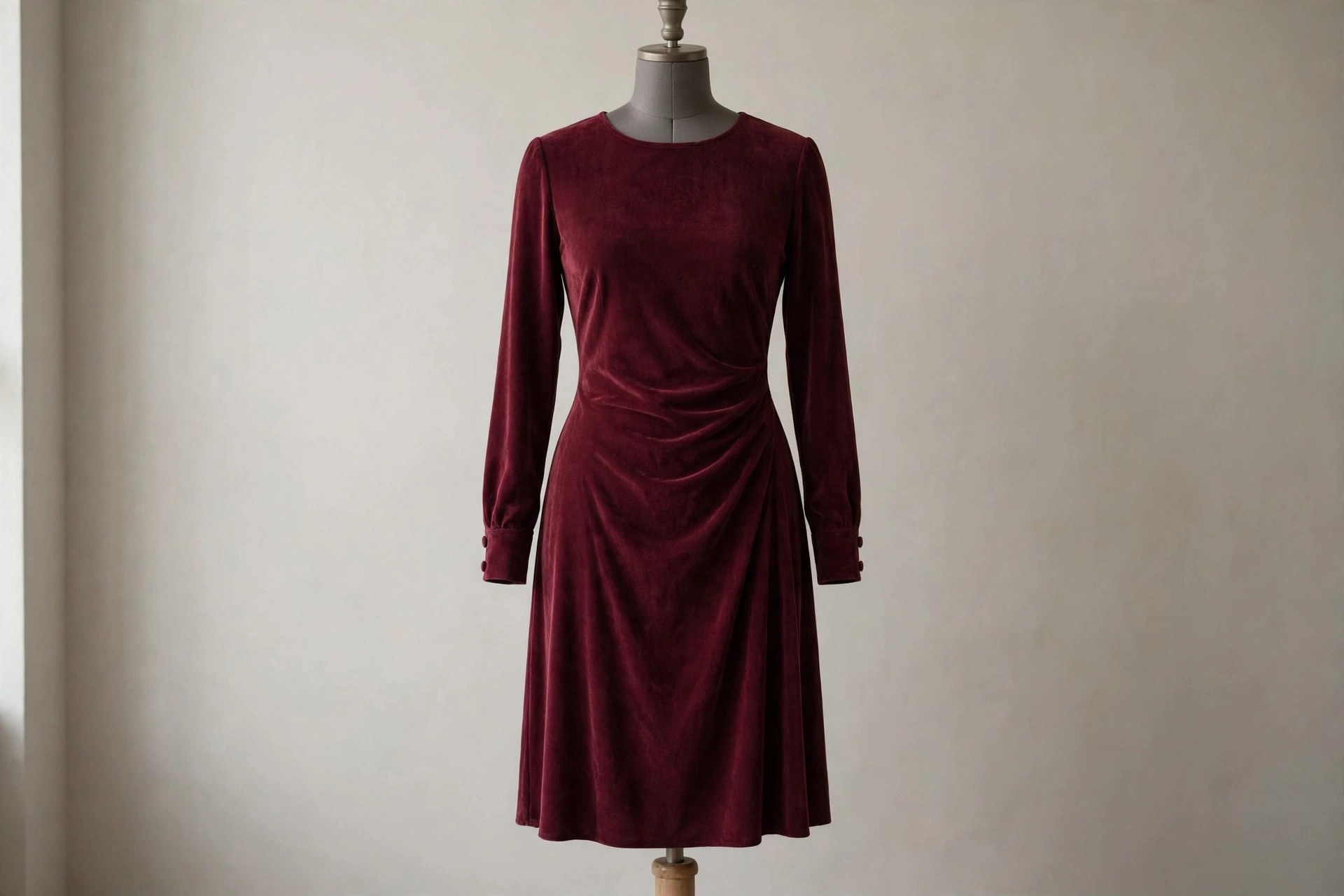
A long-sleeve dress is any dress with sleeves that reach the wrist. It is defined by coverage rather than by one silhouette, so the category runs from crisp shirt dresses to soft sweater dresses and formal sleeved gowns. Sleeves change a dress in practical ways: they add warmth, they satisfy dress codes that ask for covered arms, they remove the need for a cardigan or jacket indoors, and they balance shorter hems and lower necklines. A long-sleeve dress is also a genuinely four-season garment — in breathable cotton or linen blends for spring, in ponte and crepe for the working year, and in knits and velvet-look fabrics for winter.
Long-Sleeve Dress Styles
The shirt dress with full-length sleeves is the sharpest version: collar, button front and a cuff, usually belted. The wrap dress gains polish and coverage from its sleeves, which makes it a work standard. The sweater dress is knitted, with sleeves as part of the same soft whole. A bodycon long-sleeve dress uses the sleeves to balance its close fit, in jersey or rib knit. And the sleeved maxi pairs full coverage top and bottom, a modest, flowing option worn everywhere from evenings to religious occasions.
Length and sleeve work together. A long sleeve with a mini or knee hem reads balanced and modern; the same sleeve on a midi is the classic work formula; and on a maxi it creates the most covered silhouette of all. Necklines follow the same logic — a higher neck plus long sleeves needs a lighter fabric or a shorter hem somewhere to keep the dress from feeling heavy, while a V or scoop neck opens the covered look up.
Sleeve Types and Fabrics by Season
Sleeve cuts have their own vocabulary. A fitted sleeve follows the arm closely and layers under coats best. A raglan sleeve runs diagonally to the neckline, giving a sportier feel and easy shoulder movement. The bishop sleeve is full through the arm and gathered into a cuff at the wrist, and the bell sleeve flares open from the elbow or wrist without a cuff. Sheer and lace sleeves offer coverage without warmth, which is their whole point for evening dresses.
Fabrics follow temperature. Spring and summer long sleeves work in cotton, linen blends, rayon and fine jersey — look for breathable weaves, since a sleeve traps more heat than most wearers expect. Autumn brings ponte, crepe and mid-weight jersey; winter brings sweater knits, merino blends and heavier stretch fabrics. Whatever the season, check that the sleeve is cut long enough to stay at the wrist when you raise your arms, and that knit sleeves are not so tight they bag at the elbow by midday.
Work Notes and Styling
For work, the long-sleeve dress solves the two recurring problems of office dressing: cold air-conditioning and the covered-arm dress code. A shirt, wrap or sheath-style sleeved dress in ponte, crepe or a cotton blend needs no layer on top, which keeps the outfit to one decision. Keep hems at the knee or midi length, choose fabrics that hold their shape through a sitting day, and let the sleeves be the coverage so necklines can stay simple.
Styling is mostly about the waist and the footwear. A belt defines knit and shirt styles that would otherwise hang straight; boots — ankle boots with knee and midi lengths, taller boots under shorter hems — are the natural cold-weather partner; and loafers or low heels keep a sleeved work dress crisp. Jewellery sits well against a plain sleeve: a watch or cuff at the wrist, and earrings rather than competing necklaces when the neckline is high.
Common Questions
- Are long-sleeve dresses only for winter?
- No. Fabric decides the season, not the sleeve. Cotton, linen blends, rayon and fine jersey long-sleeve dresses are comfortable through spring and much of summer, especially in air-conditioned offices and on cooler evenings. Save sweater knits, ponte and heavy jersey for autumn and winter, and look for breathable weaves and looser sleeve cuts in warm weather.
- What is the difference between bishop and bell sleeves?
- A bishop sleeve is full along the arm and gathered into a fitted cuff at the wrist, so the fullness is held in at the end. A bell sleeve flares outward from the elbow or upper arm and ends open, with no cuff. Bishop sleeves are easier under coats and at desks; bell sleeves make more of a statement and need more care around food and paperwork.
- Can a long-sleeve dress be worn to work?
- It is one of the most reliable work dresses available. Sleeves provide the coverage many dress codes ask for, so no cardigan or jacket is needed indoors. Choose a shirt, wrap or sheath style in ponte, crepe or a cotton blend, with the hem at knee or midi length, and the result is polished with very little effort.
- How do I style a long-sleeve dress with boots?
- Match the boot height to the hem. Ankle boots pair cleanly with knee-length and midi dresses, finishing just below the hem. Knee-high boots sit under midi hems or meet shorter hems with a small gap of leg or tights. Add a belt to knit styles to define the waist, and keep the boot simple when the dress has detailed sleeves such as bishop or bell shapes.
Dress Lengths & Everyday Dress Guides
This page is part of our series on dress lengths and the everyday dress styles built around them.