Women's Sweater Dress Guide
A sweater dress takes the knit of a sweater and extends it to dress length — one warm, pull-on piece whose gauge, weight and silhouette decide everything.
Shop Women's Sweater Dresses Now
Shop Women's Sweater Dresses on Amazon Shop Women's Sweater Dresses on eBayThe Amazon and eBay links on this page are affiliate links. If you make a purchase through them, Apparel Search may earn a commission.
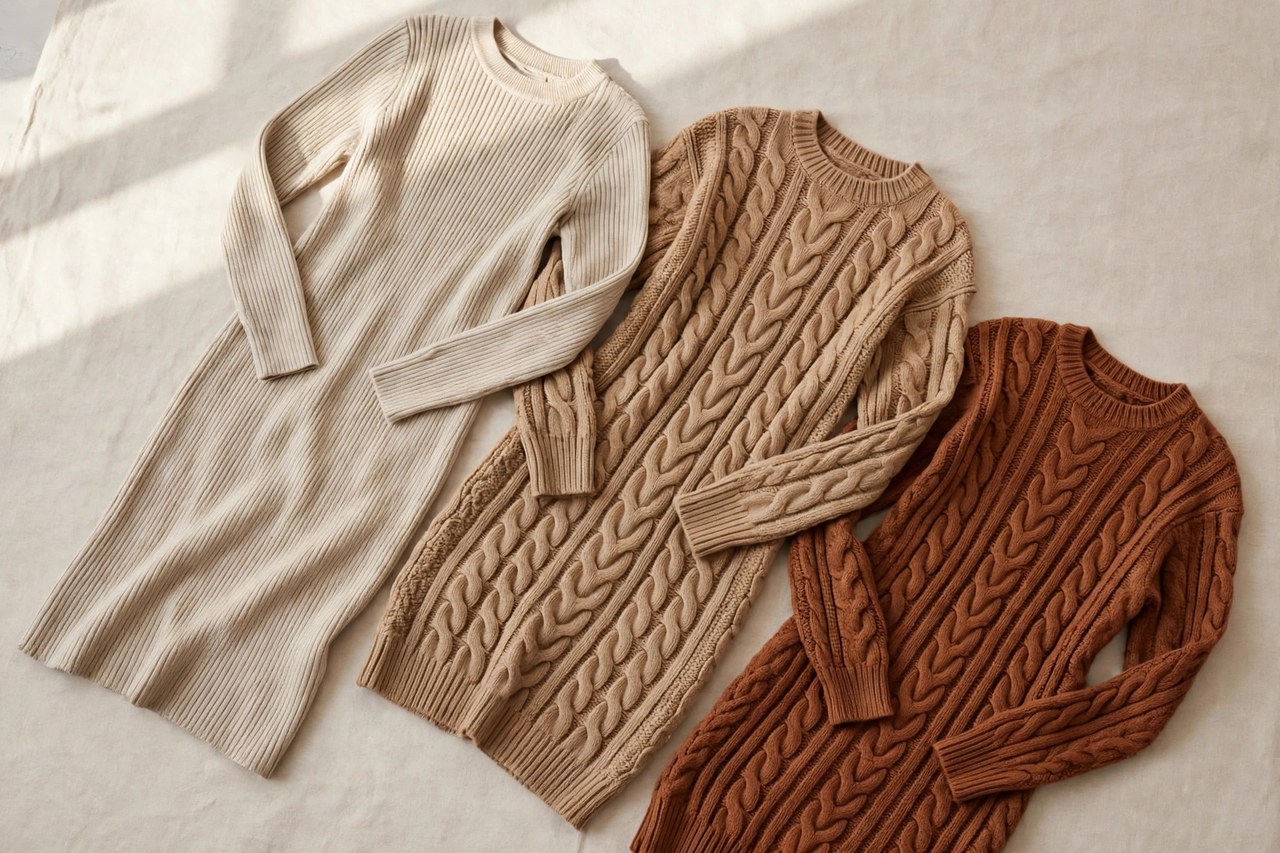
A sweater dress is exactly what its name promises: a dress knitted like a sweater. Where the sweaters page covers knit tops that end at the waist or hip, the sweater dress continues the same yarns, stitches and machinery down to a hem at the knee, midi or ankle. That extension changes the garment completely — fit now runs the full length of the body, and the dress becomes a one-piece cold-weather outfit rather than a layer.
This guide treats the sweater dress as its own garment, distinct from both the knit top and the sweater vest, the sleeveless cousin in this family. It covers the yarns and gauges that make a dress hang well instead of clinging badly, the silhouettes from bodycon to tunic, how to solve the category's famous fit questions honestly, and how to style and store a dress that is, structurally, a very long sweater with all the care needs that implies.
Yarns and Gauges: Why Knit Choice Is Everything
In a woven dress, structure comes from seams and darts; in a sweater dress, the knit itself is the structure. Fine-gauge knits — many small stitches per inch, in merino, cotton or blended yarns — drape smoothly and read dressier, but they also reveal every contour beneath them. Chunky and cable knits add texture and visual structure that forgives more, at the cost of bulk. Ribbed knits are the category's workhorse: the vertical ribs stretch generously, recover well and create a long, lengthening line that suits the dress format.
Yarn content predicts behavior. Wool and wool blends give warmth, resilience and the best recovery from a day's stretch. Cotton knits feel breathable and hold their shape across the torso but can bag at the seat because cotton has little memory. Synthetic and viscose blends add drape and sheen and reduce cost, though pure acrylic dresses can feel clammy and pill early. A touch of elastane — even 2 to 5 percent — noticeably improves how a dress-length knit recovers. Lift the dress by its shoulders in the shop: a knit that already sags on the hanger will grow on you.
Silhouettes: Bodycon, A-Line, Turtleneck and Tunic
The bodycon sweater dress is the fitted extreme — a ribbed or fine knit that follows the body to a mini or knee hem. It succeeds in heavier, substantial ribs rather than thin jersey knits. The A-line and fit-and-flare sweater dress fits through the bodice and releases from the waist or hip into a knitted skirt with real swing; it is the most widely wearable shape in the category and the kindest across a day of sitting, eating and moving.
The turtleneck sweater dress is the cold-climate classic, while cowl and mock-neck versions soften the frame. Tunic sweater dresses end at mid-thigh and are worn over leggings or tall boots as often as bare-legged. Choose silhouette by how much knit-to-body contact you enjoy; that preference decides which you will actually reach for.
Fit Solutions: Lines, Layers and Honest Mirrors
The sweater dress's reputation problem is cling, and the solutions are known. First, gauge: step up one knit weight from the thinnest option, because a slightly denser knit skims where a flimsy one grabs. Second, underpinnings: smooth, seamless underlayers and, for fitted styles, light shapewear remove the lines and interruptions a knit faithfully reports. Third, fit at the shoulder and neck: because the whole dress hangs from the shoulders, a dress that sits correctly there drapes correctly everywhere below; one that slides or twists at the top will never settle at the hem.
Sit down in the fitting room and cross your legs: knit dresses ride and stretch in sitting, and the dress you need is the one that still covers and recovers when you stand. A belt at the natural waist and boots that continue the line sharpen the effect. If a dress requires constant tugging in the shop, it will require it forever.
Styling, Boots and Knit Care
The sweater dress is a one-piece outfit whose natural partner is the boot: knee boots continue its line into winter, ankle boots suit midi lengths, and a heeled boot lifts a fine-gauge dress into evening. Belts define A-line and tunic styles; long pendants suit turtlenecks; a structured coat worn open frames the knit without crushing it. Keep jewelry snag-aware — pronged settings and rough clasps catch open knits — and choose smooth bags for the same reason. In very cold weather, thermal leggings disappear under longer lengths and double the dress's season.
Care is sweater care, extended. Never hang a sweater dress: its own weight will stretch it longer and narrower on a hanger, sometimes within a single season. Fold it, store it flat, and wash it gently — cool water, a mesh bag or hand washing for fine gauges, dried flat and reshaped to its measurements. Depill ribbed and blended knits with a fabric comb rather than picking. Rotate wear so the knit rests between outings. A sweater dress repays this care as the easiest warm outfit in the winter closet: one piece, pulled on, finished.
Related Women's Guides
More to Explore on Apparel Search
Women’s Clothes Guide by Letter: Women's Apparel Directory N · Women's Clothes Directory O · Women's Clothing Directory P · Women's Apparel Directory Q · Women's Fashion Directory R · Women's Clothes Directory T
Looking for Women's Clothing Stores?
This guide helps you choose women's sweater dresses. To browse where to buy, visit our women's clothing store directory, where you can find retailers that carry them.