Women's Swing Dress Guide
A defined bodice, a marked waist and a skirt cut to move — the swing dress was named for the dance floor, and it still earns the name.
Shop Women's Swing Dresses Now
Shop Women's Swing Dresses on Amazon Shop Women's Swing Dresses on eBayThe Amazon and eBay links on this page are affiliate links. If you make a purchase through them, Apparel Search may earn a commission.
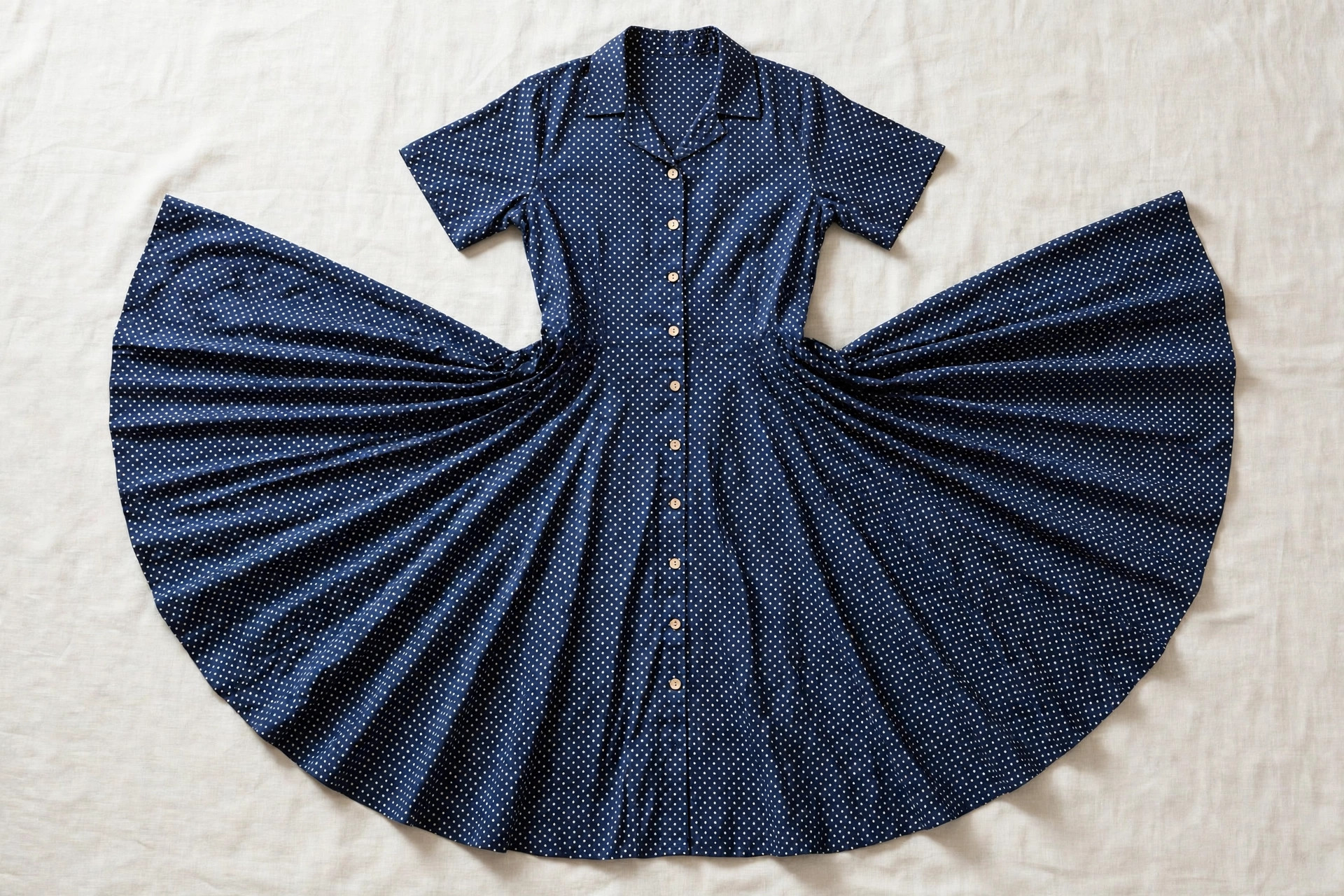
A swing dress pairs a fitted or semi-fitted bodice and a defined waist with a very full skirt — often a half or full circle — cut to fly outward when the wearer moves, turns or dances. The name is literal: the style was shaped by swing music and the Lindy Hop dance culture of the 1940s and 1950s, where a skirt's behaviour in motion was the entire point. In this cluster it sits between the fit and flare, its tailored parent, and the tent, its waist-free opposite.
Modern swing dresses split into two families. Retro and rockabilly versions keep the full vintage specification: circle skirt at knee or tea length, sweetheart or shirt necklines, polka dots and cherries, worn with petticoats for dances and themed events. Contemporary jersey versions borrow the same outline — shaped top, flaring skirt — in soft knit fabric for everyday wear, trading the drama for comfort while keeping the twirl.
Swing, Fit and Flare, Trapeze: The Family Tree
The distinctions are about the skirt and the waist. A fit and flare has the defined waist and a full skirt, but its skirt is usually an A-line or panelled flare of moderate fullness, designed to hang well standing still. A swing dress increases the skirt to a half or full circle specifically so it moves — standing still is the least interesting thing it does. A tent or trapeze dress removes the waist entirely and hangs from the shoulders. If there is a waist seam and the skirt can be spread into a near-circle on the floor, it is a swing dress.
Skirt fullness is measurable: lay the dress flat and fan the skirt. A full circle skirt spreads to roughly 180 degrees from the waist in each direction and takes several metres of fabric; a half circle reaches about half that. Fullness also decides the petticoat question — a circle skirt holds a crinoline's dome shape, while a moderate flare merely gains a little lift. Buy the fullness for the use: dancers want the circle, everyday wearers are usually happier in the half.
Who It Flatters, and the Dance-Floor Fit Checks
The swing dress's marked waist and free skirt are kind to a pear body shape — the skirt passes the hips without touching them — and to an apple shape in its softer jersey forms, where the bodice skims and the skirt supplies all the shape below a high, comfortable waist placement. Hourglass figures get the silhouette that was designed around them in the first place.
Fit checks for a dress meant to move: spin once in the fitting room. The skirt should lift evenly, not drag on one side (uneven panels), and the bodice must not rotate with it. Raise your arms — a dancing dress that binds at the shoulder will not survive a song. Check the waist seam seated and standing, and if you plan a petticoat, try them together: the petticoat should end an inch or two above the hem so only dress shows at the edge.
Fabrics and Styling, Vintage and Modern
Cotton and cotton sateen are the classic swing fabrics — crisp enough to hold the circle's edge, washable, and happy in the era's prints: polka dots, gingham, novelty and floral patterns. Ponte and scuba give modern versions structure with stretch. Very fluid fabrics make a swing dress collapse toward a skater-like drape; very stiff ones make the skirt stand like a lampshade even at rest. The middle ground — cloth with body and a little give — is the target.
Styling splits by family. Vintage: petticoat, seamed stockings or ankle socks, Mary Janes or saddle shoes, a cropped cardigan buttoned at the top, hair in victory rolls or a ponytail with a scarf. Modern: clean heels or white trainers, a denim jacket, jewellery kept to one piece. Both honour the same rule — the skirt is the event, so everything else supports it. Our shift dress guide makes an instructive contrast: minimum fabric, maximum line, no twirl at all.
Common Questions
What is a swing dress?
A dress with a fitted bodice, a defined waist and a very full — often half or full circle — skirt designed to swing and flare with movement. It descends from 1940s and 1950s swing dance culture, where skirt behaviour in motion mattered. Retro versions use cotton and petticoats; modern versions use soft knits for everyday wear.
What is the difference between a swing dress and a fit and flare dress?
Skirt fullness and intent. A fit and flare has a moderately flared, panelled skirt designed to look right standing still. A swing dress carries a half or full circle skirt designed to move — it should spread into a near-circle laid flat and lift evenly when you spin. The swing is the fit and flare's dance-floor specialist.
Do I need a petticoat with a swing dress?
Only for the full vintage effect. A petticoat lifts a circle skirt into its classic dome and makes the flare visible even standing still, and dancers wear one for exactly that reason. Modern jersey swing dresses are designed to be worn without one. If you do wear one, it should end one to two inches above the dress hem.
Dress & Skirt Silhouette Guides
Every dress and skirt silhouette guide in this cluster — the new guides plus the classic silhouettes already on Apparel Search — in alphabetical order:
- Women's Asymmetric Skirt
- Women's Bubble Dress
- Women's Circle Skirt
- Women's Cold Shoulder Dress
- Women's Column Dress
- Women's Empire Dress
- Women's Fit and Flare Dress
- Women's Prairie Dress
- Women's Prairie Skirt
- Women's Sheath Dress
- Women's Shift Dress
- Women's Skater Dress
- Women's Slip Dress
- Women's Surplice Dress
- Women's Tea Length Dress
- Women's Tent Dress
- Women's Tiered Dress
- Women's Tiered Skirt
- Women's Tulip Skirt
- Women's Wrap Dress
- Women's Wrap Skirt
More to Explore on Apparel Search
Looking for Women's Clothing Stores?
This guide helps you choose women's swing dresses. To browse where to buy, visit our womens clothing store directory, where you can find retailers that carry them.