Women's Fit and Flare Dress Guide
Fitted through the bodice and waist, then flaring into a full skirt from the hip — the fit and flare is the most waist-defining dress shape ever cut.
Shop Women's Fit and Flare Dresses Now
Shop Women's Fit and Flare Dresses on Amazon Shop Women's Fit and Flare Dresses on eBayThe Amazon and eBay links on this page are affiliate links. If you make a purchase through them, Apparel Search may earn a commission.
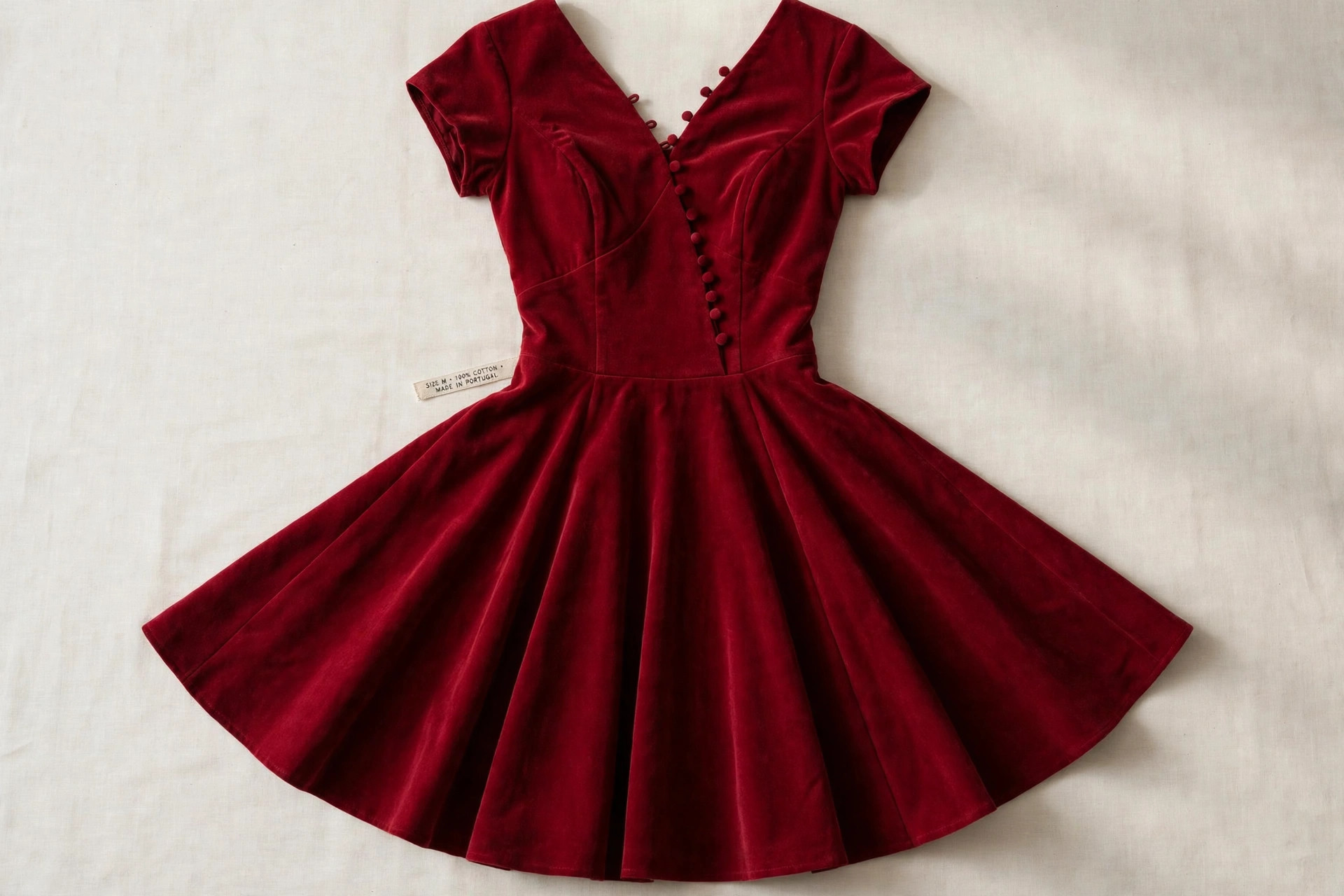
A fit and flare dress does exactly what its name promises: it fits closely through the bodice and waist, then flares from the natural waist into a full, swinging skirt. The waist seam is the whole design — everything above it is tailored, everything below it is volume. No other silhouette defines the waist this clearly, which is why the shape anchors this entire cluster of dress guides and why it keeps returning decade after decade.
The silhouette is the direct descendant of Christian Dior's 1947 New Look, which rebuilt post-war dressing around a nipped waist and generous skirt yardage. Modern versions soften the structure — stretch bodices, lighter skirts, lengths from mini to midi — but the geometry is unchanged. Its closest modern cousin is the skater dress, the same shape shortened and cut for movement; the difference is length, formality and fabric weight.
How the Fit Works: Bodice, Waist, Flare
Judge a fit and flare in three zones. The bodice should follow the torso smoothly — princess seams or darts do the shaping — without pulling across the bust. The waist seam must sit at your natural waist, the narrowest point of your torso; a seam that rides above or below it changes the whole proportion. Below the seam, the skirt is cut in panels, gores or a full circle so it stands away from the body and moves when you walk, rather than clinging to the hip.
That structure is why the shape flatters so widely. On an hourglass body shape it simply underlines the proportions already there. On a rectangle body shape the contrast between the fitted top and the full skirt manufactures the waist curve the body does not supply. Pear shapes get a skirt that skims the hip instead of measuring it. Our umbrella guide to picking clothes for your body shape explains the balancing logic behind all three effects.
Fabrics, Lengths and the Petticoat Question
Fabric decides whether a fit and flare reads tailored or romantic. Cotton sateen, ponte and faille hold a crisp flare and suit daytime and office versions; crepe and jersey soften the skirt into drape; tulle and organza overlays push it toward occasion dressing. Very light fabrics need the bodice structure to do more work, and very stiff fabrics can make the skirt bell out more than expected — check the flare from the side in a mirror, not just the front.
Length changes the register. Above-the-knee versions read young and playful — skater territory. Knee and midi lengths are the classic, wedding-guest and office-safe zone. A petticoat or crinoline underneath is optional, not required: it adds authentic 1950s volume for themed events, but a well-cut modern skirt is designed to hold its shape on a simple lining or a stiffened hem alone.
Styling and Fit Checks
Because the dress supplies both the waist and the volume, styling stays simple: heels or ballet flats, a short jacket or cropped cardigan that ends at the waist seam, and a belt only if the seam needs emphasis. Long coats worn open work; anything that buttons over the skirt and crushes the flare does not. Like the wrap dress, this is a one-piece outfit — its polish comes from the cut, not from accessories added on top.
Fit checks: zip the dress without help from the fabric's stretch; the waist seam should close at your waist, not be dragged to it. Sit down — the skirt should pool, not pull the bodice down. Twirl once: a true fit and flare skirt lifts and settles in a full circle. If the skirt hangs in points, the panels are narrow-cut and the dress is really an A-line wearing fit-and-flare language.
Common Questions
What is a fit and flare dress?
A dress with a fitted bodice, a seam at the natural waist, and a full skirt that flares out from that seam. The contrast between the close-fitting top and the voluminous skirt is what defines the waist so clearly. It descends from Dior's 1947 New Look and appears today in lengths from mini skater styles to formal midi versions.
What is the difference between a fit and flare and a skater dress?
They are the same silhouette at different registers. A skater dress is the short, casual, usually stretch-fabric version, cut above the knee for movement. Fit and flare is the broader category: longer lengths, structured fabrics like sateen and ponte, and more formal styling. If it is short, soft and sporty, retailers call it a skater; longer and tailored versions are sold as fit and flare.
Do fit and flare dresses suit every body shape?
Nearly. The fitted waist and free skirt underline an hourglass waist, create one on a rectangle shape, and skim over pear-shaped hips without measuring them. The one adjustment to watch is proportion: very full skirts can overwhelm a petite frame, so shorter lengths and moderate flare keep the balance.
Dress & Skirt Silhouette Guides
Every dress and skirt silhouette guide in this cluster — the new guides plus the classic silhouettes already on Apparel Search — in alphabetical order:
- Women's Asymmetric Skirt
- Women's Bubble Dress
- Women's Circle Skirt
- Women's Cold Shoulder Dress
- Women's Column Dress
- Women's Empire Dress
- Women's Prairie Dress
- Women's Prairie Skirt
- Women's Sheath Dress
- Women's Shift Dress
- Women's Skater Dress
- Women's Slip Dress
- Women's Surplice Dress
- Women's Swing Dress
- Women's Tea Length Dress
- Women's Tent Dress
- Women's Tiered Dress
- Women's Tiered Skirt
- Women's Tulip Skirt
- Women's Wrap Dress
- Women's Wrap Skirt
More to Explore on Apparel Search
Looking for Women's Clothing Stores?
This guide helps you choose women's fit and flare dresses. To browse where to buy, visit our womens clothing store directory, where you can find retailers that carry them.