Women's Tiered Skirt Guide
Band upon gathered band, each fuller than the last — the tiered skirt is the simplest construction in this cluster and the most variable.
Shop Women's Tiered Skirts Now
Shop Women's Tiered Skirts on Amazon Shop Women's Tiered Skirts on eBayThe Amazon and eBay links on this page are affiliate links. If you make a purchase through them, Apparel Search may earn a commission.
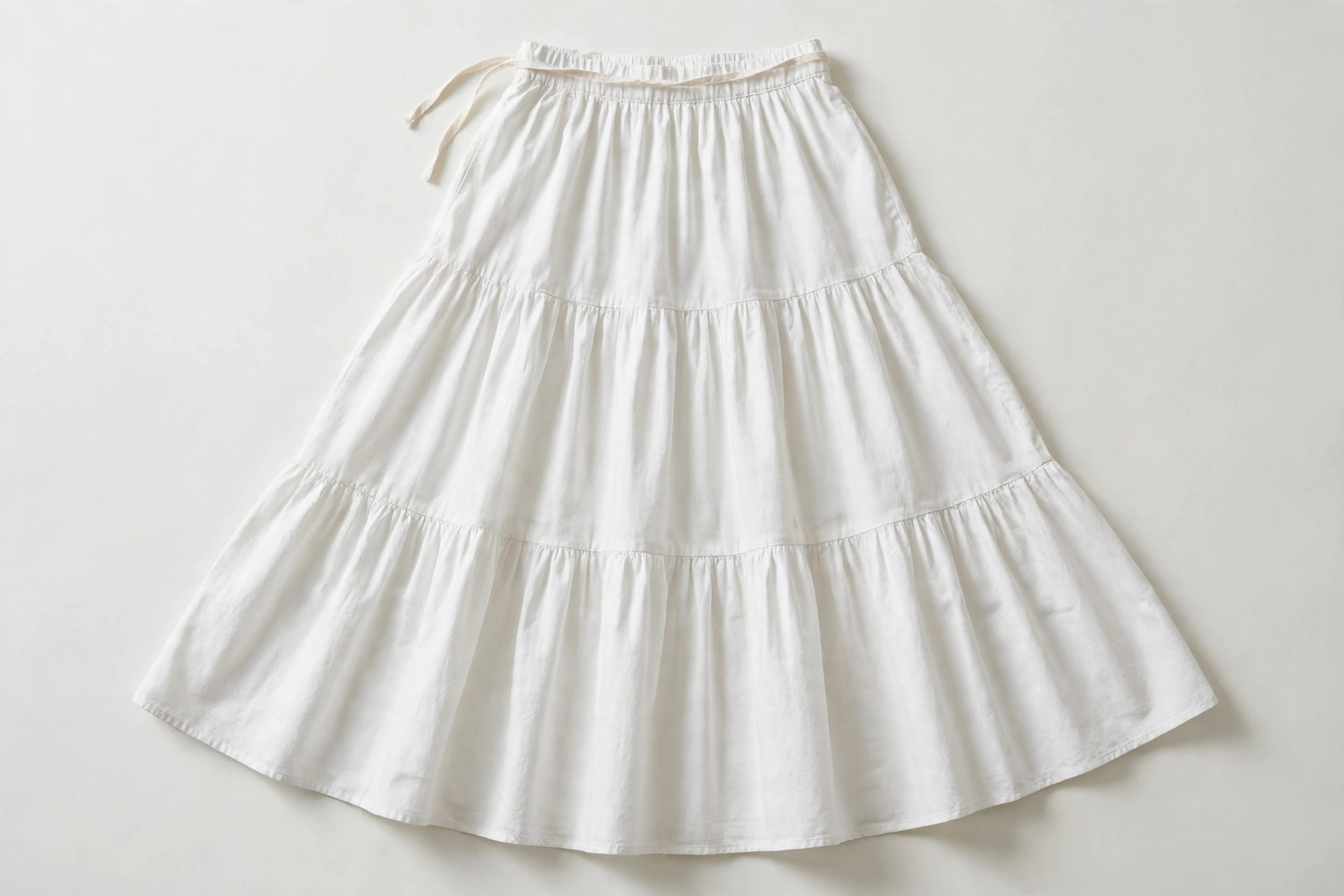
A tiered skirt is made of horizontal bands — tiers — joined by gathered seams, each band wider than the one above it, so the skirt widens in steps from waist to hem. It needs no darts, no zip engineering and no pattern drafting beyond rectangles, which is why tiered skirts appear in every sewing culture and every fashion era: peasant skirts, broomstick skirts, flamenco skirts, 1970s peasant tiers, and the loose summer skirts that return every few years are one construction in different cloth.
As a separate, the tiered skirt is even more flexible than our tiered dress: the top half is yours to choose, so the same skirt can be dressed from market morning to evening with a change of top and shoes. Its close relative the prairie skirt fixes the recipe — long, cotton, ruffled, printed. The tiered skirt keeps only the construction and lets everything else vary: two tiers or six, mini or maxi, silk or denim.
Construction: Ratios, Seams and the Broomstick Variant
Each tier is gathered to fit the tier above at a fullness ratio — one-and-a-half times is gentle, twice is the classic swish, two-and-a-half or more gives the standing ruffle steps of dance skirts. Seams can be enclosed for a clean step or overlapped with the raw gathered edge as a decorative ruffle. The waist is usually a simple elastic or drawstring casing, because the tiers below do all the visual work — which also makes the tiered skirt the most size-forgiving skirt here, and a maternity and travel staple.
The famous variant is the broomstick skirt: a tiered skirt in crinkle cotton or rayon, twisted tightly while damp and dried in its twists so the fabric keeps vertical crinkles that expand as the tiers descend. Broomstick skirts pack to nothing, need no ironing — ironing destroys the point — and store twisted or knotted. If a tiered skirt is labelled crinkle, treat it as a different care species from its crisp cotton cousins: never press it, and refresh the crinkle by re-twisting after washing.
Placing the Tiers: Proportion by Design
Tiers put horizontal lines wherever their seams fall, and the eye reads width at a horizontal line. A first tier that begins at the hip emphasises the hip; tiers that begin below it skim it and emphasise the hem's movement instead. On a rectangle shape, hip-level gathering manufactures the curve. On an inverted triangle shape, full low tiers balance the shoulders. Pear shapes usually prefer the first seam placed low or the tiers cut with less fullness at the top, letting the skirt gain width gradually — the principle runs through our body-shape styling guide.
Tier depth is the subtler lever. Equal tiers read classic and folk; deepening tiers toward the hem read modern and elongate the skirt; one very deep final tier with a ruffle is the prairie formula. Mini tiered skirts use two or three wide tiers and read as a flared, flirty shape quite different from their long sisters. Judge a tiered skirt walking, not standing: the bands should swing in sequence, and any tier that clings to the one above it is cut with too little fullness for its fabric.
Fabrics, Styling and Care
Light, gatherable cloth is the requirement: cotton voile and lawn, rayon, gauze, soft linen and chiffon for float; denim, corduroy and canvas for the sturdy workwear branch, where fewer tiers and enclosed seams keep the weight manageable. Silk and satin tiered skirts exist for evening and rely on fine enclosed seams to keep the steps clean. Whatever the fabric, weigh the finished skirt in hand — tiers multiply yardage, and a maxi in the wrong cloth is heavy enough to drag its own waistband down by evening.
Styling follows the one-volume rule this cluster repeats: tiers below, simplicity above. Tucked tees and tanks in summer, fitted knits and cropped jackets in winter, a belt to mark the waist when the top is loose. Care is the steamer's friend — tiers press band by band from the top down — except for crinkle versions, which must never meet an iron at all. Wash gathered skirts in a gentle cycle: those long gathered seams are the garment's entire structure and its first failure point in cheap versions.
Common Questions
What is a tiered skirt?
A skirt built from horizontal bands of fabric joined by gathered seams, each band fuller than the one above, so the skirt widens in steps from waist to hem. It appears as peasant skirts, broomstick skirts and modern summer skirts in every length. A prairie skirt is the specific long, ruffled, calico version of the same construction.
What is a broomstick skirt?
A tiered skirt made from crinkle fabric that is twisted tightly while damp and dried twisted — traditionally around a broomstick — so it keeps permanent vertical crinkles. The crinkles expand through the tiers, pack without wrinkling and must never be ironed. Refresh them by re-twisting the skirt after each wash and storing it knotted.
Are tiered skirts flattering?
Yes, when tier placement and fullness suit the frame: hip-level tiers add curve to rectangle shapes, full low tiers balance inverted triangles, and a low or gentle first tier skims pear shapes. Light fabrics and fewer tiers suit petite frames. The gathered seams are horizontal lines, so where they fall decides what the eye emphasises.
Dress & Skirt Silhouette Guides
Every dress and skirt silhouette guide in this cluster — the new guides plus the classic silhouettes already on Apparel Search — in alphabetical order:
- Women's Asymmetric Skirt
- Women's Bubble Dress
- Women's Circle Skirt
- Women's Cold Shoulder Dress
- Women's Column Dress
- Women's Empire Dress
- Women's Fit and Flare Dress
- Women's Prairie Dress
- Women's Prairie Skirt
- Women's Sheath Dress
- Women's Shift Dress
- Women's Skater Dress
- Women's Slip Dress
- Women's Surplice Dress
- Women's Swing Dress
- Women's Tea Length Dress
- Women's Tent Dress
- Women's Tiered Dress
- Women's Tulip Skirt
- Women's Wrap Dress
- Women's Wrap Skirt
More to Explore on Apparel Search
Looking for Women's Clothing Stores?
This guide helps you choose women's tiered skirts. To browse where to buy, visit our womens clothing store directory, where you can find retailers that carry them.