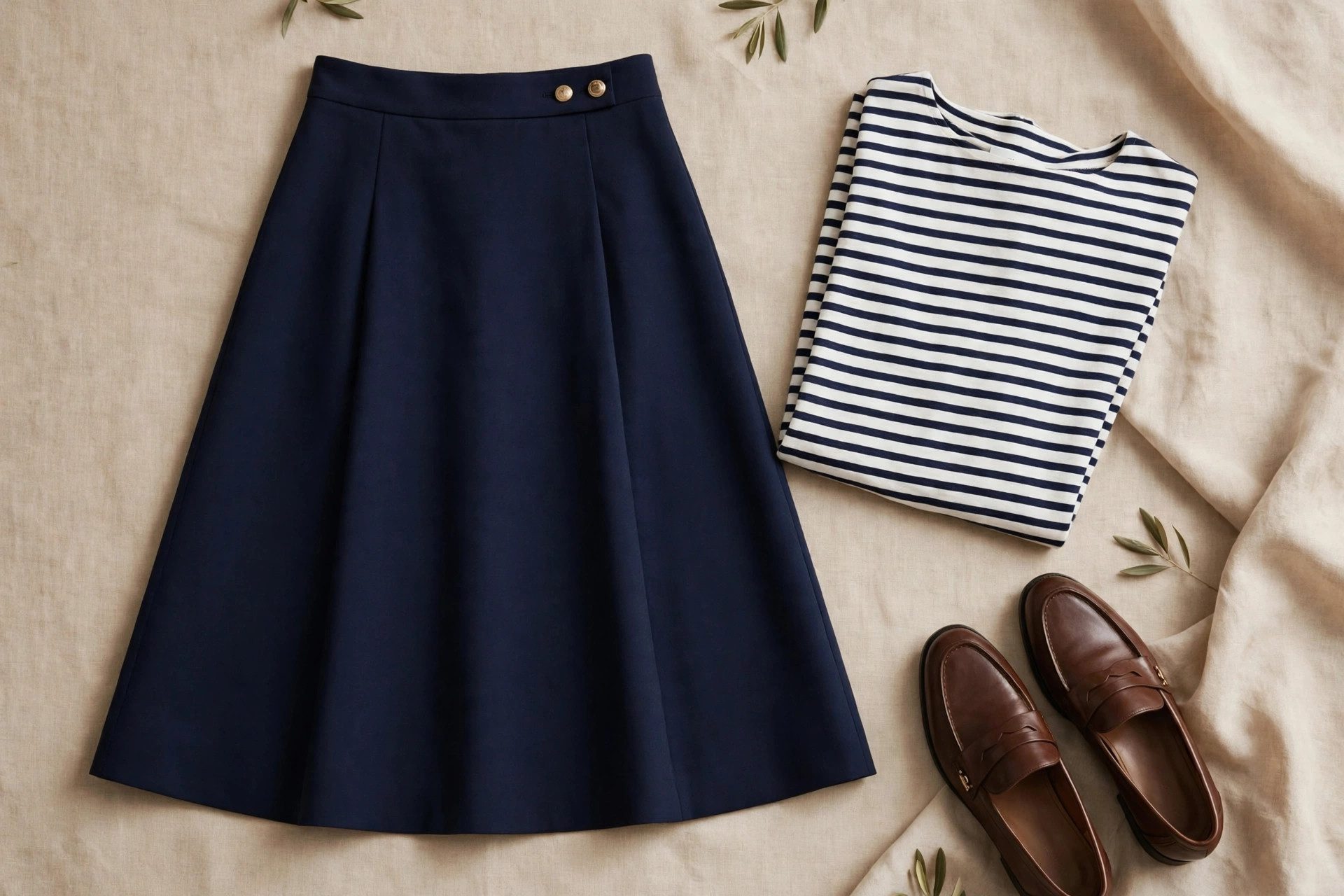
A knee-length skirt is a skirt whose hem ends at the knee — at the kneecap, just above it, or just below it. It is less a single style than a length applied to many: pencil, A-line, pleated, wrap and straight skirts all have knee-length versions, and the length is what they share. On the hemline ladder the knee is the professional anchor — covered enough for any workplace, free enough to walk, climb stairs and sit without negotiation. Searches for the term run at decade highs because it is the length shoppers reach for when they want a skirt that works everywhere.
Where Exactly Is Knee-Length?
Catalogues use the term loosely, so learn the three landing points. Above the knee — hem one to five centimetres above the kneecap — reads youthful and casual, and is the upper limit most offices accept. At the knee brushes the kneecap and is the neutral classic. Just below the knee, covering the kneecap and ending where the calf begins, is the most formal and, on most legs, the most flattering of the three, because the hem sits at a narrow point rather than across a joint.
The catch is that the knee is a fixed point on the body while skirt lengths are cut in centimetres, so the same skirt is above-knee on a tall wearer and below-knee on a petite one. When you shop, judge by where the hem lands on you, not by the size chart's label. The one landing point to avoid is mid-calf for this category — that is midi territory, with different proportion rules.
Knee-Length Cuts and Where Each Works
The pencil at knee length is the boardroom version — narrow, darted, vented at the back. The A-line at knee length is the all-rounder: fitted at the waist, skimming the hip, formal enough for work with a blouse and informal enough for weekends with a tee. Pleated knee-length skirts add movement and suit workplaces one step below formal; knife pleats read tailored, accordion pleats read softer. The wrap version adjusts at the waist and forgives fluctuation, and the straight skirt — narrower than an A-line, looser than a pencil — is the quiet classic in suiting fabrics.
Choose by occasion first and body second. Formal and office settings reward the straighter cuts in suiting fabrics; creative and casual settings take any cut in denim, cotton or knit. Because the length itself is so neutral, fabric does most of the formality work in this category — a knee-length skirt in ponte and the same skirt in raw denim are different garments socially, whatever their shared hemline.
Proportions and Shoes
The knee-length skirt's proportion rule is the waist: with the hem at the knee, the outfit divides cleanly in two, and a tucked or cropped top that marks the waist keeps the division flattering. Untucked long tops blur the join and make the length look accidental. On petite frames, above-knee or at-knee hems keep the leg longer; taller wearers can use the below-knee point freely. If the hem ends exactly at the widest part of the calf — a risk just below the knee on some legs — move it a centimetre in either direction.
Shoes are flexible because the hem leaves the ankle free. Loafers and pumps are the work standards; ankle boots work in winter and should either clear the hem comfortably or be worn with matching tights so the leg reads as one line; trainers take A-line and denim versions casual. Knee-high boots under a knee-length skirt leave almost no leg showing, which suits cold weather and formal styling, while a gap of leg with a heeled shoe is the dressier read.
Common Questions
- Is a knee-length skirt considered formal?
- It can be — formality comes from the cut and fabric more than the length. A knee-length pencil or straight skirt in a suiting fabric is formal enough for almost any office or ceremony. The same length in denim, jersey or a casual print is a casual garment. The length itself is neutral, which is its strength.
- What is the most flattering knee length?
- For most legs, just below the knee — where the kneecap is covered and the hem lands at the narrow point where the calf begins. It lengthens the leg and avoids cutting across the knee joint. Above the knee is the most youthful point. Judge on your own leg rather than the label, since height shifts where a cut length lands.
- What shoes go with a knee-length skirt?
- Loafers and low pumps for work, heeled sandals for dressier versions, ankle boots in winter, and trainers for casual A-line and denim styles. The hem leaves the ankle free, so almost every shoe works; the main rule is that boot tops should not end exactly at the hemline.
- What is the difference between knee-length and midi?
- A knee-length skirt ends at or just below the knee. A midi skirt continues past it to mid-calf, between the knee and the ankle. The midi covers more leg and needs more deliberate proportion handling at the waist and shoes; the knee-length skirt is the easier, more formal-neutral of the two.
Skirt Styles & Lengths
This page is part of our series on the core skirt styles — the cuts and lengths every skirt wardrobe is built from.