Women's Madras Skirts Guide
A skirt in the bleeding plaid: strong, fine-textured cotton checks cut into A-lines, wraps and tiers — the summer skirt with a two-thousand-year-old port in its past.
Shop Women's Madras Skirts Now
Shop Women's Madras Skirts on Amazon Shop Women's Madras Skirts on eBayThe Amazon and eBay links on this page are affiliate links. If you make a purchase through them, Apparel Search may earn a commission.
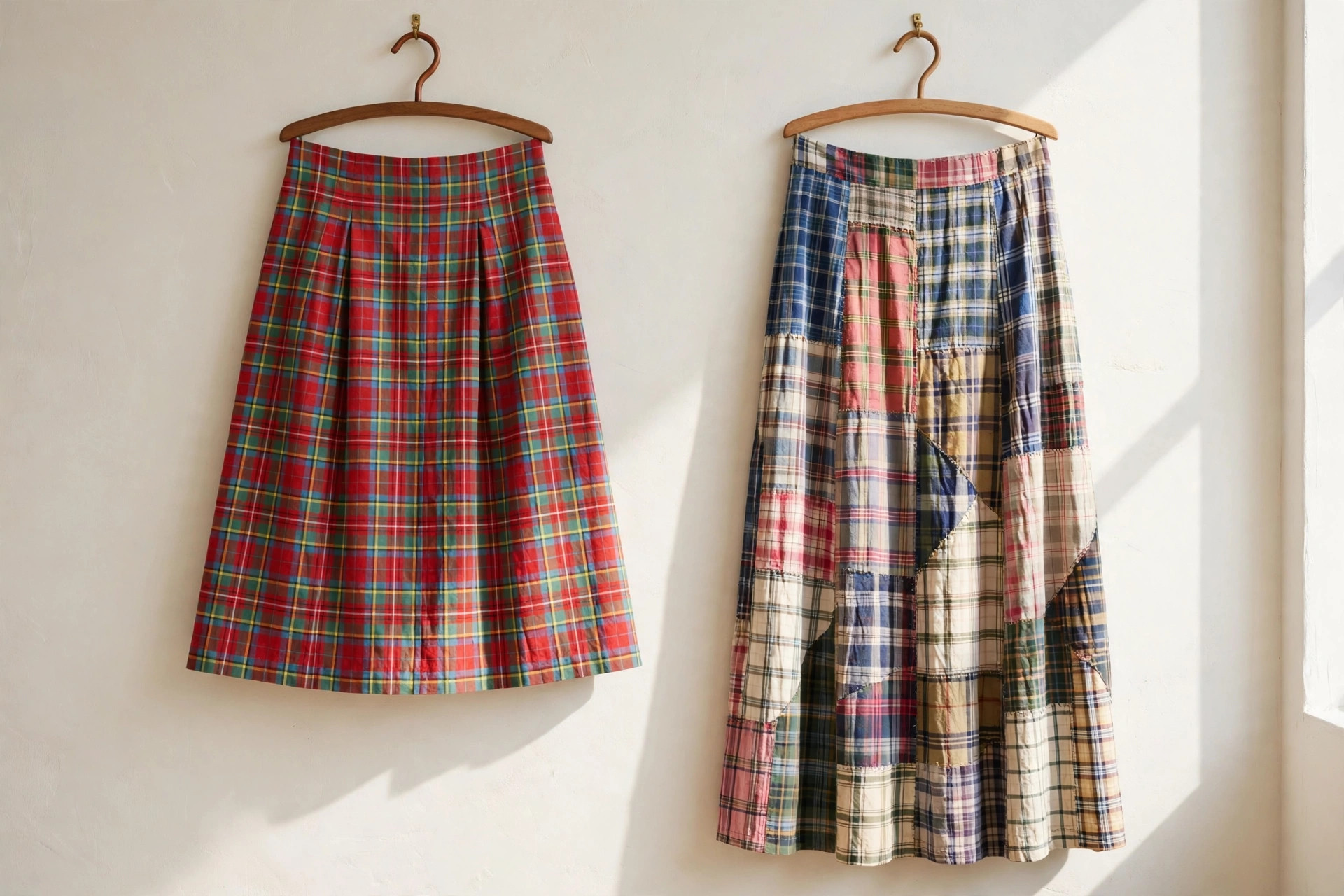
A madras skirt takes the lightest, brightest fabric in the summer wardrobe — madras, the cotton cloth whose checks are woven from colored yarns in a pattern of modified stripes — and gives it a skirt's full sweep to show off. An A-line or tiered madras skirt is pattern with movement: every step rearranges the checks, and the strong, fine-textured cotton holds a skirt's shape without weight.
Skirts display madras better than almost any garment, because the cloth falls in long uninterrupted panels. That is also why patchwork madras — many plaids sewn into one cloth — appears so often in skirts: a skirt has the area to carry the mosaic. This guide covers the fabric, the history woven into it, and the skirt styles it makes.
Chennai: The Fabric's Two-Thousand-Year Port
Madras cloth takes its name from Madraspatnam — Chennai — on India's southeast coast, a settlement woven into the cotton trade since around the 2nd century, when the region's weavers were already famous for fine patterned cotton. The handwoven cloth, dyed in vegetable colors, traveled the world's trade routes: to West Africa, to Europe, and in the 19th and 20th centuries to America, where it became the summer uniform of the East Coast.
Authentic Indian madras is still handwoven there, and it still carries the old signature: the dyes were guaranteed to bleed, softening into one another with washing until each garment's plaid was unique to its wearer. A madras skirt in the bleeding cloth is therefore a slow-changing garment — buy it for the plaid it will become across a summer of washings, not only the one on the rack.
Skirt Styles in Madras
The A-line is the classic madras skirt: knee-length or midi, the plaid matched or deliberately unmatched at the seams, worn with a plain tucked top. Tiered and gathered madras skirts go fuller and longer — the bohemian branch, often in patchwork. Wrap skirts suit the cloth's lightness and adjust at the waist. Pencil and straight madras skirts exist too, dressier and rarer, the plaid behaving like a suiting.
Because madras plaid is woven, not printed, the skirt reads the same inside and out, and hems can be left to show the selvedge character of handloom cloth. Pattern scale decides the mood: small checks for a near-solid summer skirt, big bright checks for the full coastal statement, patchwork for the festival version.
Styling and Care
Style a madras skirt as the single patterned piece: white, navy or a color pulled from the plaid above it, flat sandals or white sneakers below, denim jacket over everything in the evening. It is a three-season skirt in warm climates and the high-summer skirt everywhere else, and it travels without ironing anxiety — its natural slight rumple is authentic to the cloth.
Wash cold and separately at first, dry in shade, and expect genuine bleeding madras to keep softening — store it folded to keep the waistband true. Our guides below connect the skirt to its cotton family and to the shorter-skirt and full wardrobe context; but the shortest summary stands: a madras skirt is summer, woven.
One More Consideration
A closing thought on the skirt's place in the wardrobe: madras is one of the few patterns that is simultaneously classic and cheerful, which makes the madras skirt unusually hard-working — it anchors a plain-top wardrobe from May to September and never looks like the same skirt twice, because the plaid pairs differently with every color drawn out of it. Few garments in this guide offer that ratio of one purchase to many outfits, and fewer still have two thousand years of weaving behind them.
Related Women's Guides
Photos From Our Original Guide

Looking for Women's Clothing Stores?
If you are ready to shop rather than browse guides, visit our women’s clothing shopping directory for stores carrying women's madras skirts and much more, or use the Amazon and eBay buttons at the top of this page.