Women's Madras Pants Guide
Trousers in genuine madras: the check pattern of crossing colored stripes, woven in strong, fine-textured cotton that softens — and famously bleeds — with every wash.
Shop Women's Madras Pants Now
Shop Women's Madras Pants on Amazon Shop Women's Madras Pants on eBayThe Amazon and eBay links on this page are affiliate links. If you make a purchase through them, Apparel Search may earn a commission.
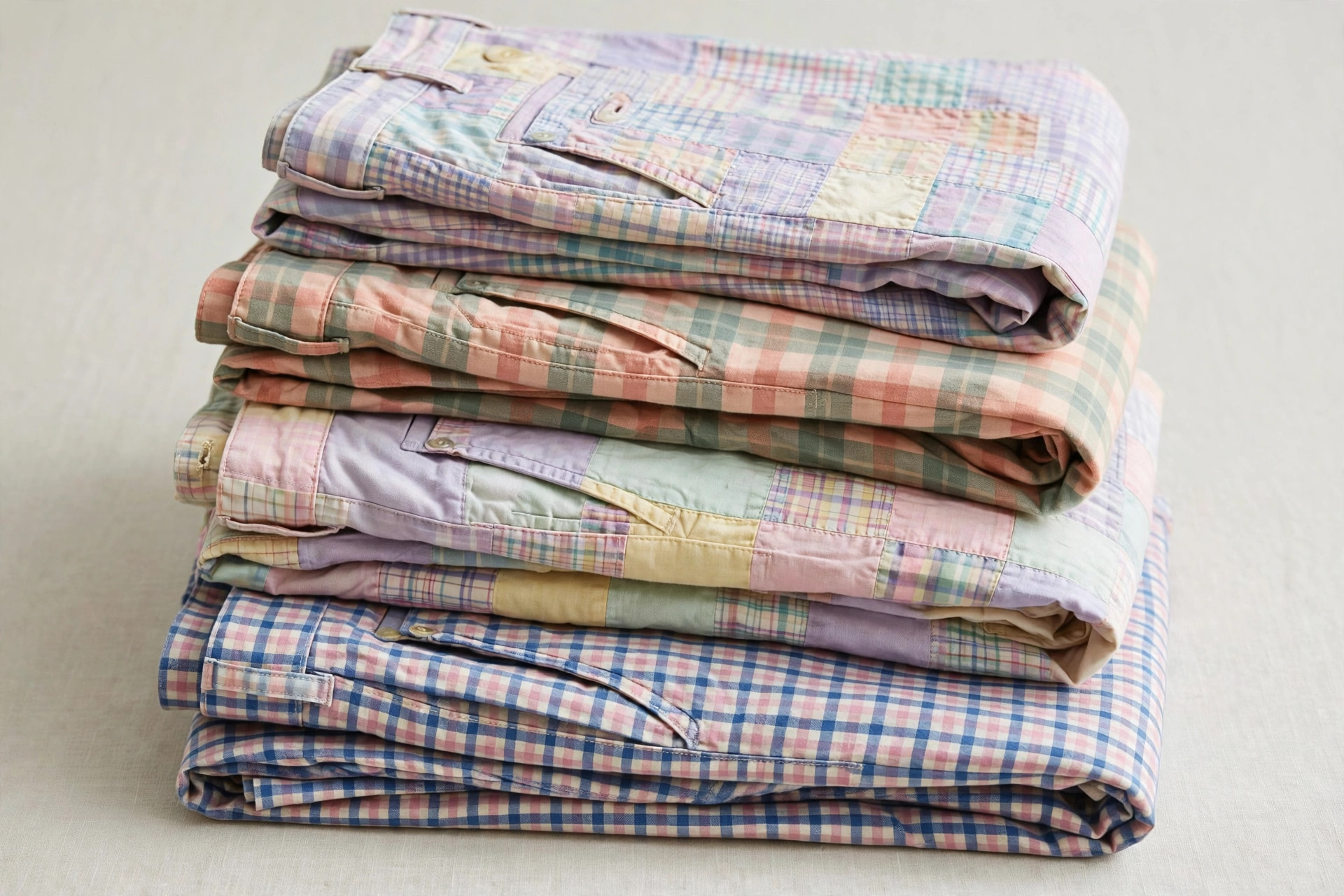
Madras pants are trousers cut from madras, and madras is first a fabric and a pattern before it is a garment: a check pattern formed by bands of color — the warp and weft stripes cross and check each other — in a strong, fine-textured cotton cloth. Put that cloth into a pair of trousers and you get the definitive summer pant of the American seaside wardrobe: light, breathable, unmistakably patterned.
The pants come in two branches. Tailored madras trousers and crops carry the plaid into a proper warm-weather rotation with blazers and polos. Madras lounge pants — including the cotton madras loungewear linked below — take the same cloth into drawstring, elastic-waist ease. Both begin from the fabric, so that is where this guide spends its time.
What Madras Fabric Is
Madras is a lightweight cotton fabric with patterns of colorful checks and stripes. The pattern is not printed: madras is a check pattern of modified stripes, created in the weave itself as differently colored yarns cross. Because the design lives in the yarns, authentic madras has no right or wrong side — the pattern reads the same on both faces of the cloth, a quick authenticity test in any shop.
The cloth itself is strong and fine-textured for its weight, plain-woven and slightly slubby where handloomed. That fine texture is why madras trousers hang cleanly rather than drooping like flannel, and why the fabric breathes in humid heat: it is a tropical-weight cotton engineered by centuries of wear in one of the world's hottest clothing climates.
Authentic Indian Madras and the Bleed
Authentic Indian madras is handwoven in and around Chennai — the city formerly called Madras, in southeast India, a cotton-trading port since antiquity — from yarns dyed with vegetable dyes. The original cloth was, in the famous phrase, guaranteed to bleed: the natural dyes were not colorfast, and each wash let the checks soften and blend into each other, so a madras garment's colors matured across a summer.
The bleeding became the luxury. Mid-century American makers sold genuine bleeding madras at a premium precisely because it changed — the faded, blended plaid announced the real thing. Modern yarn-dyed madras is usually colorfast and keeps its contrast; patchwork madras, sewn from many madras patterns, turns the whole idea into a mosaic. Know which you are buying: a first wash of true bleeding madras should be alone, cold, and expected to tint the water.
Styling and Care
Wear madras pants as the outfit's pattern and keep the rest quiet: a solid polo, tee, oxford or sweater in one of the plaid's own colors, loafers or boat shoes below. Patchwork madras asks for even plainer partners. The trousers read preppy, summery and coastal wherever they go, and cropped and capri lengths suit them especially — the ankle shows the plaid off.
Care is cold water and shade, separately at first for bleeding cloth, always for saturated modern cloth. Cotton trousers press well and soften with washing — madras famously improves. Our cotton guides linked below cover madras's fiber family in depth, including why cotton's breathability made it the fabric of the Indian summer in the first place.
One More Consideration
A note on matching, for the perfectionists: because madras is yarn-dyed and woven, the plaid's repeat varies subtly between bolts, and trousers cut from handloom cloth will never match at every seam like a printed fabric would. That slight irregularity is the authenticity the original madras buyers prized — evidence of a loom, not a printer. If a perfectly matched, perfectly stable plaid is what you want, modern colorfast madras delivers it; if character is what you want, the bleeding, shifting original is still out there.
Related Women's Guides
Photos

Looking for Women's Clothing Stores?
If you are ready to shop rather than browse guides, visit our women’s clothing shopping directory for stores carrying women's madras pants and much more, or use the Amazon and eBay buttons at the top of this page.