Abaya
Clothing Definitions — definitions of garments and clothing terms from Apparel Search
An abaya is a women's garment worn in Saudi Arabia and sometimes in other places in the Persian Gulf region. It is a long-sleeved, floor-length, loose, usually black garment worn over other clothing when a woman leaves the home. It is worn with a headscarf, the hijab, and sometimes with a veil, the niqab. This page explains where and how the abaya is worn, notes that other Muslim countries have their own versions of modest dress for women, such as the burka and chador, and clarifies that the term abaya is also used for garments worn by men.
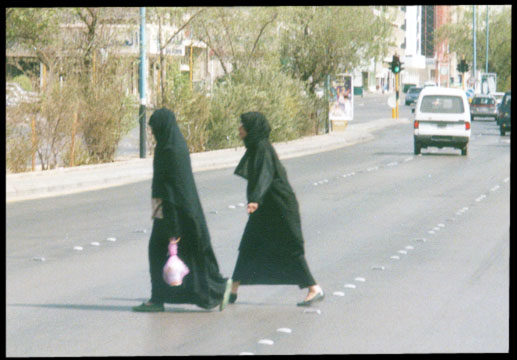 An abaya is a women's garment worn in Saudi Arabia, and sometimes other places in the Persian Gulf region. It is a long-sleeved, floor-length, loose, usually black, garment worn over other clothing when a woman leaves the protection of home. It is worn with a headscarf (hijab) and sometimes with a veil (niqab).
Saudi religious police enforce the wearing of abaya and hijab on all women, even foreigners. Those rules however do not apply in some areas.
Other Muslim countries have their own versions of Muslim modest dress for women: see burka and chador.
See also
- Muslim religious dress
The abaya is worn by women and men. Reference the many clothing outlets on the Internet using the term for both genders, and showing photographs of same.
The above article is licensed under the GNU Free Documentation License. From Wikipedia, the free encyclopedia ( https://en.wikipedia.org/wiki/abaya ). 8/4/05 Definition modified by Apparel Search.
The Abaya as Modest Dress
The abaya belongs to a family of garments worn for modesty across the Muslim world, but it has its own distinct form: a loose, flowing outer layer that covers the body from the shoulders to the floor, with long sleeves, worn over ordinary clothing rather than instead of it. Because it is an overgarment, the clothes beneath can be anything from everyday dress to formal wear; the abaya provides the public-facing layer. Its usual black color is a strong regional convention in Saudi Arabia and the Gulf, giving the garment a uniform, understated appearance in public spaces.
Within Saudi Arabia, the wearing of the abaya and hijab in public has historically been enforced by the religious police on all women, including foreigners, although those rules do not apply in some areas. Practice varies by place and community, and visitors are generally expected to respect local dress expectations. The abaya should not be confused with related garments: the burka and the chador are other countries' versions of modest dress for women, each with a different construction, and the hijab is the headscarf worn alongside the abaya rather than a substitute for it.
How the Abaya Is Worn
Practically, the abaya is designed for ease: its loose cut slips on over other clothes, and the floor-length fall provides full coverage without restricting movement. Styles range from plain, untrimmed versions for everyday wear to more finished versions for social occasions, but the defining features stay constant — long sleeves, a loose body, and a length that reaches the floor. Worn with the hijab, and in some communities with the niqab veil as well, it forms a complete modest outfit suited to the climate and customs of the Gulf region, where a light, flowing outer layer is also a practical response to intense sun and heat.
Common Questions
What is an abaya?
An abaya is a long-sleeved, floor-length, loose garment, usually black, worn over other clothing. It is worn by women in Saudi Arabia and sometimes elsewhere in the Persian Gulf region when leaving the home, as part of modest dress.
What is worn with an abaya?
The abaya is worn with a headscarf called a hijab, and sometimes with a veil called a niqab. Other Muslim countries have their own versions of modest dress for women, including the burka and the chador, which differ in cut and coverage.
Is the abaya worn only by women?
The abaya is principally a women's garment, but the term is also used for men's garments. Clothing outlets on the Internet use the word abaya for both genders, showing photographs of versions worn by women and by men.