Burka
Hat & Headwear Definitions — the two garments known as the burka, the face veil and the full-body covering, from Apparel Search
Search Apparel Search
At a Glance
Definition: Burka (also spelled burqa or burqua) is the name of two items of traditional Islamic women's clothing: a face veil tied on over a headscarf, and a full garment covering the entire body and face, with a mesh grille over the eyes to see through.
Also known as: Burqa; burqua (spellings). The full-body form is also called the full burka or Afghan burka
Pronunciation: BUR-kah
Category: Hat & Headwear Definitions
Two different items of traditional Islamic women's clothing are known as a burka, burqa or burqua. One is a kind of veil which is tied on the head, over a headscarf, and covers the face except for a slit at the eyes for the woman to see through. The other, also called a full burka or an Afghan burka, is a garment which covers the entire body and face, with the eyes covered by a net curtain — a mesh grille — allowing the woman to see but preventing other people from seeing her eyes. This page sets out the two forms, how each is constructed around the eyes, and how the term relates to the hijab dress code, in the terms of a clothing dictionary.
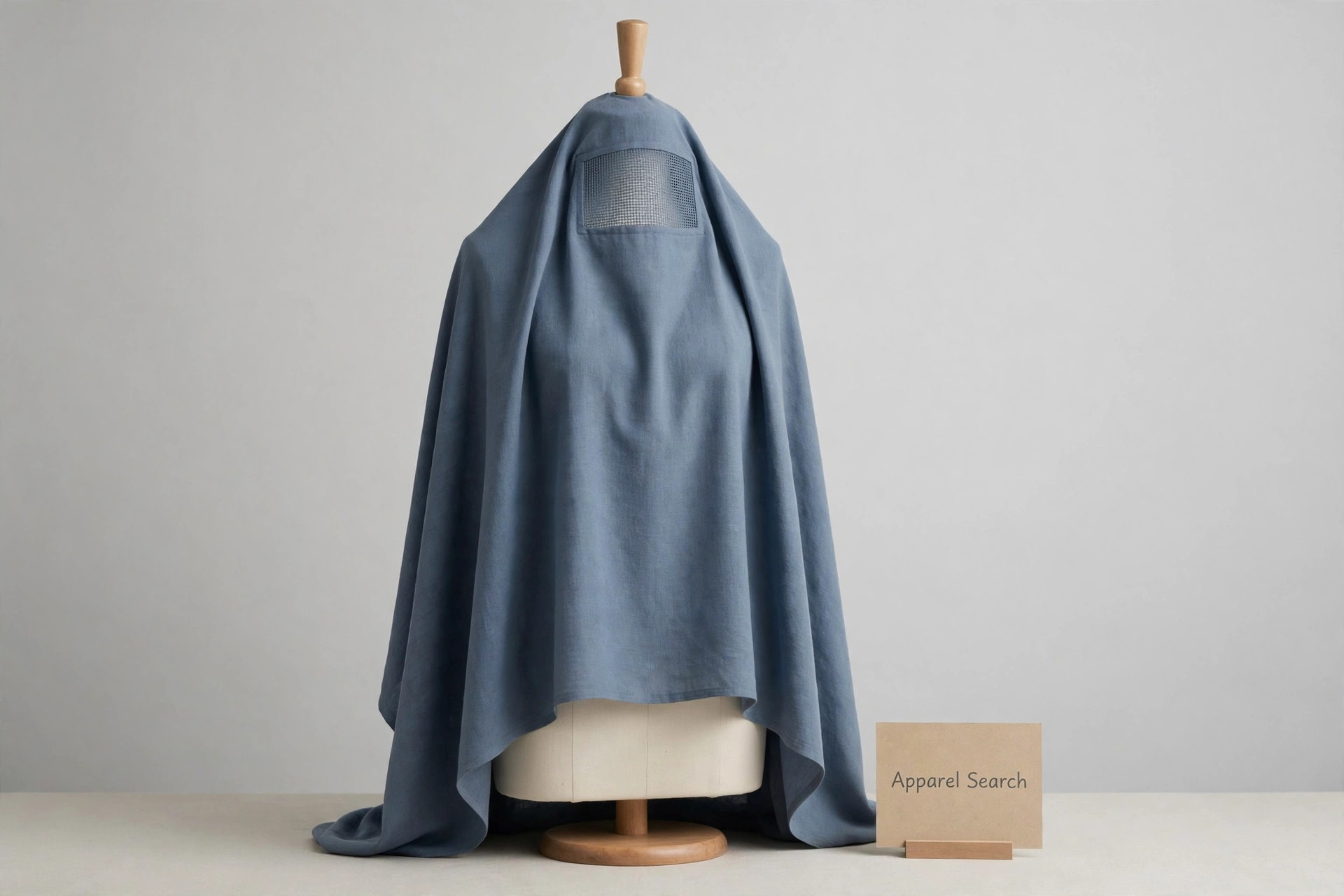
One Name, Two Distinct Garments
Careful use of the word burka starts with recognising that it names two different items, and that confusing them leads to inaccurate description of clothing. The first is a veil. It is tied on the head, over a headscarf, and covers the face except for a slit at the eyes for the woman to see through. It is therefore one component within a larger outfit, worn together with a headscarf and other clothing, and its coverage is of the face.
The second is a complete garment in itself. Also called a full burka or an Afghan burka, and occasionally called a chador, it covers the entire body and face. Describing a garment accurately means stating which of these two forms is meant — veil or full covering — rather than using burka as a general word for any head or face covering. Spelling varies as well: the variants burka, burqa and burqua all appear for the same garments, so in catalogues, museum records and clothing references, recording the spelling used by the source alongside the form of the garment prevents the common error of treating different spellings as different garments, or the same spelling as proof that two garments are the same.
How the Eye Covering Works
The two forms solve the question of vision in two different ways, and the difference is a useful identifying detail. The veil form leaves a slit at the eyes, an opening through which the woman sees, with the rest of the face covered. The full burka covers the eyes as well, with a net curtain — a mesh panel or grille — that allows the woman to see out but prevents other people from seeing her eyes. A description that notes whether the eyes are open through a slit or covered by a mesh panel therefore identifies the garment's construction far more precisely than a general statement about coverage.
The Burka and the Hijab Dress Code
In terminology, both kinds of burka are used by some Muslim women as an interpretation of the hijab dress code. Hijab in this use is the wider dress code, and the burka is a specific form of dress adopted within it, which is why the two words are related but not interchangeable, and why accurate clothing writing keeps them separate. Related garments in the same area of dress include the abaya and the bisht, each a distinct garment with its own name and construction.
Context also varies by place and period: the full burka was compulsory under Taliban rule in Afghanistan, which is one specific historical and regional requirement, and the source of the name Afghan burka for the full form. Presented plainly, these points cover what the garment is, what its forms are called, how it is constructed around the eyes, and how the term sits alongside hijab, chador and headscarf, without reducing a varied item of traditional dress to any single setting in which it has been worn.
Not to Be Confused With
A burka is not a hijab: a hijab is a headscarf covering the hair and neck and leaving the face visible, while a burka covers the face as well — either as a veil tied over a headscarf with a slit at the eyes, or, in the full burka, as a garment covering the entire body and face behind a mesh grille over the eyes. The burka is worn as one interpretation of the wider hijab dress code, not as another name for it.
Common Questions
What are the two garments called a burka?
One is a kind of veil tied on the head, over a headscarf, which covers the face except for a slit at the eyes. The other is a garment which covers the entire body and face, also called a full burka or an Afghan burka, and occasionally called a chador.
How does the wearer see in a full burka?
In a full burka the eyes are covered with a net curtain, a mesh grille allowing the woman to see but preventing other people from seeing her eyes. In the veil form, by contrast, a slit is left at the eyes for the woman to see through.
How does the burka relate to hijab?
Both kinds of burka are used by some Muslim women as an interpretation of the hijab dress code. Hijab is the broader term for the dress code, and the burka is one specific, fuller form of covering within it.