Men's Chokha Guide
The long wool coat of Georgia and the Caucasus, recognised at once by the cartridge holders across its chest.
Shop Chokha Now
Shop on Amazon Shop on eBayThe Amazon and eBay links on this page are affiliate links. If you make a purchase through them, Apparel Search may earn a commission.
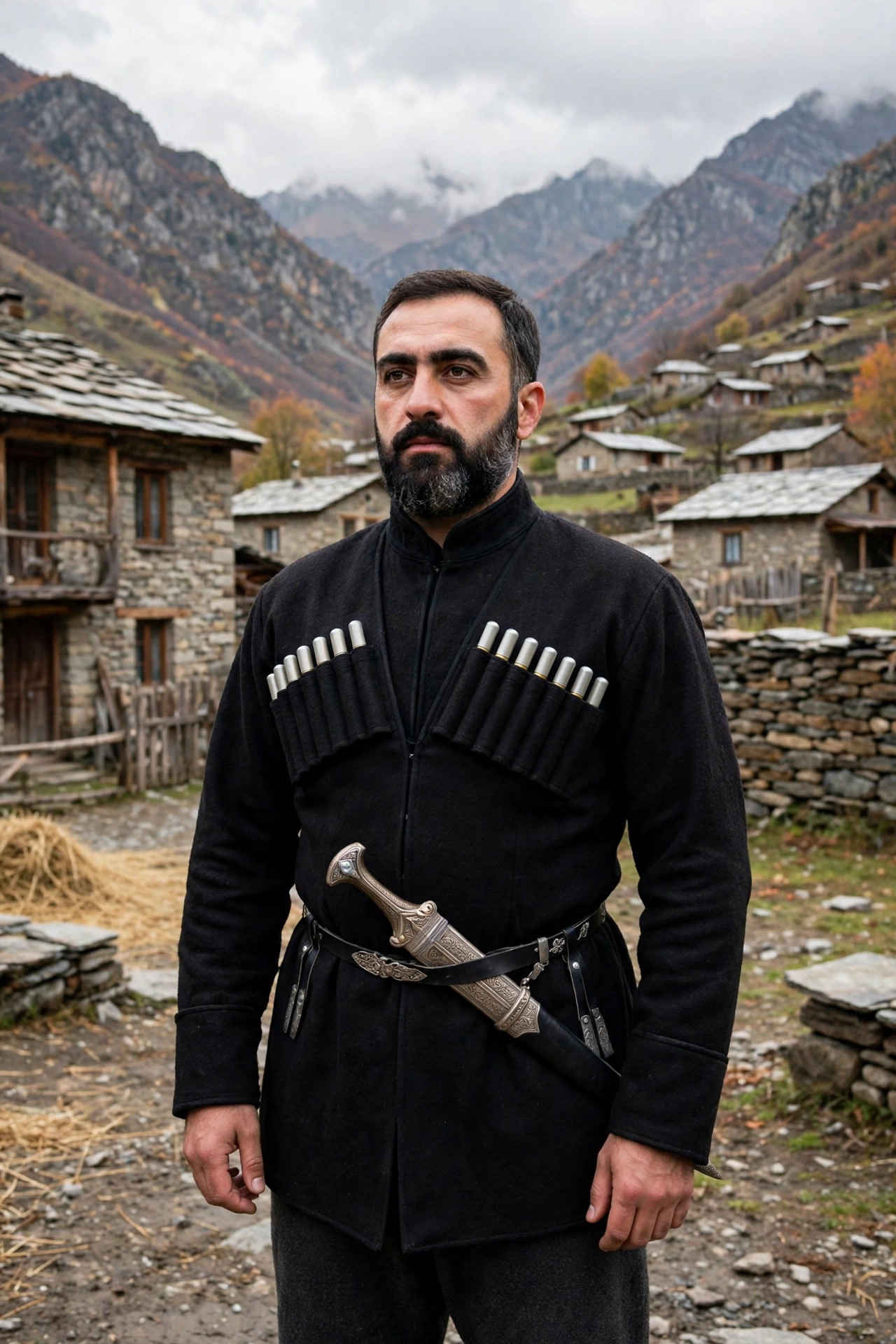
The chokha is the long wool coat worn by men in Georgia and across the Caucasus, known in Georgia itself as the chokha and in neighbouring languages by related names including chocha and cherkeska. Its unmistakable feature is the row of holders across the chest, originally made for rifle cartridges. Worn over the fitted arkhalig, belted and often with a dagger at the waist, the chokha became the defining garment of Caucasian men's dress and remains Georgia's national costume for men.
Anatomy of the Chokha
A chokha reaches below the knee, cut full enough for riding and mountain travel yet shaped at the waist. Across each side of the chest sit the gazyrs, narrow pockets or tubes that once held measured powder charges and later cartridges, capped in silver or bone on fine examples. The coat fastens down the front, the sleeves are long and sometimes slashed or turned back, and a leather or woven belt cinches the waist, from which a dagger, the kinzhal, traditionally hangs.
Regional Variations
Georgian chokhas are classically black, brown, grey or white wool, with white reserved for celebration and choir dress. Across the North Caucasus, Circassian and Cossack versions vary the cut, trim and number of chest pockets, and officers' coats added braid and rank distinctions. Mountain peoples such as the Khevsurs layered the chokha with distinctive embroidered clothing beneath. The shared grammar, long coat, cartridge chest, belted waist, makes the family recognisable from Tbilisi to the high villages of the Greater Caucasus.
Cloth and Making
The traditional cloth is dense, fulled wool that sheds rain and resists wind, woven and tailored to survive years of outdoor life. Better coats are lined, with the chest pockets individually stitched and reinforced, since they were working equipment, not decoration. Silver niello belt fittings, dagger hilts and gazyr caps were the wearer's display pieces, made by Caucasus metalsmiths. A well-made chokha is heavy in the hand, stands almost by itself, and improves, rather than dates, with careful wear.
Wearing the Chokha Today
Georgians wear the chokha today for weddings, national holidays, church festivals, folk dance and polyphonic choir performance, and it appears at state and cultural ceremonies as a symbol of national identity. Modern wearers pair an authentic coat with plain trousers and boots rather than full historical equipment. If you buy one, check the wool's density, the stitching of the chest pockets and the belt fit; store it hanging with moth protection, and brush rather than wash the wool.
Common Questions
What are the pockets on a chokha's chest for?
They are gazyrs, holders that originally carried measured gunpowder charges and later rifle cartridges. Today they are a defining decorative feature, sometimes capped in silver, bone or metal.
What is worn under a chokha?
Traditionally the fitted arkhalig coat over a shirt, with trousers tucked into boots and a belt, often with a dagger, at the waist. Modern wearers may use a simpler shirt and trousers.
When do men wear a chokha today?
In Georgia and the Caucasus for weddings, national holidays, folk dance and choir performance, festivals and cultural ceremonies, where it stands as a symbol of national dress.
Traditional & Cultural Dress Guides
Traditional and cultural dress from around the world — every guide in this cluster:
- Men's Chokha
- Men's Achkan
- Men's Boubou & Agbada
- Men's Arkhalig
- Women's Baju Kurung
- Men's Baju Melayu
- Women's Buibui
- Men's Burnous
- Men's Chullo
- Women's Churidar
- Women's Chut Thai
- Women's Deel
- Men's Djellaba
- Women's Dupatta
- Women's Huipil
- Men's Kanzu
- Women's Kebaya
- Women's Kitenge
- Men's Longyi
- Women's Patiala Salwar
- Men's Pheran
- Women's Sampot
- Women's Sinh
- Women's Songket
- Women's Terno
- Women's Hanbok
- Women's Ao Dai
- Women's Dirndl
- Women's Dashiki
- Women's Cheongsam
- Women's Salwar Kameez
- Women's Yukata
- Women's Kaftan
- Women's Abaya
- Men's Lederhosen
- Men's Thawb
- Men's Barong
- Women's Kimono
- Women's Silk Sari
- Women's Sarongs
- Men's Guayabera Shirts
Next, from Caucasus wool to Andean knitting — the earflap hat built for high-altitude cold.
Next: Men's Chullo Hat Guide: Peru and Bolivia's knitted earflap hat in alpaca wool »Looking for Men's Clothing Stores?
This guide helps you understand and choose chokha styles with confidence. To browse where to buy, visit our mens clothing store directory, where you can find retailers that carry them.