Women's Baju Kurung Guide
Malaysia's modest two-piece outfit: a loose, graceful tunic worn over a long overlapping skirt.
Shop Baju Kurung Now
Shop on Amazon Shop on eBayThe Amazon and eBay links on this page are affiliate links. If you make a purchase through them, Apparel Search may earn a commission.
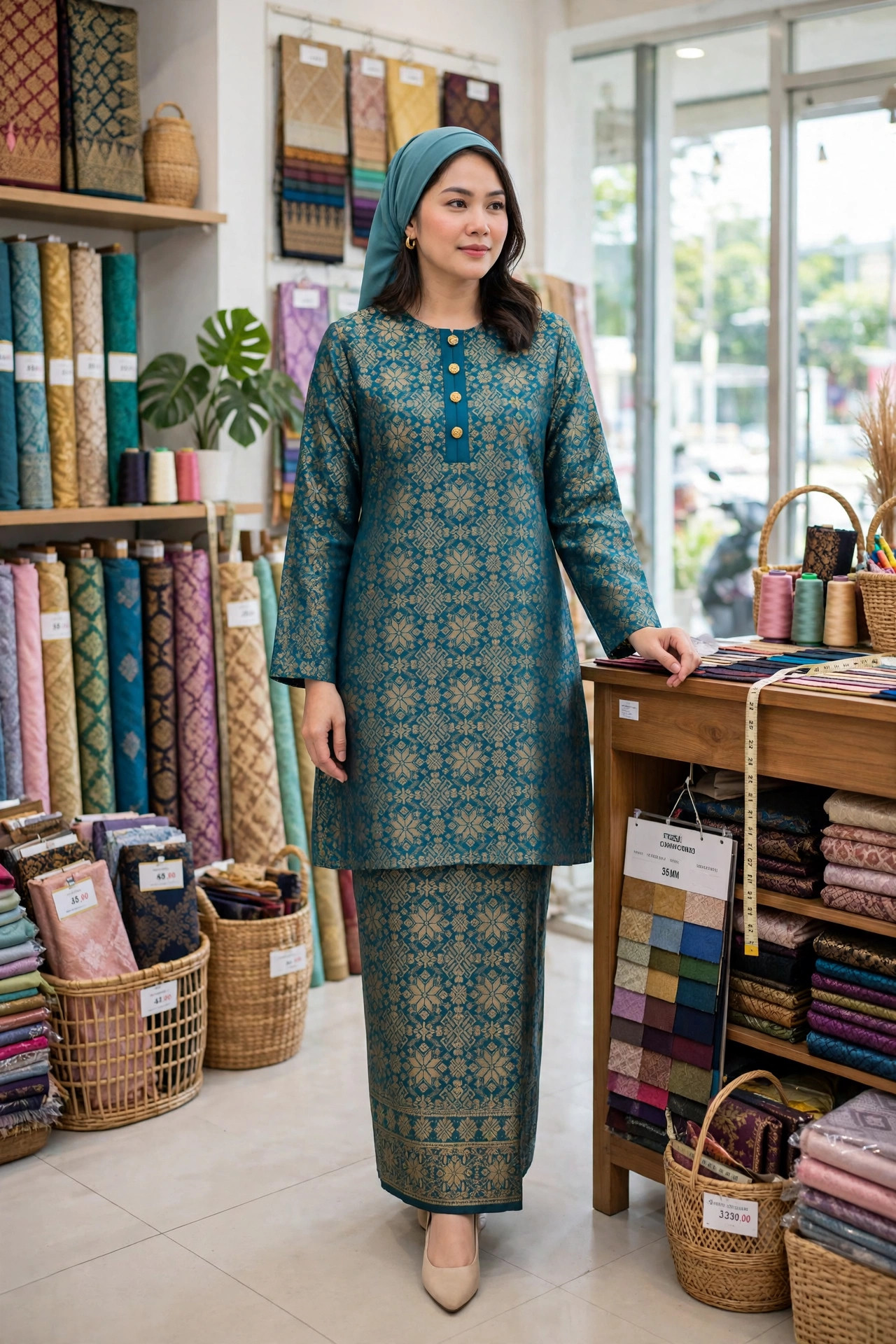
The baju kurung is the traditional dress of Malay women in Malaysia, Brunei, Indonesia and Singapore: a loose, knee-length tunic worn over a long skirt, designed to be modest, comfortable in a tropical climate and suitable for almost every occasion. Its name simply means an enclosed dress in Malay, reflecting the way the outfit covers the body without clinging to it. Women wear it at home, at work, at school and university, and in its richest fabrics at weddings and festivals, which makes it one of the most widely worn traditional outfits in Southeast Asia.
Construction: Pesak, Kekek and the Skirt
A traditional baju kurung is built from straight panels rather than shaped tailoring. Triangular side panels called pesak widen the tunic from under the arm to the hem, and small gussets called kekek under the arms give room to move, so the garment hangs in a clean, column-like line. The neckline is round with a short front opening. The skirt, the kain, is a long sarong-style piece with an overlapping front fold, the ombak beralun, that lets the wearer walk easily while keeping the front smooth and covered.
Main Styles
The classic kurung keeps the loose pesak construction. The baju kurung moden, the modern kurung, is more fitted, often with darts, a zip and a sewn pencil or mermaid skirt, and is the style most younger women choose for offices and celebrations. Kurung Pahang, from the state of Pahang, has a fuller, ribbed-panel top, while kurung Kedah is shorter and looser, traditionally worn at home and for everyday work. Regional embroidery, songket skirts and lace trims mark out festive versions from plain daily wear.
Fabrics and Occasions
Everyday baju kurung are made in breathable cotton and cotton blends, school and uniform versions in plain colours, and festive sets in silk, chiffon, lace and shimmering songket woven with metallic thread. The outfit is the standard choice for Hari Raya (Eid), when families often wear matching colours, and it is worn for weddings, Friday prayers, official functions and teaching. Many women wear a tudung headscarf with it. Because the cut is modest and unrevealing, it is also accepted as formal and office dress across Malaysia and Brunei.
Choosing and Caring for a Baju Kurung
Choose the style by occasion: a traditional loose kurung for religious and family events, a kurung moden when a closer fit is wanted. The tunic should skim rather than pull across the shoulders, the skirt overlap should stay closed when walking, and the hem should clear the floor in flat shoes. Cotton sets can be machine-washed gently, but songket, silk and lace versions should be hand-washed or dry-cleaned, dried in shade and stored hung or folded with the metallic weaving protected from abrasion, so the threads do not catch or tarnish.
Common Questions
What are the two parts of a baju kurung?
A loose, knee-length tunic with long sleeves, built with pesak side panels and kekek underarm gussets, and a long sarong-style skirt with an overlapping front fold that keeps the front smooth while allowing the wearer to walk.
When do women wear baju kurung?
Every day and for celebrations alike: at school, work and home, for Friday prayers and official functions, and in silk, lace or songket for Hari Raya (Eid) and weddings, when families often wear matching colours.
What is a baju kurung moden?
The modern version of the outfit. It keeps the tunic-and-skirt idea but is cut closer to the body, often with darts and a back zip, and is usually paired with a sewn pencil or mermaid skirt rather than a wrapped sarong skirt.
Traditional & Cultural Dress Guides
Traditional and cultural dress from around the world — every guide in this cluster:
- Women's Baju Kurung
- Men's Achkan
- Men's Boubou & Agbada
- Men's Arkhalig
- Men's Baju Melayu
- Women's Buibui
- Men's Burnous
- Men's Chokha
- Men's Chullo
- Women's Churidar
- Women's Chut Thai
- Women's Deel
- Men's Djellaba
- Women's Dupatta
- Women's Huipil
- Men's Kanzu
- Women's Kebaya
- Women's Kitenge
- Men's Longyi
- Women's Patiala Salwar
- Men's Pheran
- Women's Sampot
- Women's Sinh
- Women's Songket
- Women's Terno
- Women's Hanbok
- Women's Ao Dai
- Women's Dirndl
- Women's Dashiki
- Women's Cheongsam
- Women's Salwar Kameez
- Women's Yukata
- Women's Kaftan
- Women's Abaya
- Men's Lederhosen
- Men's Thawb
- Men's Barong
- Women's Kimono
- Women's Silk Sari
- Women's Sarongs
- Men's Guayabera Shirts
Continue with the Malay outfit worn by men, the companion to the baju kurung.
Next: Men's Baju Melayu Guide: Malaysia's classic men's outfit »Looking for Women's Clothing Stores?
This guide helps you understand and choose baju kurung styles with confidence. To browse where to buy, visit our womens clothing store directory, where you can find retailers that carry them.