Men's Chullo Hat Guide
The knitted earflap hat of the Peruvian and Bolivian highlands, patterned with the symbols of its maker's community.
Shop Chullo Now
Shop on Amazon Shop on eBayThe Amazon and eBay links on this page are affiliate links. If you make a purchase through them, Apparel Search may earn a commission.
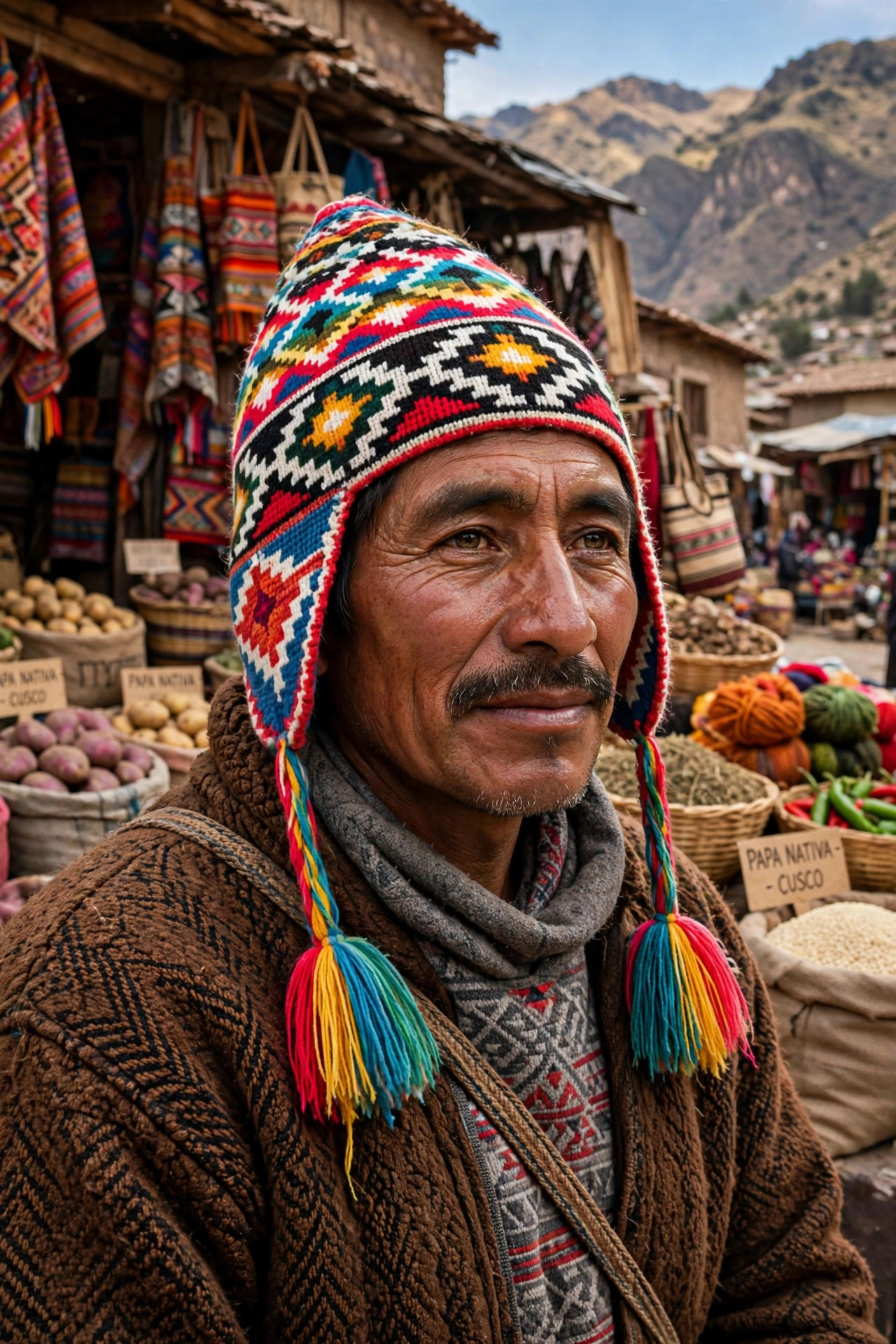
The chullo is the knitted earflap hat of the Andes, worn by men and boys in the highlands of Peru and Bolivia, where nights are cold at any time of year. Knitted in the round with earflaps, ties and often a tasselled crown, it is both serious cold-weather equipment and a canvas for community identity, its patterns naming animals, crops and places.
How a Chullo Is Knitted
A traditional chullo is knitted in fine, tight stitches, often in stranded colourwork that makes the fabric double-layered and warm. The earflaps are worked as part of the hat, not sewn on, and braided ties fasten under the chin against mountain wind. Many Peruvian chullos are knitted by men, a celebrated skill in communities around Lake Titicaca, notably on Taquile Island, where knitting quality is judged closely and hats are made to last for years of daily wear.
Patterns That Mean Something
The bands of colourwork are a vocabulary. Llamas and alpacas, condors, corn, potatoes, stars and local landscapes appear in repeated bands, and colour combinations can signal the wearer's community, marital status or the festival for which a hat was made. The finest festival chullos are almost tapestry-like, with dozens of tiny figures worked in natural and dyed yarns. Simpler everyday hats use fewer colours but keep the same structure, warmth first, pattern as the maker's signature within it.
Alpaca, Sheep Wool and Modern Yarns
Authentic highland chullos use alpaca fibre, warm, light and water-resistant, or sheep's wool, which is hardier and holds dye in strong, clear colours. Baby alpaca, the soft first shearing grade, makes the most comfortable hats against the skin. Market versions may blend in acrylic, which lowers the price and brightens colours but reduces warmth and breathability. A good test is weight and density: a real knitted chullo feels substantial, with colourwork you can see carried across the inside.
Choosing, Wearing and Caring
Choose a chullo by fit first: the crown should sit snugly without pressure, and the earflaps should cover the ears fully and tie without pulling. Men wear chullos daily in the highlands with jackets and ponchos, and everywhere else they have become a practical winter hat with genuine heritage. Wash rarely, by hand in cool water with mild soap, reshape and dry flat away from heat. Stored clean and moth-free, an alpaca chullo keeps its shape and warmth for many winters.
Common Questions
What is a chullo made from?
Traditionally alpaca fibre or sheep's wool, knitted tightly in stranded colourwork for warmth. The finest hats use soft baby alpaca. Blends with acrylic exist at lower prices but are less warm.
Where does the chullo come from?
The Andean highlands of Peru and Bolivia, where men and boys wear it against high-altitude cold. Communities around Lake Titicaca, including Taquile Island, are especially known for fine knitting.
How should a chullo fit?
Snugly on the crown without pressure, with earflaps that cover the ears fully and ties that fasten comfortably under the chin. The dense colourwork should feel substantial, not thin or loose.
Traditional & Cultural Dress Guides
Traditional and cultural dress from around the world — every guide in this cluster:
- Men's Chullo
- Men's Achkan
- Men's Boubou & Agbada
- Men's Arkhalig
- Women's Baju Kurung
- Men's Baju Melayu
- Women's Buibui
- Men's Burnous
- Men's Chokha
- Women's Churidar
- Women's Chut Thai
- Women's Deel
- Men's Djellaba
- Women's Dupatta
- Women's Huipil
- Men's Kanzu
- Women's Kebaya
- Women's Kitenge
- Men's Longyi
- Women's Patiala Salwar
- Men's Pheran
- Women's Sampot
- Women's Sinh
- Women's Songket
- Women's Terno
- Women's Hanbok
- Women's Ao Dai
- Women's Dirndl
- Women's Dashiki
- Women's Cheongsam
- Women's Salwar Kameez
- Women's Yukata
- Women's Kaftan
- Women's Abaya
- Men's Lederhosen
- Men's Thawb
- Men's Barong
- Women's Kimono
- Women's Silk Sari
- Women's Sarongs
- Men's Guayabera Shirts
Return to the Caucasus for the fitted coat that layers beneath the chokha.
Next: Men's Arkhalig Guide: The fitted coat of Azerbaijan and the Caucasus, worn alone or under the chokha »Looking for Men's Clothing Stores?
This guide helps you understand and choose chullo styles with confidence. To browse where to buy, visit our mens clothing store directory, where you can find retailers that carry them.