Women's Chut Thai Guide
Thailand's formal national dress: a silk wrap skirt worn with a sash or tailored top, in eight royally endorsed styles.
Shop Chut Thai Now
Shop on Amazon Shop on eBayThe Amazon and eBay links on this page are affiliate links. If you make a purchase through them, Apparel Search may earn a commission.
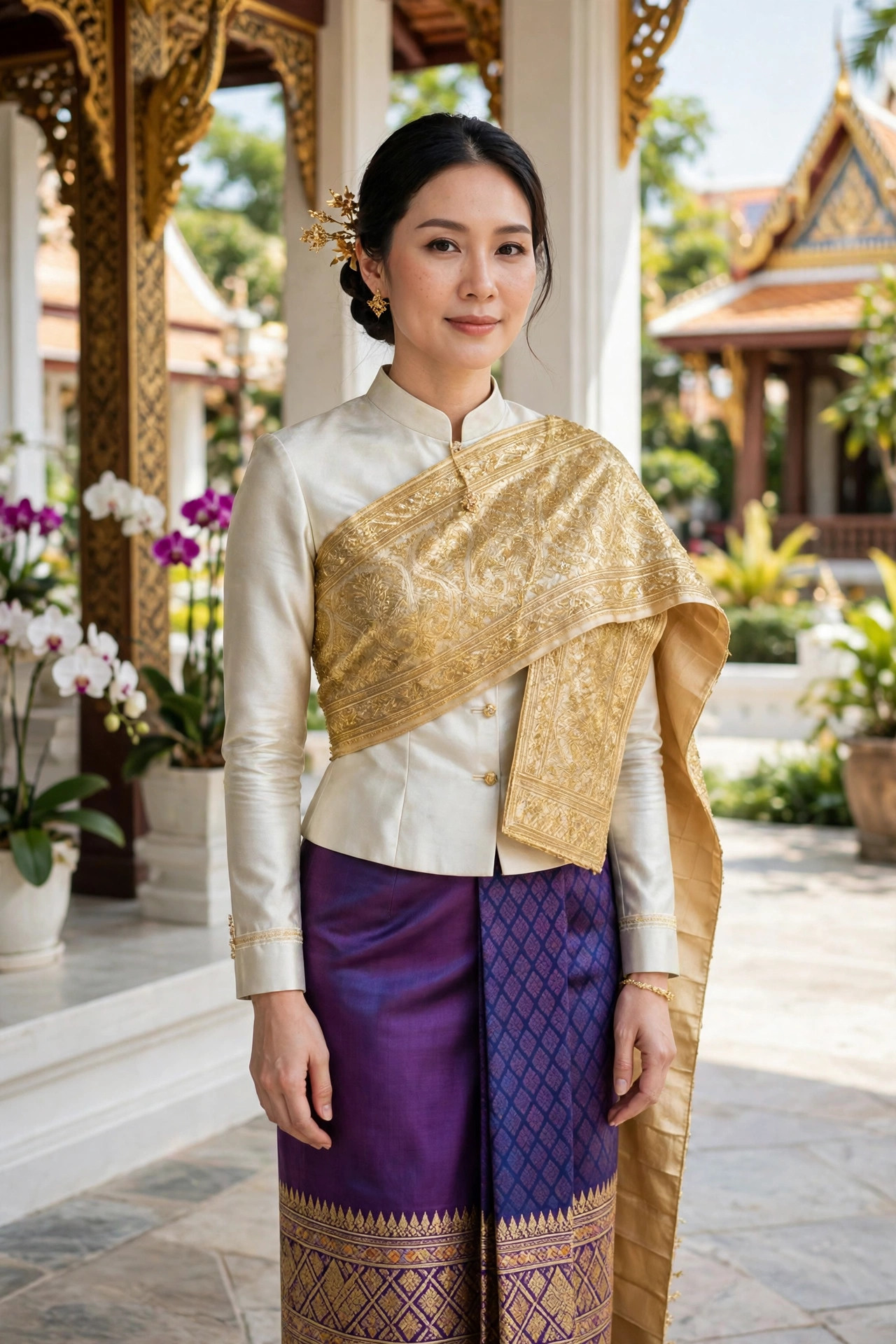
Chut thai, literally Thai outfit, is the formal national dress of Thailand. For women it combines a long wrapped skirt with a sash or a fitted formal top, in silk and brocade, and it is the dress worn for weddings, royal and state occasions, formal ceremonies and important festivals. In the 1960s, Queen Sirikit worked with designers and historians to define a set of formal styles drawing on historical Thai dress, and those styles, eight for women, remain the reference for chut thai today.
The Eight Formal Styles
The eight styles range from relaxed to full court formality. Chut Thai Ruean Ton, the most casual, pairs a collarless blouse with a plain or striped wrap skirt. Chit Lada adds a formal long-sleeved blouse with a silk skirt for daytime ceremonies. Amarin and Boromphiman use brocade and high collars for evening formality, Boromphiman as a one-piece dress. The sabai styles, Siwalai, Chakkri, Dusit and Chakkraphat, drape an embroidered sash over one shoulder and are the most recognisably Thai, with Chakkri, a gold brocade sabai over a silk wrap skirt, the best known of all.
Skirts, Sashes and Fabrics
The skirt, the pha nung or sinh-style wrap, is a long tube or wrapped cloth, often woven with a patterned border at the hem, folded at the front and held with a belt, traditionally of gold or silver. The sabai is a long sash draped diagonally across the torso and over one shoulder, leaving the other shoulder bare in the classic sabai styles, or worn over a blouse in the more formal versions. Thai silk, with its natural texture and sheen, is the prestige fabric, including mudmee ikat silk, alongside brocades woven with metallic thread for sashes and formal skirts.
How Chut Thai Is Worn Today
Brides commonly wear sabai styles in gold and rich colours, with traditional jewellery, a belt and an ornate hairstyle, while wedding guests choose Ruean Ton, Chit Lada or Amarin according to the ceremony's formality. Chut thai is worn for Loy Krathong, Songkran observances, graduation and official photographs, and by representatives of Thailand abroad. Many women rent formal sets, since tailoring, silk and accessories are costly, while a personal Ruean Ton or Chit Lada set is a practical wardrobe investment for recurring formal events.
Choosing and Caring for Chut Thai
Match the style to the occasion first: sabai styles for weddings and the most formal ceremonies, bloused styles for daytime and official events. The wrap skirt should fold flat at the front, reach the ankle and stay secure at the belt when walking and sitting, and the sabai should sit smoothly without slipping from the shoulder. Thai silk should be dry-cleaned or washed with specialist care, kept away from perfume and direct sun, and stored folded in a breathable bag, with brocade sashes rolled or padded so metallic threads are not crushed.
Common Questions
What are the eight styles of chut thai for women?
Ruean Ton, Chit Lada, Amarin, Boromphiman, Siwalai, Chakkri, Dusit and Chakkraphat. They were defined in the 1960s with Queen Sirikit's support and range from simple bloused outfits to full sabai court styles.
What is a sabai?
A long sash draped diagonally across the torso and over one shoulder. In chut thai it is often made of gold brocade or embroidered silk, and it is the defining feature of the Chakkri and other formal sabai styles.
When do women wear chut thai?
For weddings, formal and royal ceremonies, religious festivals such as Loy Krathong, graduations and official events. Brides favour the sabai styles, while guests choose among the eight styles by formality.
Traditional & Cultural Dress Guides
Traditional and cultural dress from around the world — every guide in this cluster:
- Women's Chut Thai
- Men's Achkan
- Men's Boubou & Agbada
- Men's Arkhalig
- Women's Baju Kurung
- Men's Baju Melayu
- Women's Buibui
- Men's Burnous
- Men's Chokha
- Men's Chullo
- Women's Churidar
- Women's Deel
- Men's Djellaba
- Women's Dupatta
- Women's Huipil
- Men's Kanzu
- Women's Kebaya
- Women's Kitenge
- Men's Longyi
- Women's Patiala Salwar
- Men's Pheran
- Women's Sampot
- Women's Sinh
- Women's Songket
- Women's Terno
- Women's Hanbok
- Women's Ao Dai
- Women's Dirndl
- Women's Dashiki
- Women's Cheongsam
- Women's Salwar Kameez
- Women's Yukata
- Women's Kaftan
- Women's Abaya
- Men's Lederhosen
- Men's Thawb
- Men's Barong
- Women's Kimono
- Women's Silk Sari
- Women's Sarongs
- Men's Guayabera Shirts
Continue from Thailand's formal dress to the Philippines' butterfly-sleeved terno.
Next: Women's Terno Guide: the Philippines' butterfly-sleeve dress »Looking for Women's Clothing Stores?
This guide helps you understand and choose chut thai styles with confidence. To browse where to buy, visit our womens clothing store directory, where you can find retailers that carry them.