Men's Pheran Guide
Kashmir's winter answer: a loose, long wool cloak cut to hold warmth close, its neckline bright with gold thread.
Shop Pheran Now
Shop on Amazon Shop on eBayThe Amazon and eBay links on this page are affiliate links. If you make a purchase through them, Apparel Search may earn a commission.
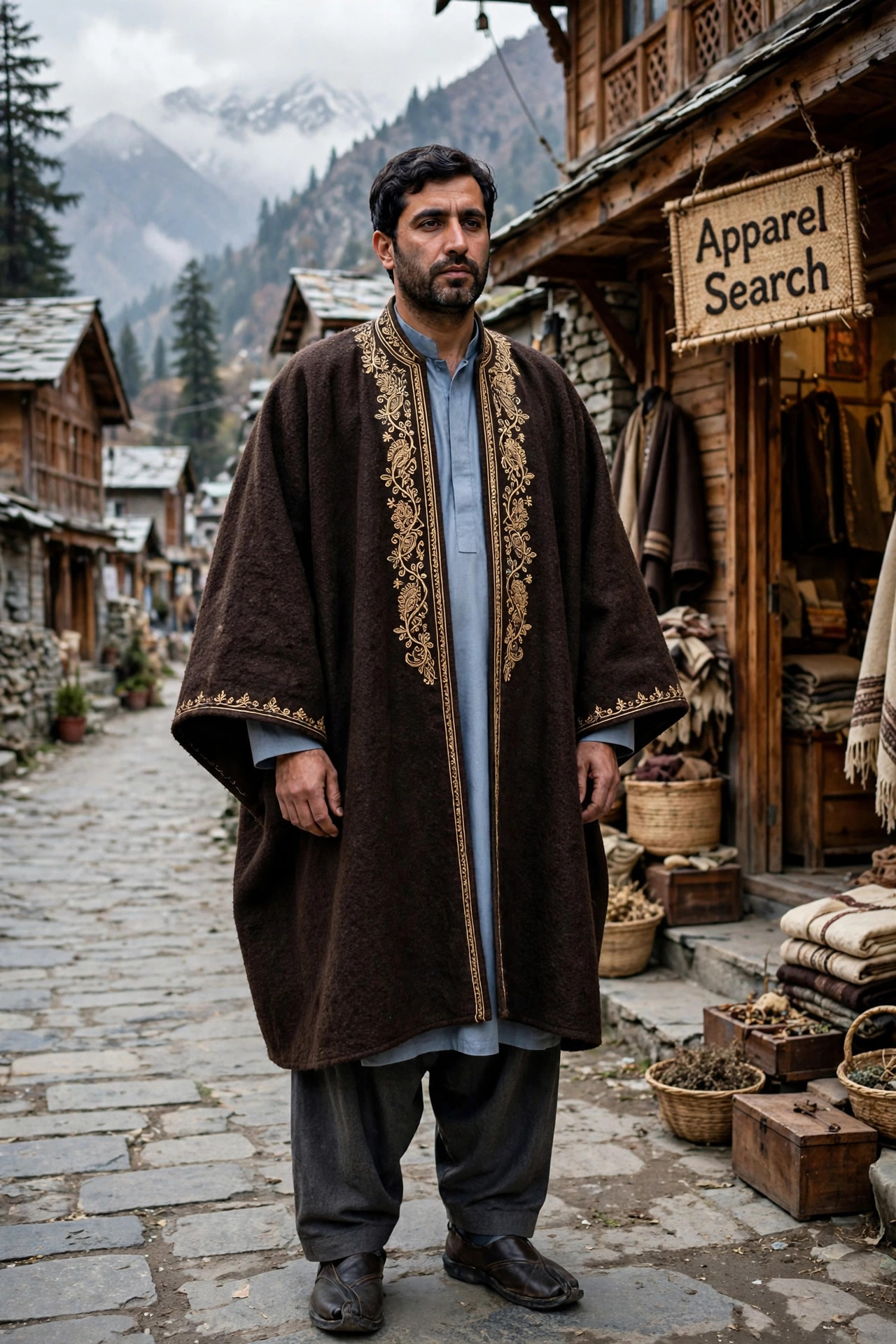
The pheran — also written firan — is the traditional dress of the Kashmir Valley: a long, loose cloak-coat falling to the knees or below, with wide sleeves and an open, embroidered front, worn by Kashmiri men over their clothes. It is less a fashion garment than a piece of climate engineering refined over centuries: in a Himalayan winter, the pheran's generous cut traps warm air around the body and even shelters the fire pot that is Kashmir's heater. Men's pherans are the plainer, darker branch of the family, their craft concentrated at the neck, cuffs and hem.
Centuries in the Kashmir Valley
Loose woollen cloaks have been worn in Kashmir for centuries, shaped by valley winters and by Central Asian and Persian currents crossing its passes. The pheran settled into the garment Kashmiris of every station share: farmers, merchants, officials and scholars have worn it, and it remains a marker of identity recognised across South Asia. For men it functions as coat, blanket and dress at once — thrown over a kurta and trousers for the market, the mosque, the office and the fields. In a valley where winter governs life for months, the pheran is what dressing means.
Cut for Warmth: The Kangri Connection
The pheran's famous partner is the kangri: an earthenware fire pot, filled with glowing charcoal and carried in a wicker basket. A Kashmiri man holds the kangri beneath his pheran, and the cloak's loose volume holds its warmth around him like a personal stove. The cut serves the system — length to the knees or ankles so heat is not lost below, a body with room for layers, and wide sleeves: hands are drawn inside the garment for warmth, the sleeves swinging as he walks. Few garments are so completely explained by their climate.
Wool, Tilla and Aari: Fabrics and Embroidery
Winter pherans are wool — traditionally pattu and tweeds in browns, greys, maroon and black — with lighter wool blends, cotton and raffal-type cloths for spring and summer wear. Two embroidery arts decorate them. Tilla is zari work in gold or silver thread, laid in bands along the neckline, front edges, cuffs and hem; on men's pherans it is kept disciplined and narrow. Aari is hook-work embroidery, done with a hooked needle in chain stitch, used for coloured patterns. The plainer the pheran, the more everyday its role; a fine tilla pheran in dark wool is Kashmiri formal dress, worn at weddings and festivals.
How Men Wear the Pheran Today
In Kashmir the pheran is daily dress, not ceremony: men wear it over a kurta-pajama or over shirts and trousers, at home, in shops and orchards, and on winter journeys. Lengths vary: traditional below-knee and ankle lengths for deep winter, shorter cuts in towns. Tailored versions keep the embroidered neck and loose body with cleaner finishing, and Kashmiri men away from the valley wear the pheran through northern winters and at gatherings as a statement of home. It pairs with trousers, sturdy shoes and, for many, a woollen cap against the mountain cold.
Choosing and Caring for a Pheran
Choose first by weight: a heavy wool pheran for winter, a mid-weight for the shoulder seasons, cotton only for summer cool. Length should reach at least the knee; longer is traditional. Judge the embroidery closely: tilla bands even and secure, aari stitching regular, neck and front edges finished cleanly, since these take the wear. Fit is meant to be generous, with room for layers and the kangri beneath. Care is wool care: dry-clean or wash gently as the maker directs, air it in sun to freshen, and store it folded with moth protection.
Common Questions
What is a kangri, worn with the pheran?
A small earthenware fire pot in a wicker basket, carried under the loose pheran in Kashmiri winters. The garment's generous cut is designed to hold its warmth close.
Is the pheran only winter wear?
No. Heavy wool pherans are for winter, but lighter cotton and blended versions are worn in Kashmir's spring and summer, and as comfortable everyday dress all year round.
How is a men's pheran different from a women's?
Men's pherans are usually plainer and darker, with restrained embroidery at the neck and cuffs. Women's versions carry fuller tilla or aari embroidery and brighter colours.
Traditional & Cultural Dress Guides
Traditional and cultural dress from around the world — every guide in this cluster:
- Men's Pheran
- Men's Achkan
- Men's Boubou & Agbada
- Men's Arkhalig
- Women's Baju Kurung
- Men's Baju Melayu
- Women's Buibui
- Men's Burnous
- Men's Chokha
- Men's Chullo
- Women's Churidar
- Women's Chut Thai
- Women's Deel
- Men's Djellaba
- Women's Dupatta
- Women's Huipil
- Men's Kanzu
- Women's Kebaya
- Women's Kitenge
- Men's Longyi
- Women's Patiala Salwar
- Women's Sampot
- Women's Sinh
- Women's Songket
- Women's Terno
- Women's Hanbok
- Women's Ao Dai
- Women's Dirndl
- Women's Dashiki
- Women's Cheongsam
- Women's Salwar Kameez
- Women's Yukata
- Women's Kaftan
- Women's Abaya
- Men's Lederhosen
- Men's Thawb
- Men's Barong
- Women's Kimono
- Women's Silk Sari
- Women's Sarongs
- Men's Guayabera Shirts
More to Explore on Apparel Search
Next, West Africa's grand flowing robes — the boubou and the agbada.
Next: Men's Boubou & Agbada Guide: West Africa's grand robes »Looking for Men's Clothing Stores?
This guide helps you understand and choose pheran styles with confidence. To browse where to buy, visit our mens clothing store directory, where you can find retailers that carry them.