Women's Sinh Guide
Laos's handwoven tube skirt, built in three parts and finished with an ornately patterned hem.
Shop Sinh Now
Shop on Amazon Shop on eBayThe Amazon and eBay links on this page are affiliate links. If you make a purchase through them, Apparel Search may earn a commission.
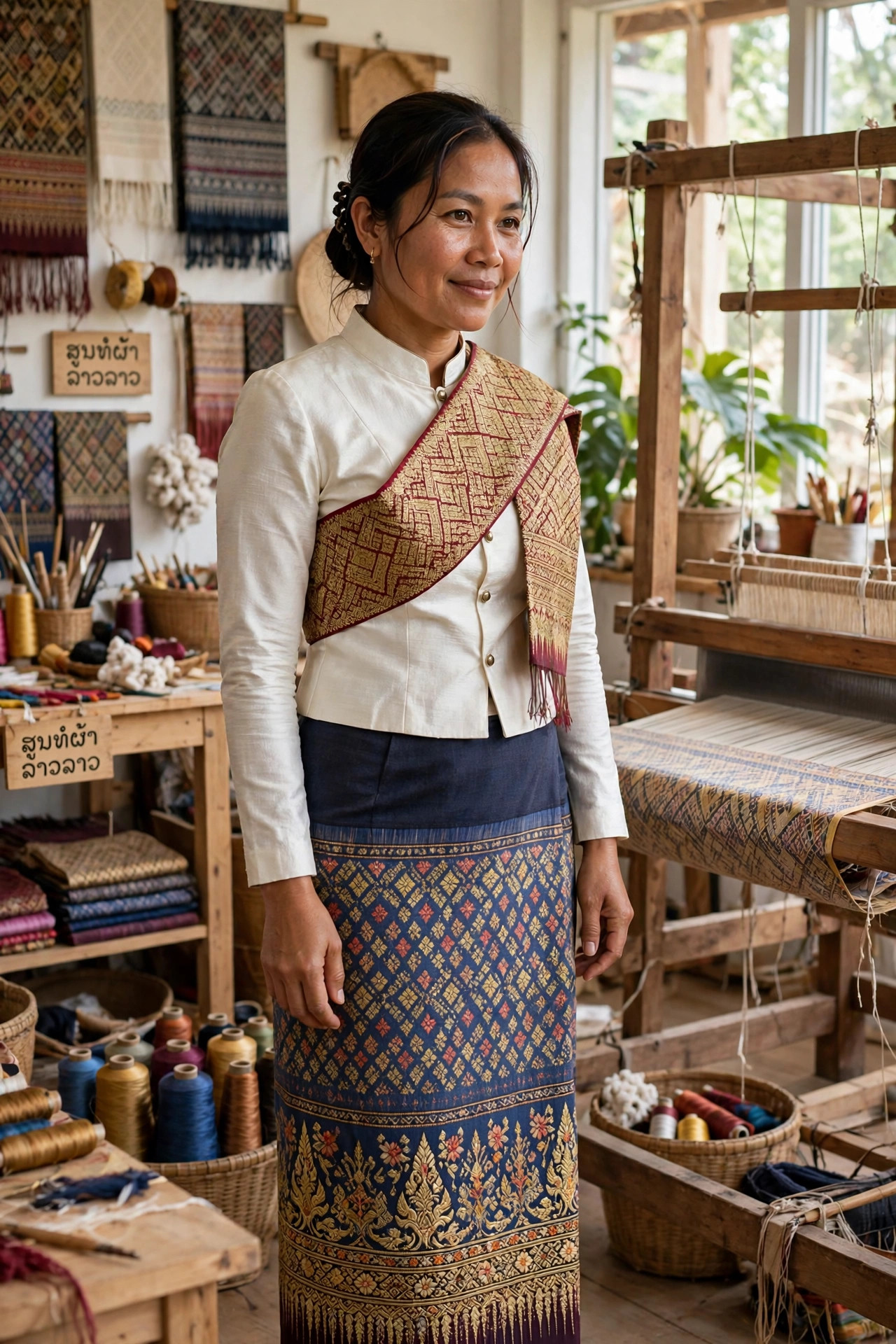
The sinh is the traditional tube skirt worn by women in Laos, a straight cylinder of handwoven cloth sewn into a tube, wrapped around the waist and held with a fold or belt. It is everyday dress for many Lao women and, in fine silk, formal wear for weddings, festivals and temple visits. Because each sinh is woven by hand, its patterns record the weaver's region, skill and family tradition, making the skirt both a garment and a piece of living textile heritage.
The Three Parts of a Sinh
A sinh is woven and assembled in three horizontal sections. The hua sinh, the waistband, is a plain or simply striped band at the top. The tua sinh, the body, forms the main field and may be plain, striped or patterned with small motifs. The tin sinh, the hem, is the widest and most decorated section, woven with dense supplementary-weft patterns in contrasting colours and metallic thread, and finished with a narrow border. The hem carries most of the visual weight, so a sinh is judged largely by the richness and precision of this lowest band.
Weaving, Fabrics and Patterns
Traditional sinh are woven on handlooms in silk for formal wear and cotton for daily use, using techniques including supplementary weft patterning, tapestry-like discontinuous weft, and matmii, the Lao form of ikat, in which threads are tie-dyed before weaving so patterns emerge in the cloth. Motifs include flowers, naga serpents, birds, elephants, stars and geometric hooks, with palettes varying by region: the deep reds and indigos of some southern weaving, the rich multicolour silk of the northeast, and the fine patterned hems associated with Luang Prabang. Modern sinh may blend silk with synthetic fibres for durability and lower cost.
How a Sinh Is Worn
The skirt is stepped into, pulled up and folded at the waist so the decorated hem sits at the ankle, then secured with the fold itself, a belt or a silver chain belt for formal wear. With it, women wear a fitted blouse, traditionally with long sleeves for formal occasions, and a sabai sash draped diagonally across the torso for ceremonies, weddings and dance. Hair is usually worn in a bun, sometimes with gold ornaments for bridal dress. The overall effect is long and column-like, with the patterned hem drawing the eye as the wearer walks.
Occasions, Choosing and Care
Women wear cotton sinh for markets, work and home, and silk sinh for Boun festivals, weddings, official events and temple visits, where modest, neat dress is expected. When choosing a sinh, check that the three sections are proportioned to your height, that the hem pattern is woven rather than printed, and that the tube gives enough overlap at the waist for a secure fold. Hand-wash cotton sinh gently; silk sinh should be washed with great care or professionally cleaned, dried in shade and stored folded loosely, away from damp, so colours and metallic threads stay bright.
Common Questions
What are the three parts of a sinh?
The hua sinh waistband at the top, the tua sinh body in the middle, and the tin sinh hem at the bottom. The hem is the widest and most heavily patterned section, and it is the main focus of the weaver's skill.
What is a sinh worn with?
A fitted blouse, and for formal occasions a sabai sash draped diagonally across the torso. Formal outfits may add a silver belt or chain at the waist, a bun hairstyle and, for brides, gold hair ornaments.
What is matmii?
The Lao form of ikat weaving. Threads are bound and dyed before weaving so the pattern is built into the yarns themselves, giving the softly edged motifs seen in many sinh bodies and hems.
Traditional & Cultural Dress Guides
Traditional and cultural dress from around the world — every guide in this cluster:
- Women's Sinh
- Men's Achkan
- Men's Boubou & Agbada
- Men's Arkhalig
- Women's Baju Kurung
- Men's Baju Melayu
- Women's Buibui
- Men's Burnous
- Men's Chokha
- Men's Chullo
- Women's Churidar
- Women's Chut Thai
- Women's Deel
- Men's Djellaba
- Women's Dupatta
- Women's Huipil
- Men's Kanzu
- Women's Kebaya
- Women's Kitenge
- Men's Longyi
- Women's Patiala Salwar
- Men's Pheran
- Women's Sampot
- Women's Songket
- Women's Terno
- Women's Hanbok
- Women's Ao Dai
- Women's Dirndl
- Women's Dashiki
- Women's Cheongsam
- Women's Salwar Kameez
- Women's Yukata
- Women's Kaftan
- Women's Abaya
- Men's Lederhosen
- Men's Thawb
- Men's Barong
- Women's Kimono
- Women's Silk Sari
- Women's Sarongs
- Men's Guayabera Shirts
Continue from the Lao tube skirt to Cambodia's wrapped sampot cloth.
Next: Women's Sampot Guide: Cambodia's wrapped silk skirt »Looking for Women's Clothing Stores?
This guide helps you understand and choose sinh styles with confidence. To browse where to buy, visit our womens clothing store directory, where you can find retailers that carry them.