Men's Kanzu Guide
East Africa's crisp white ankle-length tunic — worn with an embroidered cap for prayers, weddings and celebrations.
Shop Kanzu Now
Shop on Amazon Shop on eBayThe Amazon and eBay links on this page are affiliate links. If you make a purchase through them, Apparel Search may earn a commission.
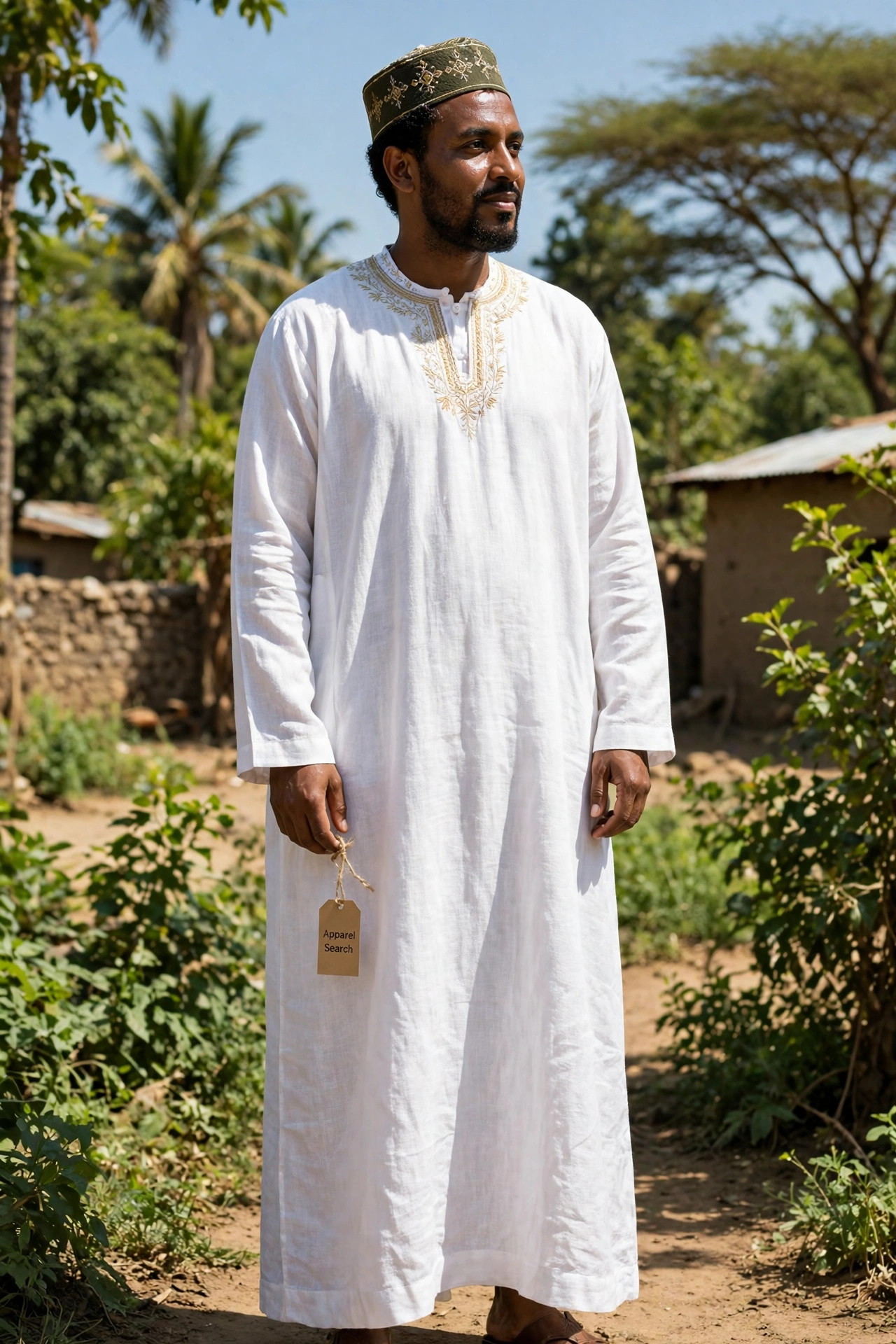
The kanzu is the ankle-length tunic worn by men across East Africa — in Tanzania, Kenya and Uganda, and along the Swahili coast where African, Arab and Indian Ocean trading cultures have met for centuries. Usually in crisp white, it is the garment men reach for at Friday prayers, weddings, Eid celebrations, graduations and formal family occasions. Its line is simple and dignified: a long, straight robe with long sleeves, falling cleanly from shoulder to ankle, finished with fine embroidery at the neck.
Construction and the Embroidered Neckline
A kanzu is cut loose and straight, with a round or short-slit neckline, long sleeves and side seams that allow easy movement and sitting. Its signature detail is the embroidery around the neck and down the chest — fine stitching, often in white or a soft contrasting thread, that rewards a close look while keeping the garment's overall restraint. Some kanzu fasten with small buttons at the neck; others slip over the head. Tailors cut the robe to fall just above the ankle, and the best examples are notable less for ornament than for perfect plainness: even hems, flat seams and cloth that stays opaque in bright light.
Fabrics and Colour
White cotton and cotton blends dominate, chosen for heat, cleanliness and formality, with smooth polyester-cotton fabrics also common for their crisp finish and easy care. Cream and very pale tones appear, and for some celebrations men wear kanzu in soft colours, but white remains the standard for prayers and weddings. Because a kanzu is worn repeatedly and washed often, fabric quality shows quickly: denser cloth keeps its body, holds the embroidery flat and presents the immaculate surface the garment depends on.
The Kofia and Formal Layering
The kanzu's traditional partner is the kofia, a cylindrical embroidered cap, its patterns pierced and stitched by hand — coastal kofia, especially from Lamu and Zanzibar, are prized craft objects in themselves. For formal occasions, many men add a dark blazer or suit-style jacket over the kanzu, a pairing seen at weddings, official functions and celebrations across the region, combining the robe's dignity with contemporary formal dress. Sandals suit everyday and prayer wear; polished shoes accompany the jacketed, ceremonial version.
Occasions and Meaning
A groom and his attendants may wear matching white kanzu; elders wear them as everyday marks of respectability; and boys receive a first kanzu for religious festivals with real pride. In Uganda, the kanzu is recognised as national dress for men, worn at cultural ceremonies including traditional weddings, where it is sometimes paired with a barkcloth or tailored jacket. Across the region, putting on a clean, pressed kanzu signals that an occasion matters — which is precisely why it endures alongside suits and casual wear.
Choosing and Care
Choose a kanzu that falls straight without clinging, sleeves to the wrist and hem at the ankle bone, with neck embroidery that is fine, symmetrical and firmly stitched. White kanzu are washed bright, lightly starched by some wearers, and pressed crisp — presentation is part of the garment. Wash embroidered necklines inside out on a gentle cycle and dry in shade to keep whites from yellowing. Keep one kanzu reserved, immaculate, for weddings and festivals, and rotate plainer ones for regular prayers and family visits.
Common Questions
What is a kanzu?
An ankle-length tunic robe, usually white, worn by men in East Africa, especially in Tanzania, Kenya and Uganda and along the Swahili coast. It is worn for prayers, weddings, festivals and formal occasions.
What is worn with a kanzu?
Traditionally an embroidered cap called a kofia, and for formal occasions a dark jacket or blazer over the kanzu. Sandals or formal shoes complete the outfit depending on the setting.
Is a kanzu the same as a thawb?
They are related in silhouette — both are long robes — but the kanzu is the East African form, with its own neckline embroidery, local tailoring and its pairing with the kofia cap.
Traditional & Cultural Dress Guides
Traditional and cultural dress from around the world — every guide in this cluster:
- Men's Kanzu
- Men's Achkan
- Men's Boubou & Agbada
- Men's Arkhalig
- Women's Baju Kurung
- Men's Baju Melayu
- Women's Buibui
- Men's Burnous
- Men's Chokha
- Men's Chullo
- Women's Churidar
- Women's Chut Thai
- Women's Deel
- Men's Djellaba
- Women's Dupatta
- Women's Huipil
- Women's Kebaya
- Women's Kitenge
- Men's Longyi
- Women's Patiala Salwar
- Men's Pheran
- Women's Sampot
- Women's Sinh
- Women's Songket
- Women's Terno
- Women's Hanbok
- Women's Ao Dai
- Women's Dirndl
- Women's Dashiki
- Women's Cheongsam
- Women's Salwar Kameez
- Women's Yukata
- Women's Kaftan
- Women's Abaya
- Men's Lederhosen
- Men's Thawb
- Men's Barong
- Women's Kimono
- Women's Silk Sari
- Women's Sarongs
- Men's Guayabera Shirts
Stay on the Swahili coast for the buibui, the flowing black covering worn by women in the same region.
Next: Women's Buibui Guide: The Swahili coast covering »Looking for Men's Clothing Stores?
This guide helps you understand and choose kanzu styles with confidence. To browse where to buy, visit our mens clothing store directory, where you can find retailers that carry them.