Women's Dupatta Guide
One long scarf, a dozen ways to wear it: the dupatta finishes South Asian outfits and carries much of their richest craft.
Shop Dupatta Now
Shop on Amazon Shop on eBayThe Amazon and eBay links on this page are affiliate links. If you make a purchase through them, Apparel Search may earn a commission.
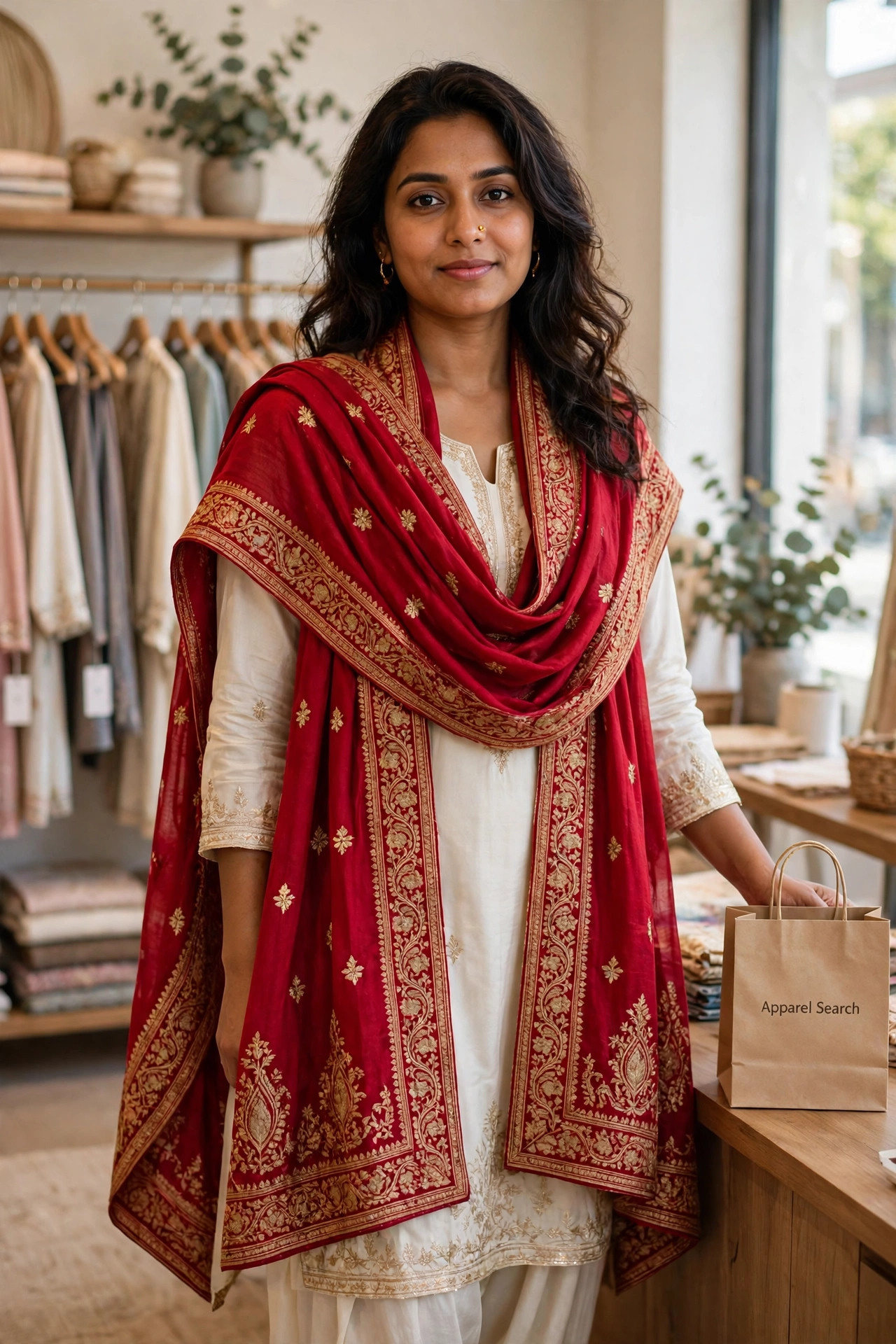
The dupatta is the long, wide scarf that completes women's dress across South Asia. It is the third piece of the salwar kameez, worn draped over the shoulders, across the chest or over the head, and it partners lehengas, kurta sets and festive suits of every region. Typically two to two and a half metres of cloth, the dupatta is at once practical — a cover for respect, a shield from sun, a warmth — and decorative: on many outfits it carries the richest fabric, the deepest colour and the finest embroidery of the ensemble.
A Garment with Ancient Roots
Draped shoulder cloths are among the oldest garments of the Indian subcontinent, visible in sculpture for well over a thousand years, and the dupatta descends from that long tradition of wrapped and draped dress. It took its form alongside the salwar kameez in the medieval and Mughal centuries, becoming an emblem of grace and modesty in women's dress across India, Pakistan and Bangladesh. Wearing it carries social meaning that is still understood: a dupatta drawn over the head signals respect in temples and gurudwaras and before elders, while its everyday drape is simply part of dressing well.
Fabrics and Craft
A dupatta can be almost any beautiful cloth. Cotton and mulmul serve daily wear; chiffon and georgette give the float that festive draping loves; silk, organza and net carry weddings. Craft traditions concentrate on it: phulkari, the floss-silk embroidery of Punjab, is worked most famously on dupattas and shawls; bandhani tie-dye dots them in Gujarat and Rajasthan; block printing, hand painting, zari woven borders, sequins and mirror work all find their showcase here. Because it is a single length, the dupatta shows textile art at full scale, which is why treasured pieces are kept, gifted and handed down.
Ways to Drape a Dupatta
The classic everyday drape lays the dupatta over both shoulders with the centre across the chest and the ends falling behind or forward. One shoulder, with the cloth pleated and pinned, is the neat modern choice for work and functions. For lehengas, the dupatta is pleated, pinned at one shoulder and drawn across the torso, or draped over both arms behind. Over the head — for prayer, respect or sun — the edges frame the face and the length covers the shoulders. Contemporary styling adds belted drapes over kurta sets. A small pin at the shoulder keeps any drape secure.
Matching a Dupatta to an Outfit
Suits are sold as three-piece sets, but confident dressers mix. The principles are weight and border: a heavy, richly bordered dupatta needs a suit substantial enough to hold it, while a light chiffon dupatta disappears over anything. Contrast is the classic play — a deep dupatta over a pale suit, a printed dupatta over plain cloth — and a beautiful dupatta can lift the simplest cotton suit into occasion wear, which is why many women collect dupattas separately from suits. When buying, drape it in the shop: its fall, border finish and behaviour over the shoulder decide its quality.
Care and Storage
Care follows the craft. Plain cotton and chiffon dupattas hand-wash gently and dry in shade to protect colour; phulkari, heavily embroidered, sequinned and zari-bordered pieces are dry-cleaned or washed only as the maker directs, since metal threads and floss silk dislike harsh handling. Store dupattas folded along their length with borders protected, away from the hooks of jewellery and embellished outfits that snag cloth. Keep white and pastel pieces separate from deep colours. A dupatta cared for this way outlasts the suit it came with — and goes on finishing other outfits for years.
Common Questions
How long is a dupatta?
Usually about two to two and a half metres long and up to a metre wide — long enough to drape over both shoulders, across the front, or over the head.
How should a dupatta be draped?
Over both shoulders for classic formality, over one shoulder for ease, or across the front with the ends brought back. Pin it at the shoulder to keep the drape secure.
Can a dupatta be worn with outfits besides salwar kameez?
Yes — with lehengas, kurta sets, shararas and even plain suits. A richly bordered dupatta can transform a simple outfit, which is why many women collect them separately.
Traditional & Cultural Dress Guides
Traditional and cultural dress from around the world — every guide in this cluster:
- Women's Dupatta
- Men's Achkan
- Men's Boubou & Agbada
- Men's Arkhalig
- Women's Baju Kurung
- Men's Baju Melayu
- Women's Buibui
- Men's Burnous
- Men's Chokha
- Men's Chullo
- Women's Churidar
- Women's Chut Thai
- Women's Deel
- Men's Djellaba
- Women's Huipil
- Men's Kanzu
- Women's Kebaya
- Women's Kitenge
- Men's Longyi
- Women's Patiala Salwar
- Men's Pheran
- Women's Sampot
- Women's Sinh
- Women's Songket
- Women's Terno
- Women's Hanbok
- Women's Ao Dai
- Women's Dirndl
- Women's Dashiki
- Women's Cheongsam
- Women's Salwar Kameez
- Women's Yukata
- Women's Kaftan
- Women's Abaya
- Men's Lederhosen
- Men's Thawb
- Men's Barong
- Women's Kimono
- Women's Silk Sari
- Women's Sarongs
- Men's Guayabera Shirts
More to Explore on Apparel Search
Next, north to Kashmir, where the pheran wraps men in embroidered wool against the mountain winter.
Next: Men's Pheran Guide: Kashmir's wool cloak »Looking for Women's Clothing Stores?
This guide helps you understand and choose dupatta styles with confidence. To browse where to buy, visit our womens clothing store directory, where you can find retailers that carry them.