Men's Arkhalig Guide
The close-fitting coat worn across Azerbaijan and the Caucasus, layered under the chokha or on its own.
Shop Arkhalig Now
Shop on Amazon Shop on eBayThe Amazon and eBay links on this page are affiliate links. If you make a purchase through them, Apparel Search may earn a commission.
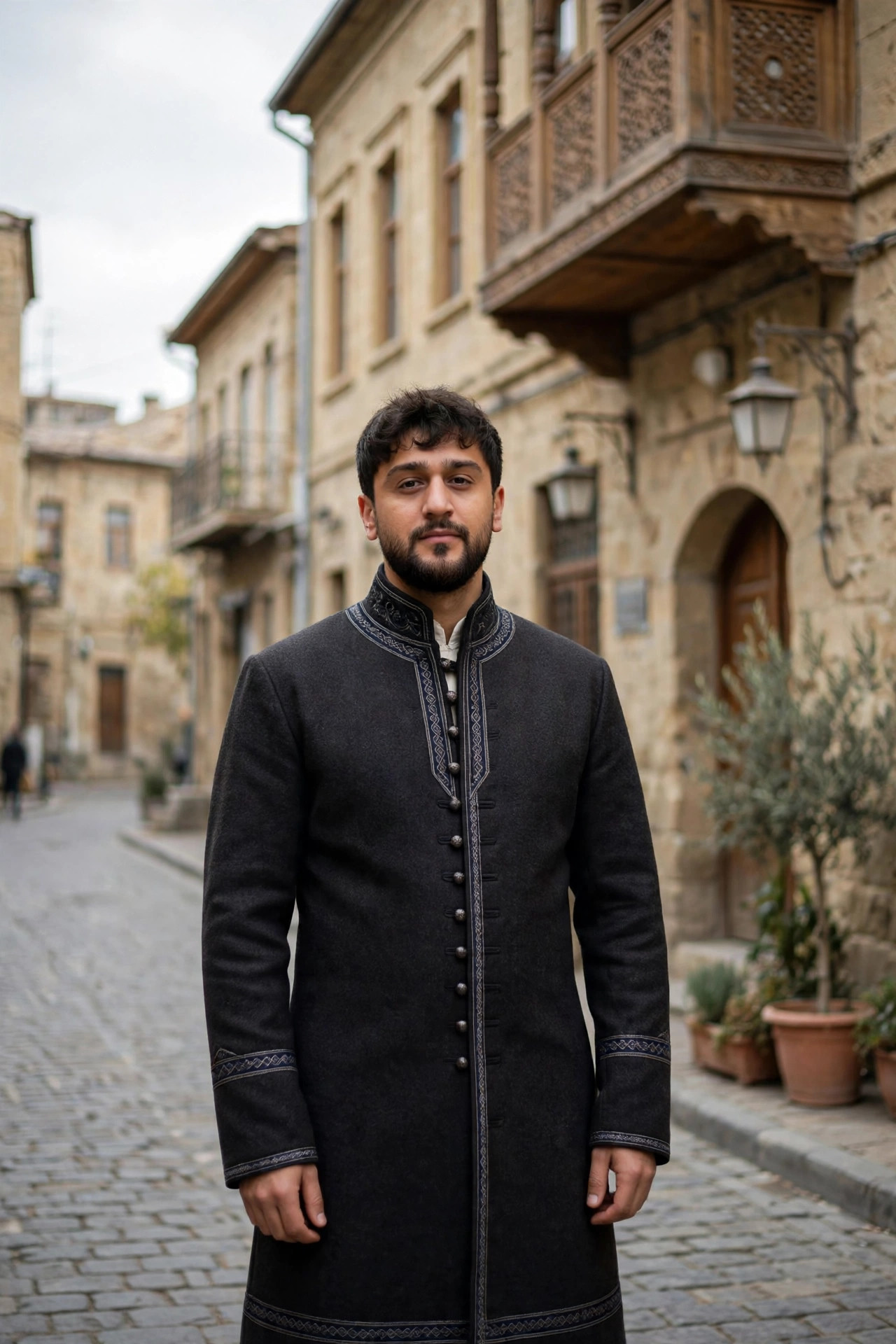
The arkhalig is a long, fitted coat worn by men across Azerbaijan, Georgia, Armenia and the wider Caucasus, with close relatives in Persian and Central Asian dress. It is the tailored layer of the region's traditional clothing: worn on its own in milder weather, and under the heavier chokha in winter or for full formal dress. With its shaped waist, buttoned chest and standing collar, the arkhalig gave Caucasian menswear its notably neat, upright silhouette in nineteenth-century portraits and photographs.
Construction: A Coat Cut Close
An arkhalig is cut to follow the body. The bodice fits closely through the chest and waist, fastening edge to edge with small buttons or hooks, and the skirt of the coat then flares gently over the hips to about the knee. A short standing collar frames the neck, and the long sleeves are close at the wrist. Beneath the outer cloth, traditional examples are lined and sometimes lightly quilted for warmth. Pockets are set discreetly into the seams, keeping the front clean and the line uninterrupted.
Worn Alone and Under the Chokha
Layering defines how the arkhalig is used. Indoors and in summer it is the outer garment, worn over a shirt with trousers tucked into boots. For travel, winter and ceremony, the long wool chokha goes over it, its cartridge pockets and belt sitting above the arkhalig's fitted waist. A wide sash or leather belt was often wound over the arkhalig at the waist, both to hold the coat and to carry the practical items a man needed close at hand.
Fabrics, Colour and Decoration
Working arkhaligs were made from sturdy wool and heavy cotton; wealthier wearers chose silk, velvet and fine broadcloth, sometimes with gold or silver braid at the collar, chest and cuffs. Colours ran deep and dignified, black, brown, dark blue and burgundy, with brighter silk versions for celebration. Decoration stays at the edges, a braided frogging, a line of trim, handsome buttons, because the garment's effect depends on fit and posture rather than surface ornament.
The Arkhalig Today and Choosing One
Traditional ensembles are still worn in Azerbaijan and Georgia for national celebrations, weddings, dance and music performance, and formal cultural events, where the arkhalig remains the essential middle layer. When choosing one, judge it as tailoring: the chest should close without pulling, the waist should shape without pinching, and the skirt should clear the knee cleanly when walking. Store it hanging, brush wool versions after wear, and have silk or braided examples cleaned by a specialist.
Common Questions
What is an arkhalig worn with?
Over a shirt and trousers, often with a sash or belt at the waist. In cold weather and for formal dress, the heavier chokha coat is worn over the arkhalig as the outer layer.
How should an arkhalig fit?
Close through the chest and shaped at the waist, fastening edge to edge without pulling, with the coat's skirt flaring gently over the hips to about the knee.
Where is the arkhalig from?
The Caucasus, especially Azerbaijan, Georgia and Armenia, with related fitted coats found in Persian and Central Asian traditional dress. It remains part of national and performance dress in the region.
Traditional & Cultural Dress Guides
Traditional and cultural dress from around the world — every guide in this cluster:
- Men's Arkhalig
- Men's Achkan
- Men's Boubou & Agbada
- Women's Baju Kurung
- Men's Baju Melayu
- Women's Buibui
- Men's Burnous
- Men's Chokha
- Men's Chullo
- Women's Churidar
- Women's Chut Thai
- Women's Deel
- Men's Djellaba
- Women's Dupatta
- Women's Huipil
- Men's Kanzu
- Women's Kebaya
- Women's Kitenge
- Men's Longyi
- Women's Patiala Salwar
- Men's Pheran
- Women's Sampot
- Women's Sinh
- Women's Songket
- Women's Terno
- Women's Hanbok
- Women's Ao Dai
- Women's Dirndl
- Women's Dashiki
- Women's Cheongsam
- Women's Salwar Kameez
- Women's Yukata
- Women's Kaftan
- Women's Abaya
- Men's Lederhosen
- Men's Thawb
- Men's Barong
- Women's Kimono
- Women's Silk Sari
- Women's Sarongs
- Men's Guayabera Shirts
Next, its close relative from north India — a buttoned coat with a famous name attached.
Next: Men's Achkan Guide: North India's fitted formal coat, from court dress to modern weddings »Looking for Men's Clothing Stores?
This guide helps you understand and choose arkhalig styles with confidence. To browse where to buy, visit our mens clothing store directory, where you can find retailers that carry them.