Women's Songket Guide
The handwoven cloth of gold and silver thread, worn by women as skirts, sashes and festive dress across Malaysia and Indonesia.
Shop Songket Now
Shop on Amazon Shop on eBayThe Amazon and eBay links on this page are affiliate links. If you make a purchase through them, Apparel Search may earn a commission.
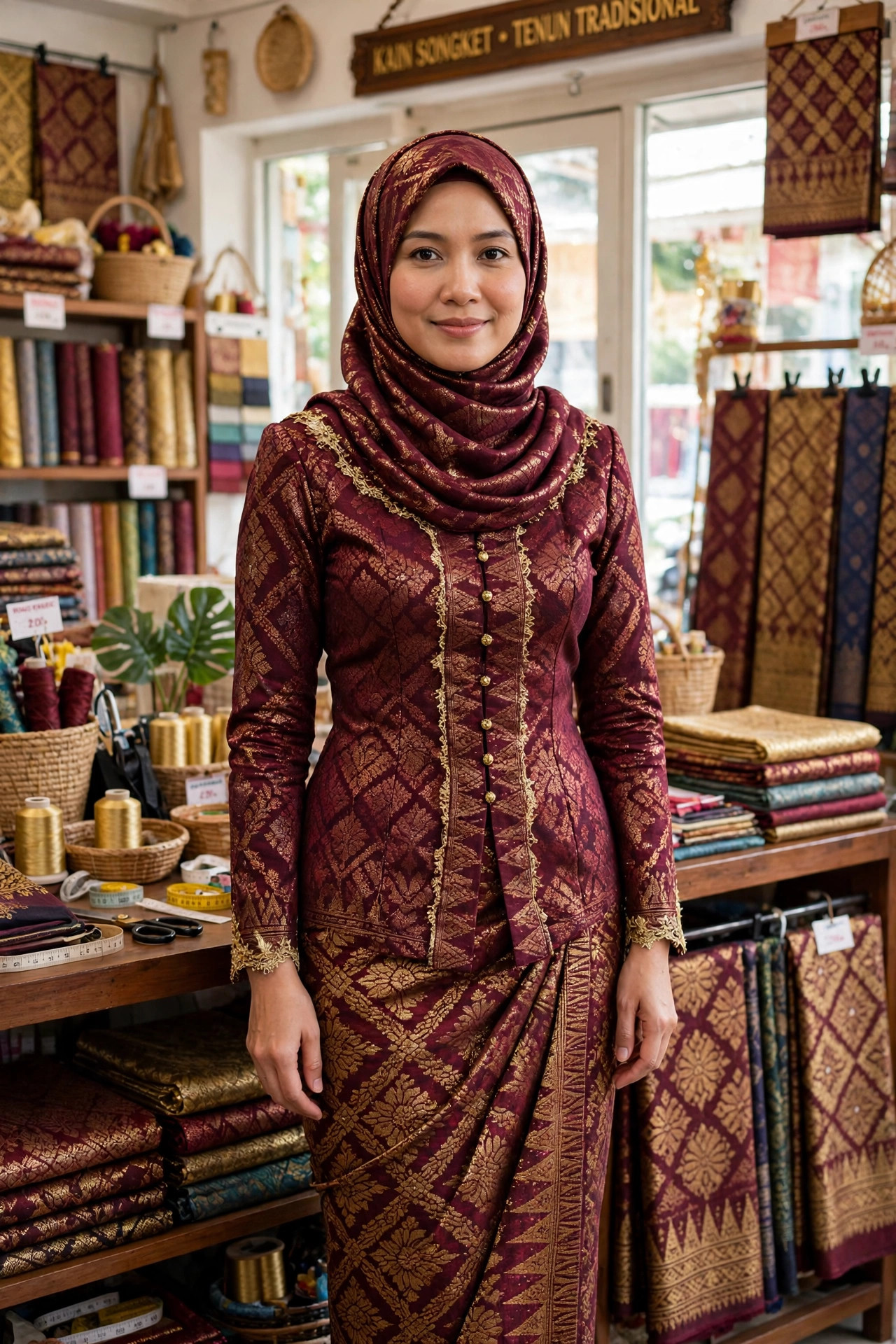
Songket is not a single garment but a luxurious handwoven fabric, patterned with supplementary threads of gold or silver that appear to float across a silk or cotton ground. It is woven in Malaysia and Indonesia, in regions including Palembang in Sumatra, Minangkabau communities, Bali, and the Malaysian states of Terengganu and Kelantan. For women, songket becomes long wrapped skirts, sashes, kebaya pairings and full festive outfits, and a fine piece represents weeks of a weaver's work at the loom.
How Songket Is Woven
Songket is made on a handloom using a supplementary weft technique: as the plain ground cloth is woven, extra threads, traditionally real gold-wrapped thread and now more often metallic yarn, are inserted by hand to build the pattern row by row. The weaver counts threads from a pattern stored on sticks, so motifs grow slowly and precisely. Common motifs include bamboo shoots (pucuk rebung), flowers, stars and geometric borders. A full-length cloth for a skirt can take weeks, and months for the densest wedding pieces, which is why genuine handwoven songket is treasured and handed down.
How Women Wear Songket
The most common use is the kain songket, a long cloth wrapped and folded at the waist as a skirt, worn with a plain kebaya or baju kurung top so the weaving is the focus. A narrower songket sash, the selendang, is draped over one shoulder or across the torso, and matching sets of skirt and sash are standard bridal wear in Malay and Palembang tradition. Songket also appears as the skirt of a baju kurung, as bodices and jackets in modern styling, and in smaller pieces such as clutches and shoes for festive occasions.
Regional Character
Palembang songket from South Sumatra is famous for rich red grounds densely covered in gold. Malay songket from Malaysia's east coast tends to use strong ground colours, including deep greens, maroon and navy, with patterns concentrated at borders and the cloth's head panel. Minangkabau songket from West Sumatra carries its own motif vocabulary tied to nature and proverb. Machine-woven songket-pattern cloth is widely sold at lower prices; it is smoother and more uniform, while handwoven pieces show slight irregularities, a heavier hand and patterning worked through the cloth's structure.
Choosing and Caring for Songket
When choosing songket, check the reverse: handwoven pattern threads are carried within the weave, the cloth feels substantial, and the metallic areas are supple rather than stiffly printed. Consider how much gold the occasion calls for, as a full dense cloth suits weddings while a bordered cloth works for festivals and formal evenings. Care is gentle: dry-clean or wash very carefully by hand, never wring the cloth, dry it in shade, and store it rolled rather than sharply folded, with the metallic side protected, so threads do not crack, catch or tarnish.
Common Questions
Is songket a garment or a fabric?
A fabric. Songket is a handwoven cloth patterned with supplementary gold or silver threads. Women wear it made up as wrapped skirts, shoulder sashes, kebaya and baju kurung pairings, and bridal sets, rather than as one fixed garment shape.
How can you tell handwoven songket from printed cloth?
Turn it over. Handwoven songket shows the pattern threads worked through the weave on the reverse, feels heavier and slightly irregular, and the metallic areas flex with the cloth. Printed versions are flat, light and perfectly uniform.
How should songket be stored?
Rolled rather than folded in hard creases, away from damp and direct light, with tissue or plain cloth protecting the metallic threads. Dry-clean fine silk songket, and handle it by the ground fabric rather than pulling at the gold pattern areas.
Traditional & Cultural Dress Guides
Traditional and cultural dress from around the world — every guide in this cluster:
- Women's Songket
- Men's Achkan
- Men's Boubou & Agbada
- Men's Arkhalig
- Women's Baju Kurung
- Men's Baju Melayu
- Women's Buibui
- Men's Burnous
- Men's Chokha
- Men's Chullo
- Women's Churidar
- Women's Chut Thai
- Women's Deel
- Men's Djellaba
- Women's Dupatta
- Women's Huipil
- Men's Kanzu
- Women's Kebaya
- Women's Kitenge
- Men's Longyi
- Women's Patiala Salwar
- Men's Pheran
- Women's Sampot
- Women's Sinh
- Women's Terno
- Women's Hanbok
- Women's Ao Dai
- Women's Dirndl
- Women's Dashiki
- Women's Cheongsam
- Women's Salwar Kameez
- Women's Yukata
- Women's Kaftan
- Women's Abaya
- Men's Lederhosen
- Men's Thawb
- Men's Barong
- Women's Kimono
- Women's Silk Sari
- Women's Sarongs
- Men's Guayabera Shirts
Continue from woven gold cloth to the handwoven tube skirt worn by women in Laos.
Next: Women's Sinh Guide: Laos's handwoven tube skirt »Looking for Women's Clothing Stores?
This guide helps you understand and choose songket styles with confidence. To browse where to buy, visit our womens clothing store directory, where you can find retailers that carry them.