Women's Terno Guide
The Philippines' formal dress, recognised at once by its stiff, upright butterfly sleeves.
Shop Terno Now
Shop on Amazon Shop on eBayThe Amazon and eBay links on this page are affiliate links. If you make a purchase through them, Apparel Search may earn a commission.
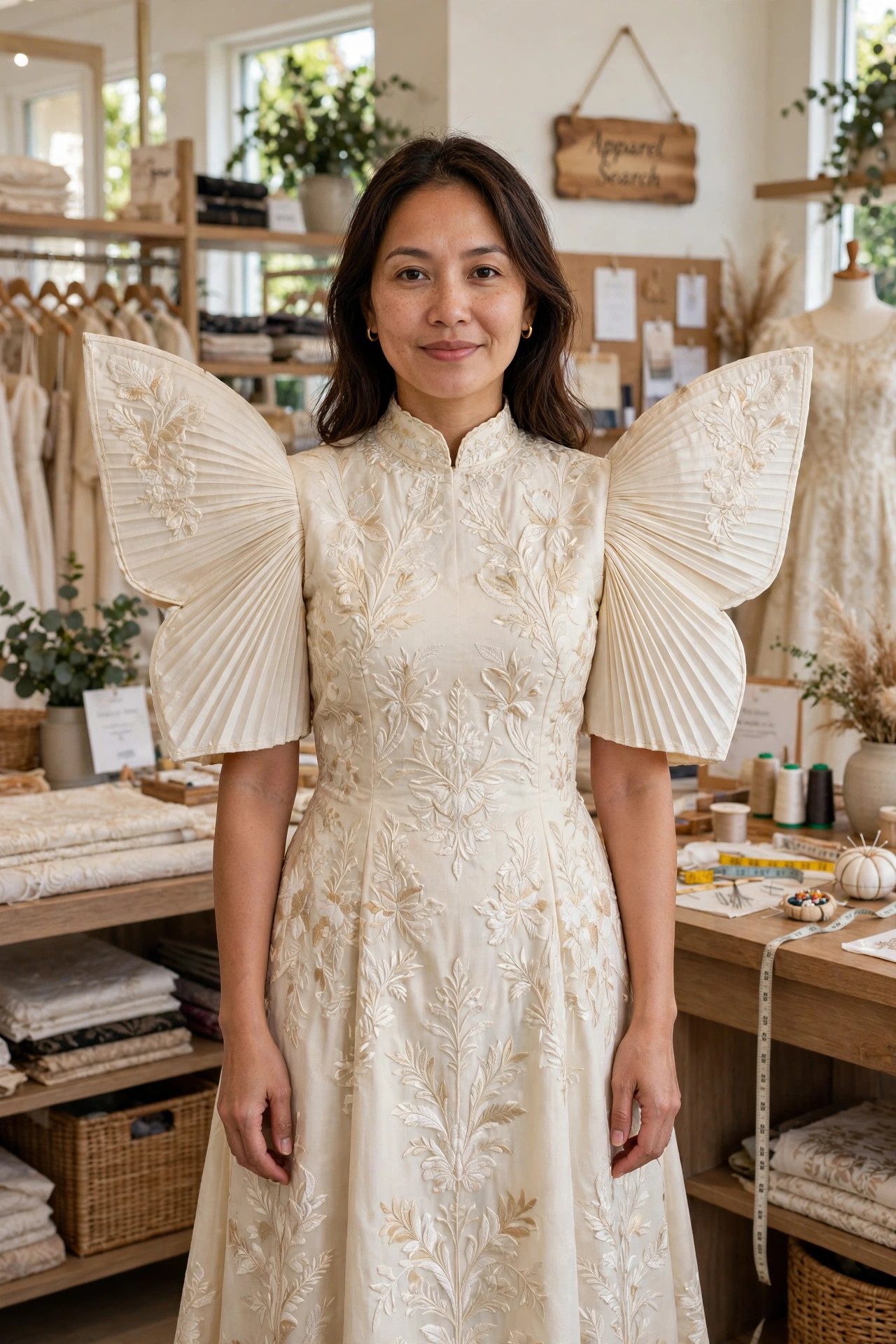
The terno is the formal dress of the Philippines, known worldwide for its butterfly sleeves: stiff, upright sleeves that rise from the shoulder like folded wings. It is a one-piece long dress, elegant and architectural, worn for weddings, formal celebrations, cultural events and state occasions. The terno is also called Filipiniana, and wearing it is a statement of Filipino identity as much as of formality, which is why it appears at events from Manila galas to diaspora celebrations around the world.
From Baro't Saya to the One-Piece Terno
The terno evolved from the earlier baro't saya, a four-piece outfit of blouse (baro), skirt (saya), shoulder kerchief (pañuelo) and overskirt. Its grand form, the María Clara dress, combined a delicate embroidered blouse and pañuelo with a full skirt, and was named for the heroine of José Rizal's novel Noli Me Tangere. In the early twentieth century the pieces were gradually unified, the pañuelo's stiffened sleeves became the dress's defining feature, and by the 1940s the modern terno, a single gown with butterfly sleeves, was established as the national formal dress.
How Butterfly Sleeves Are Built
Each butterfly sleeve is a shaped, stiffened panel of fabric that stands up and curves over the shoulder, held by internal support and careful tailoring rather than by the wearer's arm. The sleeves are the hardest part of the dress to make well: they must match each other, stand at the same height, and balance the line of the gown. The rest of the terno is usually a long, fairly straight or gently flared dress, sometimes with a detachable train or a draped overskirt in more traditional versions, keeping the silhouette simple so the sleeves carry the design.
Fabrics and Decoration
The classic terno fabrics are handwoven Philippine textiles: piña, woven from pineapple leaf fibre, light and translucent with a fine sheen; jusi, originally from banana fibre and now often silk-organza-like; and piña-seda, a piña and silk blend that is softer and easier to wear. Embroidery, especially the fine floral calado openwork of Lumban, decorates bodices and sleeves, and beading and sequins appear on evening terno. Plain-dyed silk and modern fabrics are also used, but piña remains the prestige choice for weddings and the most formal occasions.
Wearing, Choosing and Care
A terno is worn with heels, restrained jewellery that does not compete with the sleeves, and hair worn up or neatly back. When choosing one, fit through the bodice and the balance of the sleeves matter most; a made-to-measure terno from an experienced maker is worth the investment for a wedding or a recurring formal wardrobe. Piña and embroidered terno should be professionally cleaned, stored hung with the sleeves supported and protected from crushing, and kept away from damp, since natural fibres mildew. Handled with care, a terno lasts for decades and is often passed between generations. It also photographs strikingly, with the sleeves framing the face and shoulders, which is one reason it remains a first choice for milestone portraits, official photographs and family celebrations.
Common Questions
Why are terno sleeves called butterfly sleeves?
Because each stiffened sleeve stands up and curves over the shoulder like a folded butterfly wing. The shape developed from the stiffened pañuelo of the earlier María Clara dress and became the terno's defining feature.
What is piña fabric?
A handwoven Philippine fabric made from the fibres of pineapple leaves. It is light, translucent and slightly crisp, with a natural sheen, and it is the prestige fabric for terno and other formal Filipiniana dress.
When do women wear a terno?
For weddings, formal galas, cultural celebrations, graduations and state occasions, in the Philippines and at Filipino events worldwide. It is the country's formal national dress for women.
Traditional & Cultural Dress Guides
Traditional and cultural dress from around the world — every guide in this cluster:
- Women's Terno
- Men's Achkan
- Men's Boubou & Agbada
- Men's Arkhalig
- Women's Baju Kurung
- Men's Baju Melayu
- Women's Buibui
- Men's Burnous
- Men's Chokha
- Men's Chullo
- Women's Churidar
- Women's Chut Thai
- Women's Deel
- Men's Djellaba
- Women's Dupatta
- Women's Huipil
- Men's Kanzu
- Women's Kebaya
- Women's Kitenge
- Men's Longyi
- Women's Patiala Salwar
- Men's Pheran
- Women's Sampot
- Women's Sinh
- Women's Songket
- Women's Hanbok
- Women's Ao Dai
- Women's Dirndl
- Women's Dashiki
- Women's Cheongsam
- Women's Salwar Kameez
- Women's Yukata
- Women's Kaftan
- Women's Abaya
- Men's Lederhosen
- Men's Thawb
- Men's Barong
- Women's Kimono
- Women's Silk Sari
- Women's Sarongs
- Men's Guayabera Shirts
Continue the tour of traditional dress with the handwoven tunic of Mexico and Guatemala.
Next: Women's Huipil Guide: Mexico and Guatemala's woven tunic »Looking for Women's Clothing Stores?
This guide helps you understand and choose terno styles with confidence. To browse where to buy, visit our womens clothing store directory, where you can find retailers that carry them.