Women's Sampot Guide
Cambodia's long wrapped cloth, woven in silk hol ikat and worn as an elegant ankle-length skirt.
Shop Sampot Now
Shop on Amazon Shop on eBayThe Amazon and eBay links on this page are affiliate links. If you make a purchase through them, Apparel Search may earn a commission.
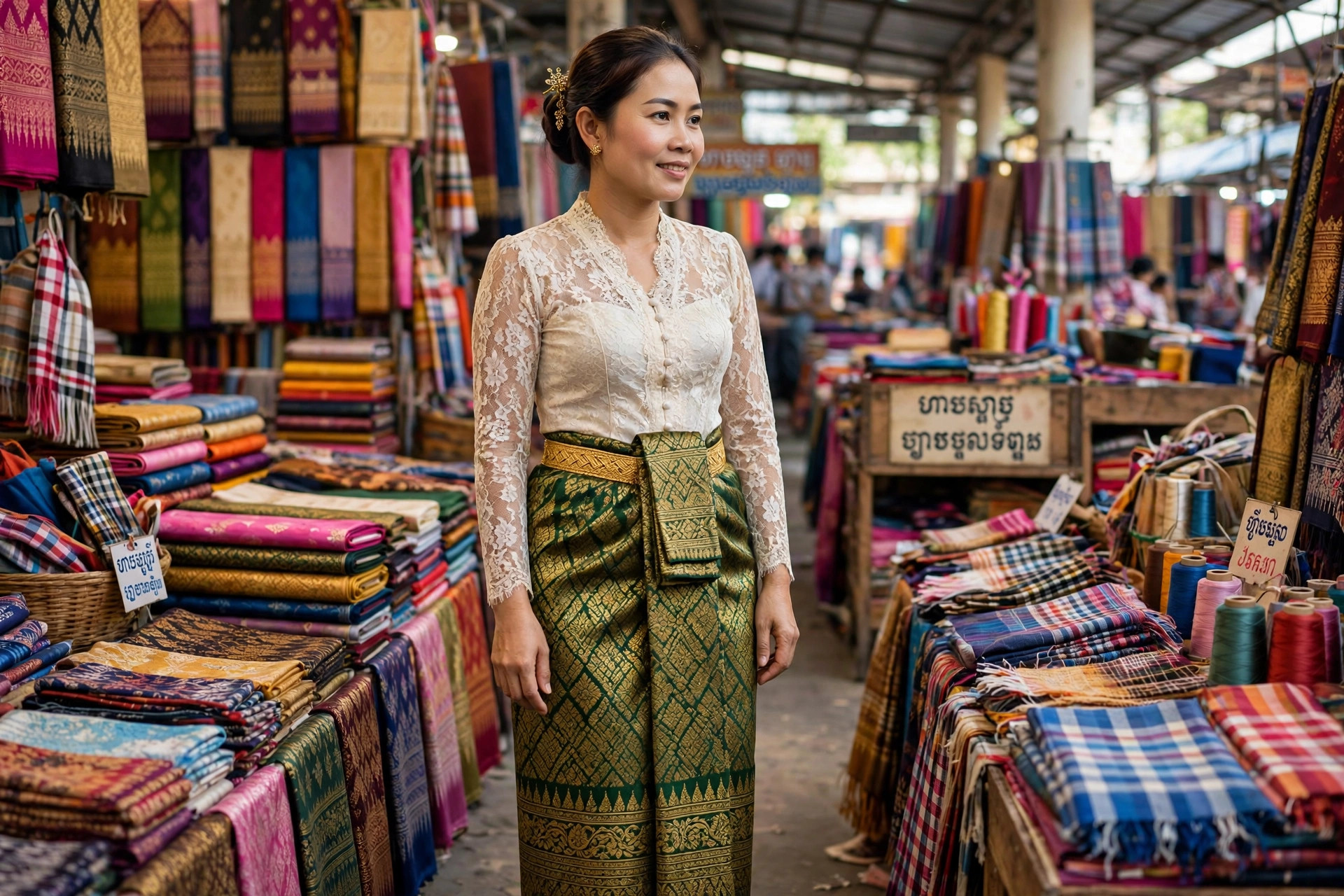
The sampot is Cambodia's traditional lower garment, a long rectangular cloth, typically around three metres, wrapped around the waist and worn by women as an ankle-length skirt. It has been worn in Cambodia for centuries, appears in the carvings of Angkor, and remains central to Khmer dress for weddings, religious ceremonies, classical dance and formal occasions. In its finest form it is woven from silk using the hol ikat technique, producing cloth whose patterns glow with colour on both sides.
Styles of Sampot for Women
The sampot chang somloy is the straight, skirt-like form most associated with women today: the cloth wraps around the waist, folds at the front and falls smoothly to the ankles. The sampot phamuong is a silk sampot patterned with small, repeated motifs, worn for formal occasions. The sampot chang kben, in which the cloth is drawn between the legs and tucked at the back to form a trouser-like shape, is historically worn by both women and men and is still seen in classical dance and martial arts contexts. Everyday sampot are also woven in cotton in simpler patterns.
Hol Silk and Pattern
Khmer hol is a form of weft ikat: the silk threads are tied and dyed in sequence before weaving, so the pattern is dyed into the yarn and appears as the cloth is woven, with characteristically soft, precise edges. Phamuong hol carries small motifs such as flowers, stars and geometric forms in rows, often in gold-yellow, green, red and deep purple on a dark ground. Weaving a fine hol sampot takes great skill and time, and silk sampot are valued possessions, chosen carefully for weddings and kept for years.
How a Sampot Is Worn
The cloth is wrapped around the waist, the end folded neatly at the front and secured with a belt, traditionally a metal belt for formal wear. With it, women wear a fitted blouse, often of lace or silk for celebrations, and for the most formal occasions a sbai sash draped over one shoulder. Brides wear richly coloured silk sampot with elaborate jewellery, and Apsara dancers wear sampot styled to echo the dress carved on temple walls, with pleated front panels and ornate belts. Dressed this way, the sampot's long line and woven pattern carry the whole outfit.
Choosing and Caring for a Sampot
When choosing a sampot, look at the pattern on both sides of the cloth: genuine hol ikat shows the design through the fabric, with the slight softness of dyed-yarn weaving rather than a printed surface. Silk suits weddings and ceremonies; cotton is practical for daily and warm-weather wear. Check the length gives a secure wrap and front fold at your waist. Care for silk sampot by gentle hand-washing or specialist cleaning, dry in shade, and store folded with plain cloth between layers, away from damp and insects, so the silk and its colours last.
Common Questions
How is a sampot worn by women?
As a long cloth wrapped around the waist, folded neatly at the front and secured with a belt, falling to the ankles. It is worn with a fitted blouse and, for formal occasions, a sbai sash over one shoulder.
What is hol?
The Khmer weft ikat technique used for fine silk sampot. Threads are tied and dyed before weaving, so patterns are dyed into the yarn itself and show on both sides of the finished cloth.
What is the difference between sampot somloy and sampot chang kben?
Sampot chang somloy hangs straight like a long skirt and is the form most women wear today. Sampot chang kben is drawn between the legs and tucked at the back, forming a trouser-like shape used in dance and historical dress.
Traditional & Cultural Dress Guides
Traditional and cultural dress from around the world — every guide in this cluster:
- Women's Sampot
- Men's Achkan
- Men's Boubou & Agbada
- Men's Arkhalig
- Women's Baju Kurung
- Men's Baju Melayu
- Women's Buibui
- Men's Burnous
- Men's Chokha
- Men's Chullo
- Women's Churidar
- Women's Chut Thai
- Women's Deel
- Men's Djellaba
- Women's Dupatta
- Women's Huipil
- Men's Kanzu
- Women's Kebaya
- Women's Kitenge
- Men's Longyi
- Women's Patiala Salwar
- Men's Pheran
- Women's Sinh
- Women's Songket
- Women's Terno
- Women's Hanbok
- Women's Ao Dai
- Women's Dirndl
- Women's Dashiki
- Women's Cheongsam
- Women's Salwar Kameez
- Women's Yukata
- Women's Kaftan
- Women's Abaya
- Men's Lederhosen
- Men's Thawb
- Men's Barong
- Women's Kimono
- Women's Silk Sari
- Women's Sarongs
- Men's Guayabera Shirts
Continue from Cambodia's wrapped cloth to Thailand's formal national dress.
Next: Women's Chut Thai Guide: Thailand's formal dress »Looking for Women's Clothing Stores?
This guide helps you understand and choose sampot styles with confidence. To browse where to buy, visit our womens clothing store directory, where you can find retailers that carry them.