Men's Achkan Guide
South Asia's tailored formal coat: a high collar, a buttoned front, and two centuries of courtly polish — worn over a kurta for weddings and great occasions.
Shop Achkan Now
Shop on Amazon Shop on eBayThe Amazon and eBay links on this page are affiliate links. If you make a purchase through them, Apparel Search may earn a commission.
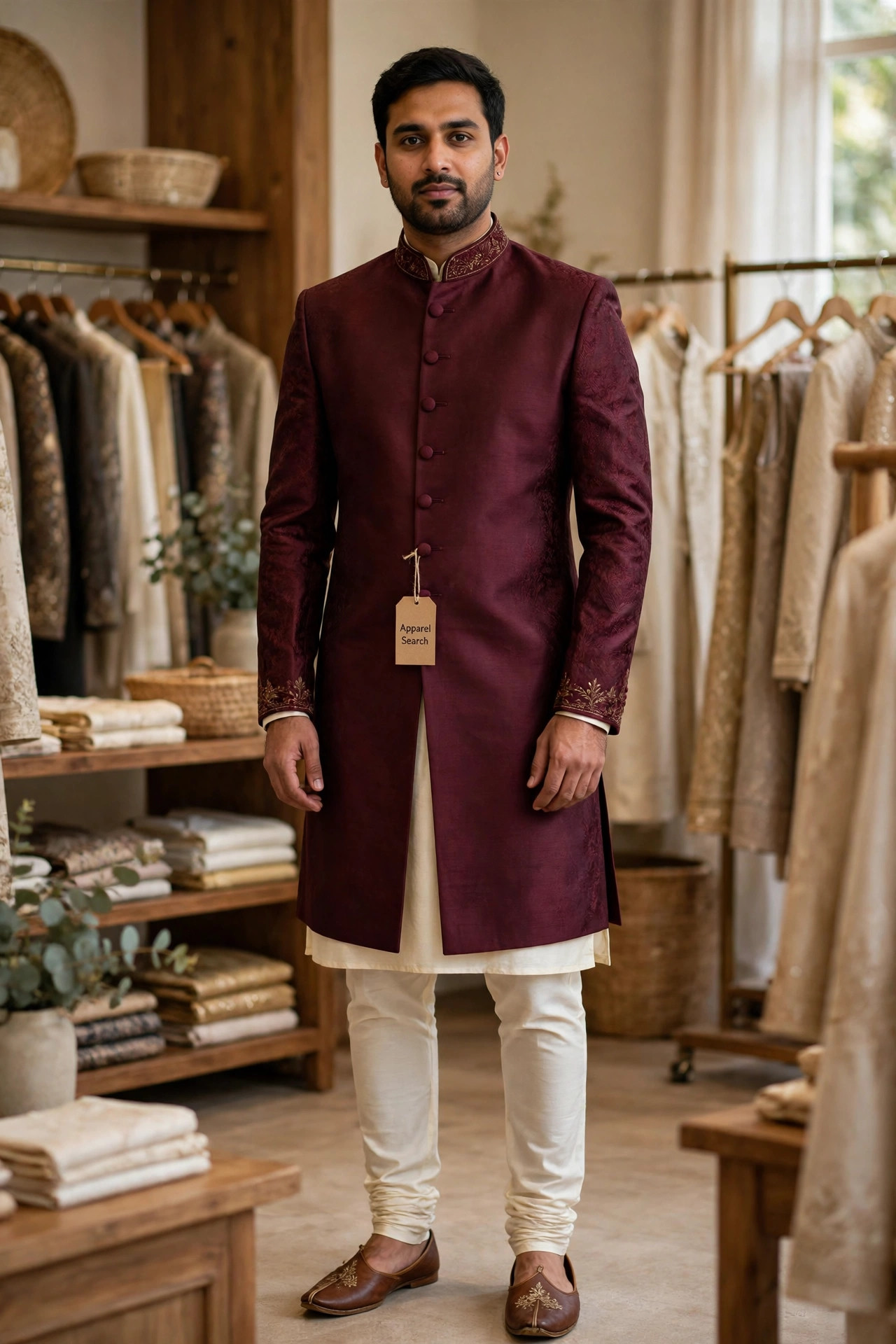
The achkan is the formal coat of South Asian menswear: a tailored, knee-length garment that buttons up the front to a high, standing collar, worn over a kurta with slim trousers. Where the Western suit signals formality with a lapel and tie, the achkan does it with line, cloth and restraint — a clean column of silk or brocade, finished with covered buttons and, on festive versions, embroidery at the collar and cuffs. For grooms, honoured guests and men marking Eid or a formal reception, a well-fitted achkan remains a first choice.
From Court Dress to the Modern Achkan
The achkan descends from the angrakha and chapkan coats of Mughal court dress, refined during the nineteenth century in the courts of Hyderabad, Lucknow and Delhi into the buttoned, high-collared form known today. It became the dress of noblemen and officials, then — as tailored versions spread — the standard formal coat for urban men across India and Pakistan. In the twentieth century, national leaders wore it as a symbol of dignified, indigenous formality; the short buttoned jacket associated with Jawaharlal Nehru is a close relative of the same cut. Today's achkan keeps that courtly skeleton.
Achkan or Sherwani? Knowing the Difference
The achkan and the sherwani are cousins, and the terms are sometimes used loosely, but tailors distinguish them. The achkan is generally the lighter garment: closer fitting, often unlined or lightly structured, frequently made in cotton-silk, linen blends or wool suiting, and commonly plainer, with decoration concentrated at the collar and cuffs. The sherwani is heavier and more ceremonial — longer, more fully lined and structured, and often richly embroidered in brocade or zardozi for weddings. In short: a coat for a formal summer reception is likely an achkan; one anchoring a groom's wedding outfit is likely a sherwani.
How an Achkan Is Worn
An achkan is always worn over a kurta — the long tunic whose hem shows below the coat, a layered line, part of the look. Below go slim trousers: churidar, whose gathered ankles echo the coat's neatness, or tailored straight trousers in a matching or neutral shade. Footwear is the mojari or jutti — the curled, embroidered slipper of the region — or clean formal shoes for modern receptions. Grooms may add a matching stole over one shoulder and a turban; guests keep accessories minimal: a pocket square, and buttons fastened up to the collar.
Fabrics, Colour and Embroidery
Fabric sets the achkan's season and ceremony. Raw silk, silk blends and jacquard brocade give wedding weight and sheen; cotton-silk and linen blends make breathable summer coats for daytime formality; fine wool and wool blends serve winter evenings in northern regions. Colour runs from ivory, cream and pastels for day weddings to maroon, navy, bottle green and black for night. Embroidery, when present, is placed with restraint — a worked collar, cuff bands, or a single motif line beside the buttons — often in zardozi metallic thread for grooms. Covered buttons in the coat's own fabric are the classic finish.
Choosing and Caring for an Achkan
Fit decides everything: an achkan should follow the shoulder exactly, close smoothly over the chest without pulling at the buttons, and fall to around the knee. Sleeves end at the wrist bone, showing a sliver of kurta cuff. Many men have achkans made to measure — the traditional route — or buy ready-made and have the waist and sleeves adjusted. Care follows the fabric: brocade, silk and embroidered coats are dry-cleaned and stored hanging in breathable covers; plain cotton-silk versions may be gently cleaned as the maker directs. Kept well, an achkan serves for decades of celebrations.
Common Questions
What is the difference between an achkan and a sherwani?
An achkan is the lighter, closer-fitting coat, often unlined and plainer. A sherwani is heavier, longer and more richly embroidered. Both button to a high collar and are worn over a kurta.
What do men wear with an achkan?
A kurta beneath it, churidar or slim trousers, and mojari slippers or formal shoes. Grooms may add a turban and a stole; guests need nothing more than a well-fitted coat.
When is an achkan worn?
At weddings, Eid celebrations, formal receptions and cultural events across India and Pakistan. Silk and brocade versions serve grooms; plainer cotton-silk achkans suit honoured guests.
Traditional & Cultural Dress Guides
Traditional and cultural dress from around the world — every guide in this cluster:
- Men's Achkan
- Men's Boubou & Agbada
- Men's Arkhalig
- Women's Baju Kurung
- Men's Baju Melayu
- Women's Buibui
- Men's Burnous
- Men's Chokha
- Men's Chullo
- Women's Churidar
- Women's Chut Thai
- Women's Deel
- Men's Djellaba
- Women's Dupatta
- Women's Huipil
- Men's Kanzu
- Women's Kebaya
- Women's Kitenge
- Men's Longyi
- Women's Patiala Salwar
- Men's Pheran
- Women's Sampot
- Women's Sinh
- Women's Songket
- Women's Terno
- Women's Hanbok
- Women's Ao Dai
- Women's Dirndl
- Women's Dashiki
- Women's Cheongsam
- Women's Salwar Kameez
- Women's Yukata
- Women's Kaftan
- Women's Abaya
- Men's Lederhosen
- Men's Thawb
- Men's Barong
- Women's Kimono
- Women's Silk Sari
- Women's Sarongs
- Men's Guayabera Shirts
More to Explore on Apparel Search
Next, the slim trouser that so often partners this coat — cut long on purpose, and gathered like bangles at the ankle.
Next: Women's Churidar Guide: trousers gathered like bangles »Looking for Men's Clothing Stores?
This guide helps you understand and choose achkan styles with confidence. To browse where to buy, visit our mens clothing store directory, where you can find retailers that carry them.