Women's Deel Guide
Mongolia's long wrap robe, worn by everyone — with women's cuts, colours and trims of their own.
Shop Deel Now
Shop on Amazon Shop on eBayThe Amazon and eBay links on this page are affiliate links. If you make a purchase through them, Apparel Search may earn a commission.
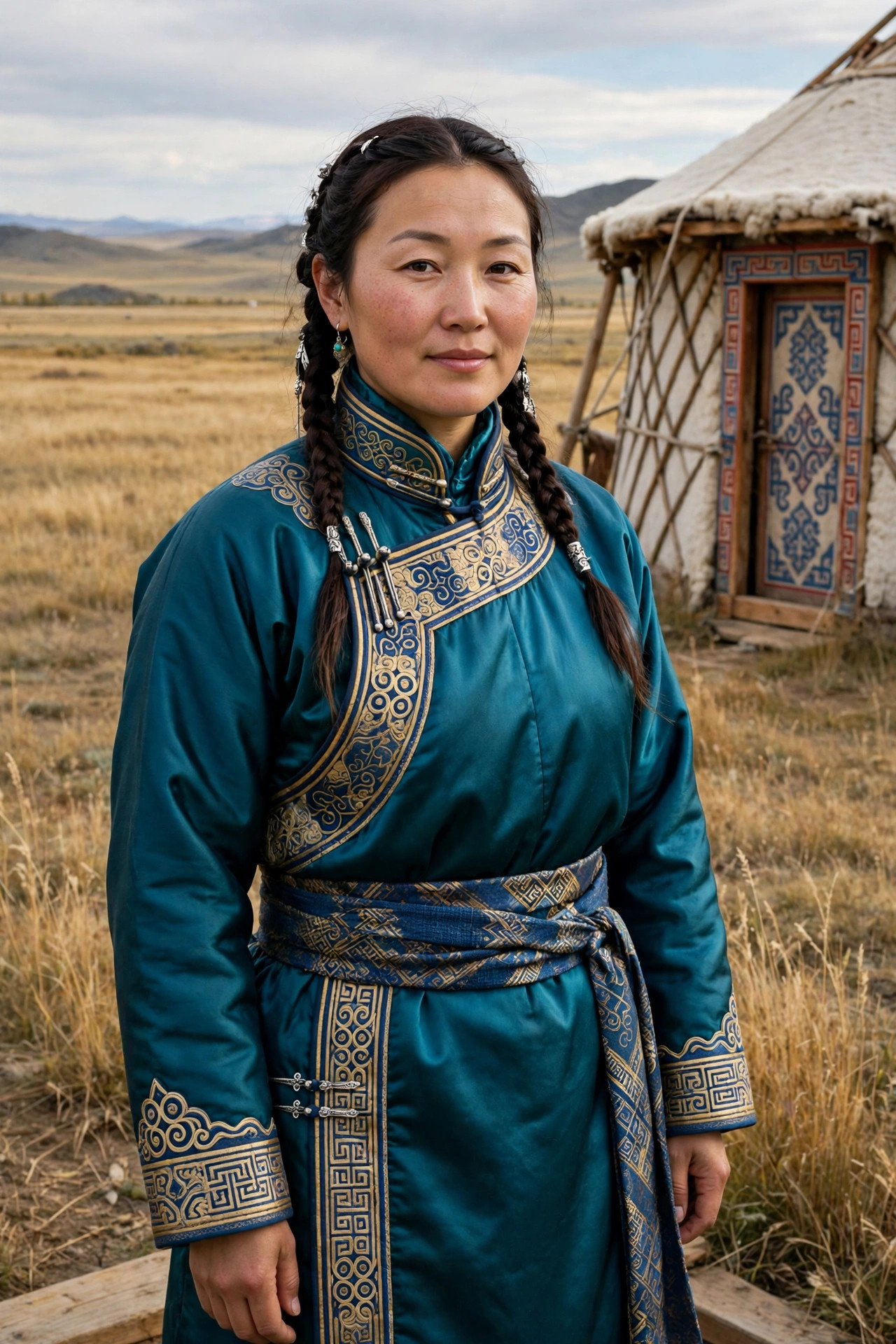
The deel is the long, wrap-front robe worn across Mongolia, practical dress for steppe life for centuries and still the garment of choice for festivals and formal occasions. It is worn by all genders in Mongolia, by herders, elders, officials and children alike. This page leans toward women's styles: the cuts, colours, trims and accessories that distinguish a woman's deel, while the basic construction, a high collar, a diagonal wrap closure and a long sash belt, is shared by the whole family.
Construction: Collar, Wrap and Sash
A deel wraps across the body and fastens at the side and under the arm with knotted frog buttons, forming a diagonal line from the high, standing collar. The long sleeves extend over the hands in winter as built-in protection, and the robe falls to the ankles over trousers or boots. A very long sash, the bus, winds several times around the waist, supporting the back for riding and creating the chest space traditionally used to carry small items. Women's deels shape the waist more noticeably.
How Women's Deels Differ
Women's deels are often cut with a more defined waist, sometimes with a gathered or slightly flared skirt below the sash, and pointed or decorated sleeve cuffs. Colours run brighter and richer than men's everyday browns and blues: turquoise, coral red, purple and green silks with contrasting collar and cuff trim in orange or gold. Married women traditionally wore a distinctive two-piece style with a cropped jacket over a skirt in some regions, and headdresses and silver jewellery complete formal dress.
Fabrics: From Everyday Cotton to Festival Silk
Working deels are made from hard-wearing cotton and wool, padded and quilted for the Mongolian winter. Festival and wedding deels use silk and brocade, often with woven or embroidered motifs, clouds, waves and endless knots, in auspicious colours. The lining matters in a continental climate: a good deel is a complete weather system, worn with layers beneath in winter and alone in summer. Bright synthetic silks are now common for dance and celebration wear, lighter and easier to clean.
Occasions, Choosing and Care
Mongolians wear the deel for Tsagaan Sar (Lunar New Year) greetings, Naadam festival in July, weddings, graduations and official photographs, and many older people wear it daily. When choosing a women's deel, check that the wrap closes smoothly, the sash length allows several firm turns, and the skirt clears your boots when walking. Silk and brocade deels are best professionally cleaned; cotton versions can be washed gently. Store hanging or loosely folded, sash separate, away from strong light.
Common Questions
Is the deel worn by men as well as women?
Yes. The deel is worn by all genders in Mongolia. Women's styles usually have a more shaped waist, brighter colours, decorated cuffs and, in some regions and traditions, a two-piece form for married women.
What is the sash on a deel for?
The long sash, or bus, wraps several times around the waist. It supports the back for riding and daily work, shapes the robe, and traditionally creates carrying space at the chest for small items.
When do women wear a deel today?
For Tsagaan Sar (Lunar New Year), the Naadam festival, weddings, graduations and formal occasions, as well as daily wear for some. Festival deels are silk or brocade in bright, auspicious colours.
Traditional & Cultural Dress Guides
Traditional and cultural dress from around the world — every guide in this cluster:
- Women's Deel
- Men's Achkan
- Men's Boubou & Agbada
- Men's Arkhalig
- Women's Baju Kurung
- Men's Baju Melayu
- Women's Buibui
- Men's Burnous
- Men's Chokha
- Men's Chullo
- Women's Churidar
- Women's Chut Thai
- Men's Djellaba
- Women's Dupatta
- Women's Huipil
- Men's Kanzu
- Women's Kebaya
- Women's Kitenge
- Men's Longyi
- Women's Patiala Salwar
- Men's Pheran
- Women's Sampot
- Women's Sinh
- Women's Songket
- Women's Terno
- Women's Hanbok
- Women's Ao Dai
- Women's Dirndl
- Women's Dashiki
- Women's Cheongsam
- Women's Salwar Kameez
- Women's Yukata
- Women's Kaftan
- Women's Abaya
- Men's Lederhosen
- Men's Thawb
- Men's Barong
- Women's Kimono
- Women's Silk Sari
- Women's Sarongs
- Men's Guayabera Shirts
Next, south to Myanmar, where a single wrapped cloth dresses a nation.
Next: Men's Longyi Guide: Myanmar's wrapped paso for men, knotted at the waist and worn every day »Looking for Women's Clothing Stores?
This guide helps you understand and choose deel styles with confidence. To browse where to buy, visit our womens clothing store directory, where you can find retailers that carry them.