Men's Baju Melayu Guide
Malaysia's classic men's ensemble: a long tunic and trousers, finished with a woven samping at the waist and a songkok cap.
Shop Baju Melayu Now
Shop on Amazon Shop on eBayThe Amazon and eBay links on this page are affiliate links. If you make a purchase through them, Apparel Search may earn a commission.
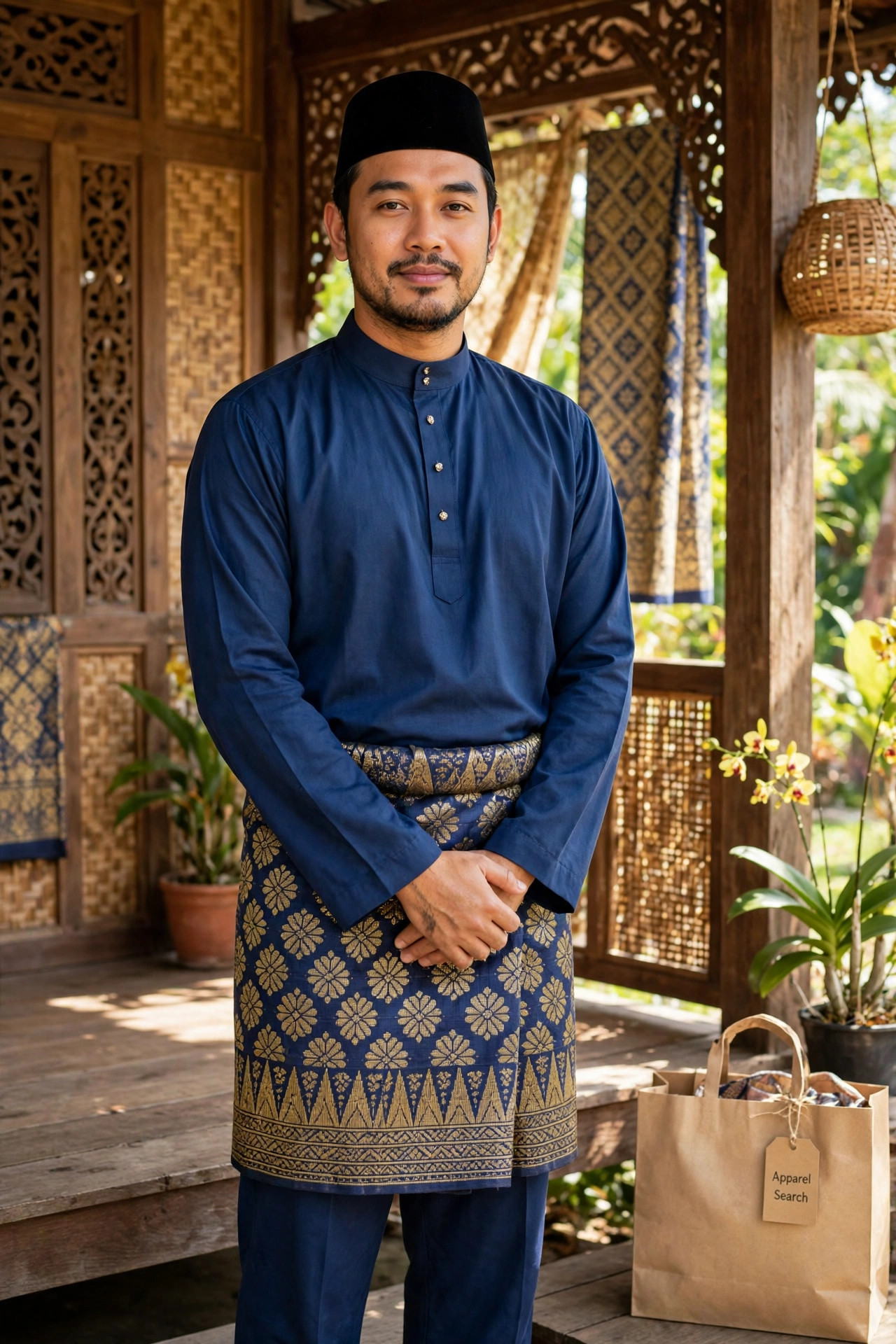
The baju melayu is the traditional men's dress of Malaysia and the wider Malay world, also worn in Brunei, Singapore, southern Thailand and parts of Indonesia. Its name simply means Malay shirt, but the full ensemble is a complete outfit: a loose, long-sleeved tunic worn over matching trousers, with a short sarong-like samping wrapped at the waist and a songkok cap. Men wear it for Friday prayers, Hari Raya Aidilfitri, weddings and official ceremonies, where it reads as both national dress and formal dress.
Two Collars: Cekak Musang and Teluk Belanga
The tunic is cut in two classic collar styles. Cekak musang has a raised standing collar, about two centimetres high, fastened with a single stud-like button, and is the more formal of the two, long associated with Johor and palace wear. Teluk belanga has a simple round neckline with a short slit, finished with neat stitching and no collar, giving a softer, more relaxed line. Both versions have long sleeves, a loose straight body and side slits that let the wearer sit and move comfortably.
The Samping, Songkok and Finishing Details
The samping is a short cloth, often richly woven songket with gold or silver thread, folded and wrapped around the waist over the tunic, its length and fold adjusted for the occasion. The black velvet songkok, a truncated oval cap, completes the formal look. Small details matter: tunic buttons may be linked studs in metal or crystal for weddings, pockets sit at the chest and lower front, and the trousers are plain, straight and cut to match the tunic exactly in colour and fabric.
Fabrics and Colours
Everyday and prayer wear favours breathable cotton and cotton blends that stay cool in a tropical climate. For Hari Raya and weddings, men choose satin, silk blends and matte duchess fabrics with a gentle sheen, in colours coordinated with family members, a long-standing festive tradition. Songket samping cloths are the splurge piece, handwoven on looms with metallic supplementary weft. Plain, well-pressed fabric in a deep, solid colour photographs best and honours the garment's clean lines better than busy prints.
Choosing and Caring for a Baju Melayu
Buy the collar you will actually wear: cekak musang for formal and official settings, teluk belanga for comfort and family gatherings. The tunic should skim, not cling, with sleeves ending at the wrist and room to raise the arms for prayer. Check that trousers and tunic are a true colour match in daylight. Wash cotton sets gently and separately at first, iron on a medium setting, and store songket folded away from direct light, refolding occasionally so metallic threads do not crease and crack.
Common Questions
What is the difference between cekak musang and teluk belanga?
Cekak musang has a raised standing collar fastened with a single stud and is the more formal style. Teluk belanga has a plain round neckline with a short slit and no collar, giving a softer, more relaxed look.
What do men wear with a baju melayu?
Matching straight trousers, a samping cloth, often songket, wrapped at the waist over the tunic, and a black songkok cap. For weddings, decorative linked stud buttons replace plain fastenings.
When is the baju melayu worn?
For Friday prayers, Hari Raya Aidilfitri and other festivals, weddings, and official and national ceremonies in Malaysia, Brunei and Singapore. Coordinated family colours are a popular Hari Raya tradition.
Traditional & Cultural Dress Guides
Traditional and cultural dress from around the world — every guide in this cluster:
- Men's Baju Melayu
- Men's Achkan
- Men's Boubou & Agbada
- Men's Arkhalig
- Women's Baju Kurung
- Women's Buibui
- Men's Burnous
- Men's Chokha
- Men's Chullo
- Women's Churidar
- Women's Chut Thai
- Women's Deel
- Men's Djellaba
- Women's Dupatta
- Women's Huipil
- Men's Kanzu
- Women's Kebaya
- Women's Kitenge
- Men's Longyi
- Women's Patiala Salwar
- Men's Pheran
- Women's Sampot
- Women's Sinh
- Women's Songket
- Women's Terno
- Women's Hanbok
- Women's Ao Dai
- Women's Dirndl
- Women's Dashiki
- Women's Cheongsam
- Women's Salwar Kameez
- Women's Yukata
- Women's Kaftan
- Women's Abaya
- Men's Lederhosen
- Men's Thawb
- Men's Barong
- Women's Kimono
- Women's Silk Sari
- Women's Sarongs
- Men's Guayabera Shirts
Next, the glittering handwoven cloth that finishes this outfit — and stands alone as art.
Next: Women's Songket Guide: Malaysia and Indonesia's cloth of gold — handwoven songket for samping, sarongs and ceremony »Looking for Men's Clothing Stores?
This guide helps you understand and choose baju melayu styles with confidence. To browse where to buy, visit our mens clothing store directory, where you can find retailers that carry them.