Men's Longyi Guide
Myanmar's everyday wrapped cloth: the men's paso, knotted at the front and worn from market to office.
Shop Longyi Now
Shop on Amazon Shop on eBayThe Amazon and eBay links on this page are affiliate links. If you make a purchase through them, Apparel Search may earn a commission.
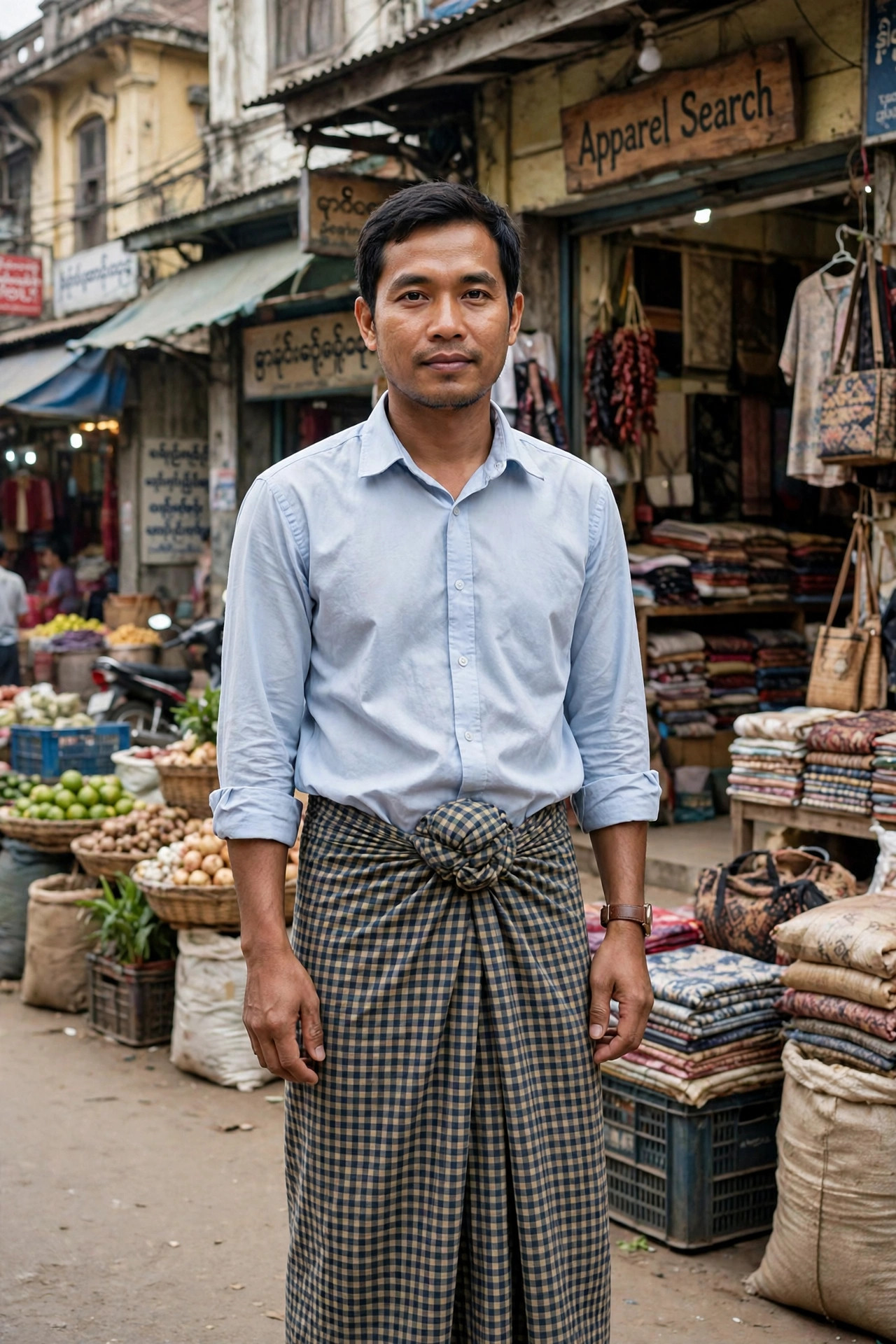
The longyi is the tube-shaped cloth worn wrapped at the waist by men and women throughout Myanmar, as ordinary daily dress for work, school, worship and celebration. The cloth is sewn into a cylinder, stepped into, folded and secured without buttons or zips, cool in a tropical climate and easy to adjust, wash and replace. This page focuses on the men's version, the paso, while noting the women's htamein, because the two share one cloth and one national wardrobe.
The Men's Paso and How It Is Tied
A paso is a wide tube of cloth, typically checked, striped or in deep plain colours. The wearer steps in, pulls the cloth up to the waist, gathers the excess at the front, folds it flat from both sides and tucks or knots the top edge, the folded bundle sitting neatly at the centre front. A firm tuck is the skill: a well-tied paso survives a working day, a football kickabout and a bus ride. In formal wear the paso is longer, cleaner and carefully pressed.
The Women's Htamein, in Brief
Women's longyi, the htamein, is wrapped and fastened differently, traditionally overlapping at the side or front and secured with a tuck or a small fastening at the waistband, often with a black waistband panel at the top and patterned or floral cloth below. It is worn with a fitted blouse, the eingyi. Patterns and colours for women run brighter and more varied than men's checks, and silk htamein with woven designs are treasured for weddings and merit-making ceremonies.
Fabrics, Checks and Regional Weaving
Everyday pasos are cotton, cheap, cool and quick to dry, in checks and stripes woven or printed in greens, blues, maroons and browns. Finer longyis use silk and silk-cotton, including the elaborate acheik wave patterns woven in Amarapura, among the most skilled and expensive textiles in Myanmar. Regional weaving centres add their own stripes and motifs, and a man's choice of a crisp, well-woven paso with a shirt and jacket is standard smart dress for offices and occasions alike.
Wearing, Choosing and Caring
Men pair the paso with shirts, from casual short sleeves to a white shirt, traditional collarless jacket and blazer for formal events, and with sandals in daily life. When choosing a longyi, check the tube's width against your waist, you need generous overlap for a secure fold, and choose cotton for daily wear, silk blends for ceremony. Longyis wash easily by hand or machine, dry fast in the sun, and should be stored folded flat; silk acheik pieces deserve gentle washing and shade drying.
Common Questions
What is the difference between a paso and a htamein?
Paso is the men's longyi, gathered and knotted or tucked at the front in checks, stripes or plain colours. Htamein is the women's longyi, wrapped and fastened at the waist, often with a dark waistband and brighter patterned cloth.
How does a longyi stay up without fasteners?
The tube cloth is pulled to the waist, the excess folded flat from both sides at the front, and the top edge tucked or knotted firmly. A well-practised tuck keeps a paso secure all day.
What fabrics are longyis made from?
Cotton for everyday wear, in woven checks and stripes, and silk or silk-cotton for formal wear. The finest, from Amarapura, carry elaborate acheik wave patterns and are highly prized.
Traditional & Cultural Dress Guides
Traditional and cultural dress from around the world — every guide in this cluster:
- Men's Longyi
- Men's Achkan
- Men's Boubou & Agbada
- Men's Arkhalig
- Women's Baju Kurung
- Men's Baju Melayu
- Women's Buibui
- Men's Burnous
- Men's Chokha
- Men's Chullo
- Women's Churidar
- Women's Chut Thai
- Women's Deel
- Men's Djellaba
- Women's Dupatta
- Women's Huipil
- Men's Kanzu
- Women's Kebaya
- Women's Kitenge
- Women's Patiala Salwar
- Men's Pheran
- Women's Sampot
- Women's Sinh
- Women's Songket
- Women's Terno
- Women's Hanbok
- Women's Ao Dai
- Women's Dirndl
- Women's Dashiki
- Women's Cheongsam
- Women's Salwar Kameez
- Women's Yukata
- Women's Kaftan
- Women's Abaya
- Men's Lederhosen
- Men's Thawb
- Men's Barong
- Women's Kimono
- Women's Silk Sari
- Women's Sarongs
- Men's Guayabera Shirts
Next, climb to the Andes for a knitted hat made for thin, cold air.
Next: Men's Chullo Hat Guide: Peru and Bolivia's knitted earflap hat in alpaca wool »Looking for Men's Clothing Stores?
This guide helps you understand and choose longyi styles with confidence. To browse where to buy, visit our mens clothing store directory, where you can find retailers that carry them.