Women's Patiala Salwar Guide
Punjab's generous trouser: metres of pleats gathered from the waist, made for comfort, movement and dance.
Shop Patiala Salwar Now
Shop on Amazon Shop on eBayThe Amazon and eBay links on this page are affiliate links. If you make a purchase through them, Apparel Search may earn a commission.
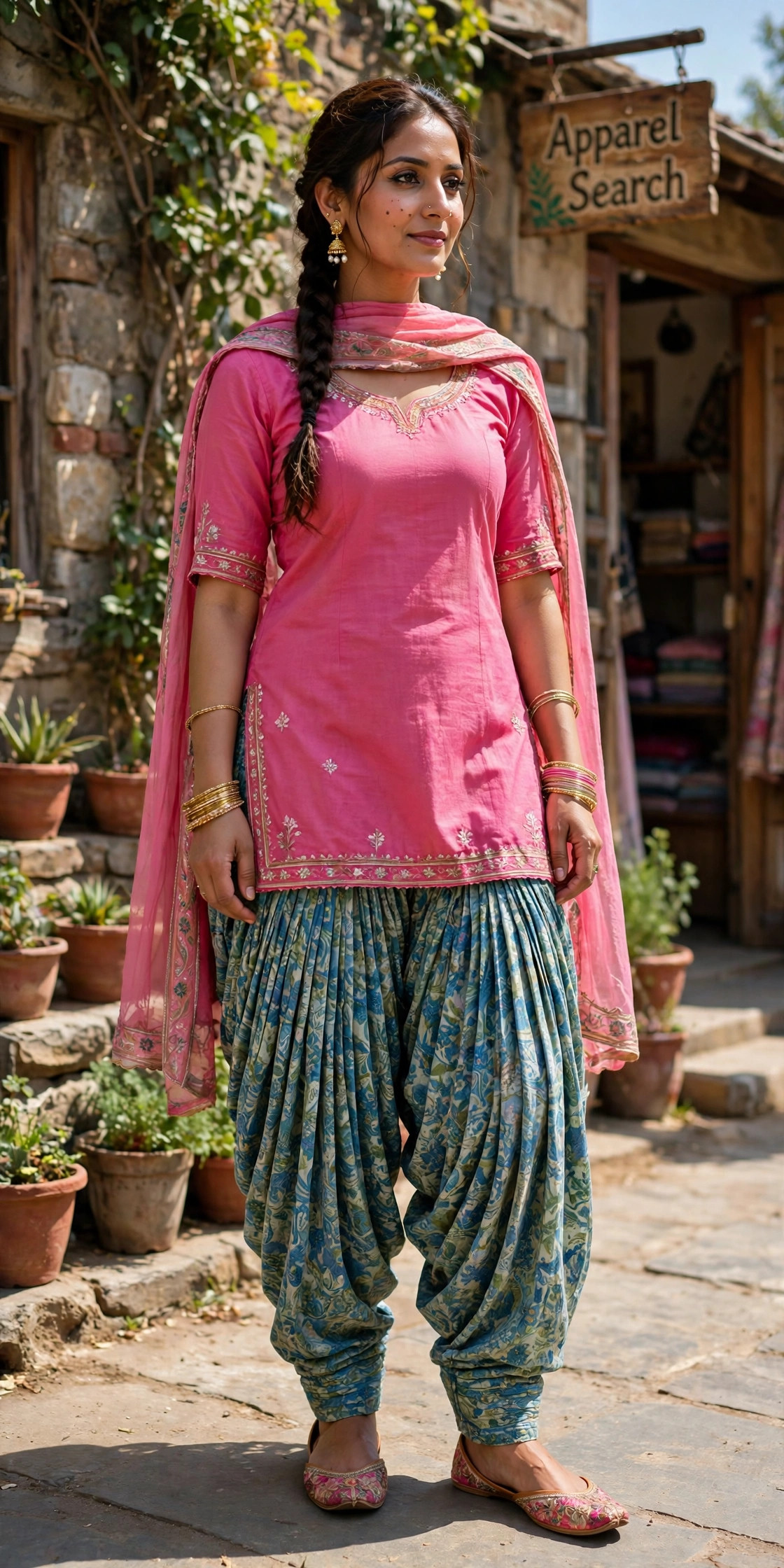
The Patiala salwar is the fullest trouser in the salwar family: a wide, flowing leg built from generous pleats that fall from the waistband and gather into a neat cuff at the ankle. It is named for Patiala, the city of Punjab in northern India, and it remains the signature bottom of the Punjabi suit, worn with a short kameez and dupatta by women across Punjab and the diaspora. If the regular salwar kameez is South Asia's everyday classic, the Patiala version is its most joyful expression — a garment designed to move.
From Patiala: A Royal City's Trouser
Patiala was one of the great princely states of Punjab, and its court dress favoured volume and ease in the region's heat. The pleated salwar that took the city's name suited that life: roomy enough for riding, working and sitting on the floor, yet finished with an ankle that kept the cloth clear of the ground. From court and city wear it passed into the everyday dress of Punjabi women. The style is inseparable from Punjab's culture of celebration — a Patiala salwar in full swing is the partner to bhangra rhythm and wedding dancing.
How the Pleats Are Made
A Patiala salwar uses more cloth than a standard salwar — often close to twice as much — and its construction is all in the top. The fabric is gathered into many soft pleats stitched into the waistband, traditionally drawn up with a woven drawstring, the nala. The pleats fall open through the leg, giving its characteristic ballooning drape, then collect into a fitted ankle band, the poncha, sometimes with a small buttoned opening. The point is balance: pleats distributed evenly front and back, so the trouser hangs straight, swings freely and never twists as the wearer walks.
The Classic Punjabi Suit
The Patiala salwar is worn with a short kameez, ending at or above the hip, precisely so the pleats can be seen — a long top over Patiala pleats hides the whole point of the garment. A dupatta completes the suit, draped over the shoulders or head, and in Punjab the most festive choice is a phulkari dupatta, its silk-thread embroidery glowing against a plainer suit. Flat embroidered juttis are the traditional footwear. The outfit serves daily life, market days, family gatherings, gurudwara visits and weddings alike, its formality set by fabric and embroidery.
Fabrics and Prints
Daily Patiala salwars are cotton and cotton blends — breathable, washable and strong enough for the pleats to hold their fall. Rayon and crepe give a softer, swishier drape that many women prefer for the style's movement, while silk and brocade-trimmed versions serve weddings. Punjabi taste runs to pattern: printed salwars under plain kameez, plain salwars under printed or embroidered kameez, and checks, florals and geometrics mixed with a practised eye. Because the pleats multiply whatever cloth is used, a small print reads rich and a bold print becomes a celebration — choose scale with the occasion in mind.
Choosing, Wearing and Care
Judge a Patiala salwar by its pleats: they should start evenly at the waist, fall without pulling, and gather cleanly into the ankle cuff. Length matters — the cuff should sit at the ankle bone, since extra length drags the pleats and spoils the swing. The drawstring should tie flat and stay tied through a day of sitting and standing. Care is straightforward for cotton: machine or hand wash, shake the pleats out before drying, and iron with the pleats smoothed in their natural direction. Festive silk pairs are cleaned as the fabric directs and stored folded, not crushed, to protect their fall.
Common Questions
Why does a Patiala salwar have so many pleats?
The pleats give the legs freedom while keeping a graceful, flowing shape. Generous fabric is gathered from the waist, so the trouser moves — and dances — with the wearer.
What length of kameez suits a Patiala salwar?
A short kameez, ending at or above the hip, is classic, leaving the pleats fully visible. Longer tops hide its best feature.
Where does the Patiala salwar come from?
Patiala city in Punjab, where its roomy pleated cut suited the region's royal courts and everyday life alike. It remains the signature trouser of the Punjabi suit.
Traditional & Cultural Dress Guides
Traditional and cultural dress from around the world — every guide in this cluster:
- Women's Patiala Salwar
- Men's Achkan
- Men's Boubou & Agbada
- Men's Arkhalig
- Women's Baju Kurung
- Men's Baju Melayu
- Women's Buibui
- Men's Burnous
- Men's Chokha
- Men's Chullo
- Women's Churidar
- Women's Chut Thai
- Women's Deel
- Men's Djellaba
- Women's Dupatta
- Women's Huipil
- Men's Kanzu
- Women's Kebaya
- Women's Kitenge
- Men's Longyi
- Men's Pheran
- Women's Sampot
- Women's Sinh
- Women's Songket
- Women's Terno
- Women's Hanbok
- Women's Ao Dai
- Women's Dirndl
- Women's Dashiki
- Women's Cheongsam
- Women's Salwar Kameez
- Women's Yukata
- Women's Kaftan
- Women's Abaya
- Men's Lederhosen
- Men's Thawb
- Men's Barong
- Women's Kimono
- Women's Silk Sari
- Women's Sarongs
- Men's Guayabera Shirts
More to Explore on Apparel Search
Next, the scarf that completes the Punjabi suit — and nearly every traditional outfit in this cluster.
Next: Women's Dupatta Guide: draping, fabrics and borders »Looking for Women's Clothing Stores?
This guide helps you understand and choose patiala salwar styles with confidence. To browse where to buy, visit our womens clothing store directory, where you can find retailers that carry them.