Women's Kitenge Guide
East and Central Africa's bold printed cotton — bought as cloth, tailored into dresses, skirts and wraps that carry pattern and meaning.
Shop Kitenge Now
Shop on Amazon Shop on eBayThe Amazon and eBay links on this page are affiliate links. If you make a purchase through them, Apparel Search may earn a commission.
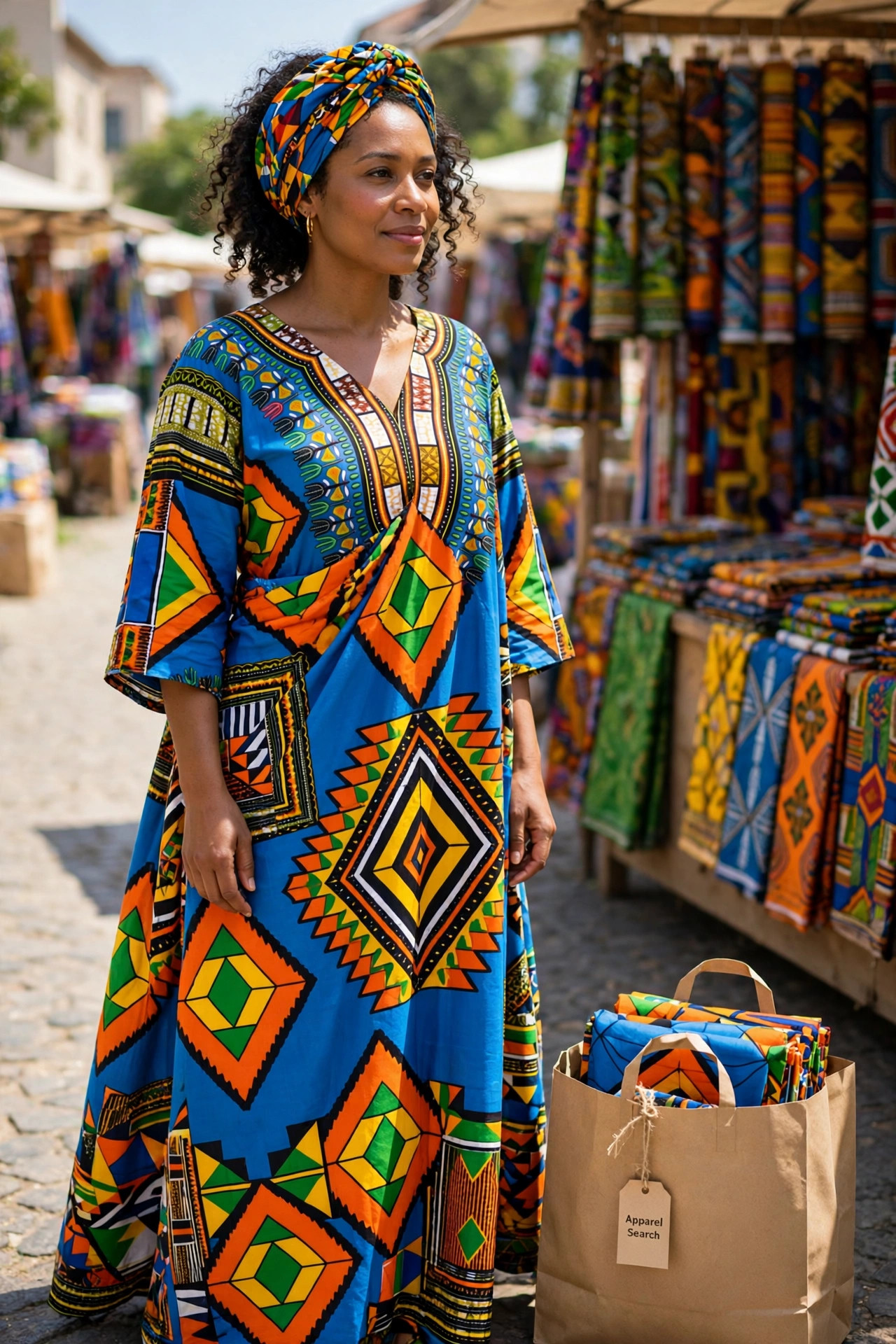
Kitenge — called chitenge in parts of Central Africa — is the bold printed cotton that dresses women across East and Central Africa, from Tanzania and Kenya to Zambia, Malawi and the Congo. Unlike a finished garment, kitenge begins as cloth: lengths of vividly patterned cotton sold in markets and shops, which a woman chooses for its colours and motifs and takes to a tailor. The result is clothing that is at once widely shared and entirely personal — the same print worn by many, cut differently for each wearer.
The Cloth: Print, Border and Sayings
Kitenge is printed in the wax-resist tradition, giving it saturated colour and crisp, large-scale pattern on both sides of a sturdy cotton. Designs range from bold geometrics and swirling florals to motifs drawn from daily life, politics and celebration. Many lengths include a contrasting border along one edge, placed by the tailor at a hem, neckline or waist for effect, and some carry a printed proverb or saying in Swahili or another local language — a message the wearer literally wears, making kitenge a form of communication as well as decoration. West African print traditions offer a lively comparison in our women's Dashiki guide.
From Length to Garment
The tailor is central to kitenge culture. From a standard length, women commission fitted dresses with shaped waists and flared skirts, two-piece sets of blouse and skirt or wrap skirt, and tailored jackets and trousers in modern cuts. Untailored, the same cloth works as a wrapper skirt, a headwrap, a shawl and a secure, comfortable baby carrier worn on the back. Because the cloth is sold uncut, fit and style are the wearer's own choices — a kitenge dress fits its owner as few ready-made garments can.
Fabrics and Quality
True kitenge is cotton: breathable, durable and able to hold intense colour through years of washing. Quality varies, and experienced buyers judge it by hand and eye — the print should be sharp and equally clear on the reverse, the cotton firm rather than flimsy, and the colours deep and even. Lighter or blended cloths imitate the look at lower cost but fade and thin faster. A good kitenge softens pleasantly with wear while its pattern stays vivid, which is why treasured lengths are kept, re-tailored and handed on.
Occasions and Styling
Kitenge is everyday dress and celebration dress alike. Matching kitenge outfits — the same print tailored for a whole group — are a beloved feature of weddings, church services, women's gatherings and family photographs, expressing unity and joy. For daily wear, a kitenge skirt or dress pairs with a plain top that lets the print lead; for occasions, a fully tailored kitenge dress with the border placed at the hem needs only simple jewellery. Headwraps in the same or a coordinating print complete a formal look.
Choosing and Care
Buy kitenge by the full printed length so the border and any saying remain intact for the tailor to place well, and choose pattern scale to suit the garment — large motifs reward wide skirts and wraps, smaller prints suit fitted bodices. Wash new kitenge separately in cold water, since rich dyes can release colour at first, then with similar colours; dry in shade and iron on the reverse to protect the surface. Treated so, kitenge keeps the brilliance that made you choose it.
Common Questions
What is kitenge?
A boldly printed cotton cloth of East and Central Africa, sold in lengths and tailored into dresses, skirts, blouses and wraps. It is known for large, vivid patterns, often with a border design and sometimes a printed saying.
How is kitenge worn?
Most often tailored to measure by a local tailor — fitted dresses, two-piece skirt sets and wraps — and also worn as a wrapper, headwrap or baby carrier. Matching outfits are popular for celebrations.
How do you care for kitenge cotton?
Wash cold and gently with similar colours, especially in early washes, and dry in shade to protect the vivid print. The cotton softens with wear while good prints keep their colour.
Traditional & Cultural Dress Guides
Traditional and cultural dress from around the world — every guide in this cluster:
- Women's Kitenge
- Men's Achkan
- Men's Boubou & Agbada
- Men's Arkhalig
- Women's Baju Kurung
- Men's Baju Melayu
- Women's Buibui
- Men's Burnous
- Men's Chokha
- Men's Chullo
- Women's Churidar
- Women's Chut Thai
- Women's Deel
- Men's Djellaba
- Women's Dupatta
- Women's Huipil
- Men's Kanzu
- Women's Kebaya
- Men's Longyi
- Women's Patiala Salwar
- Men's Pheran
- Women's Sampot
- Women's Sinh
- Women's Songket
- Women's Terno
- Women's Hanbok
- Women's Ao Dai
- Women's Dirndl
- Women's Dashiki
- Women's Cheongsam
- Women's Salwar Kameez
- Women's Yukata
- Women's Kaftan
- Women's Abaya
- Men's Lederhosen
- Men's Thawb
- Men's Barong
- Women's Kimono
- Women's Silk Sari
- Women's Sarongs
- Men's Guayabera Shirts
Travel to Korea for the hanbok, with its high waist, full skirt and cropped jacket.
Next: Women's Hanbok Guide: Korea's elegant formal dress »Looking for Women's Clothing Stores?
This guide helps you understand and choose kitenge styles with confidence. To browse where to buy, visit our womens clothing store directory, where you can find retailers that carry them.