Men's Djellaba Guide
Morocco's long hooded robe — practical in sun and cold alike, and central to everyday and festive dress across North Africa.
Shop Djellaba Now
Shop on Amazon Shop on eBayThe Amazon and eBay links on this page are affiliate links. If you make a purchase through them, Apparel Search may earn a commission.
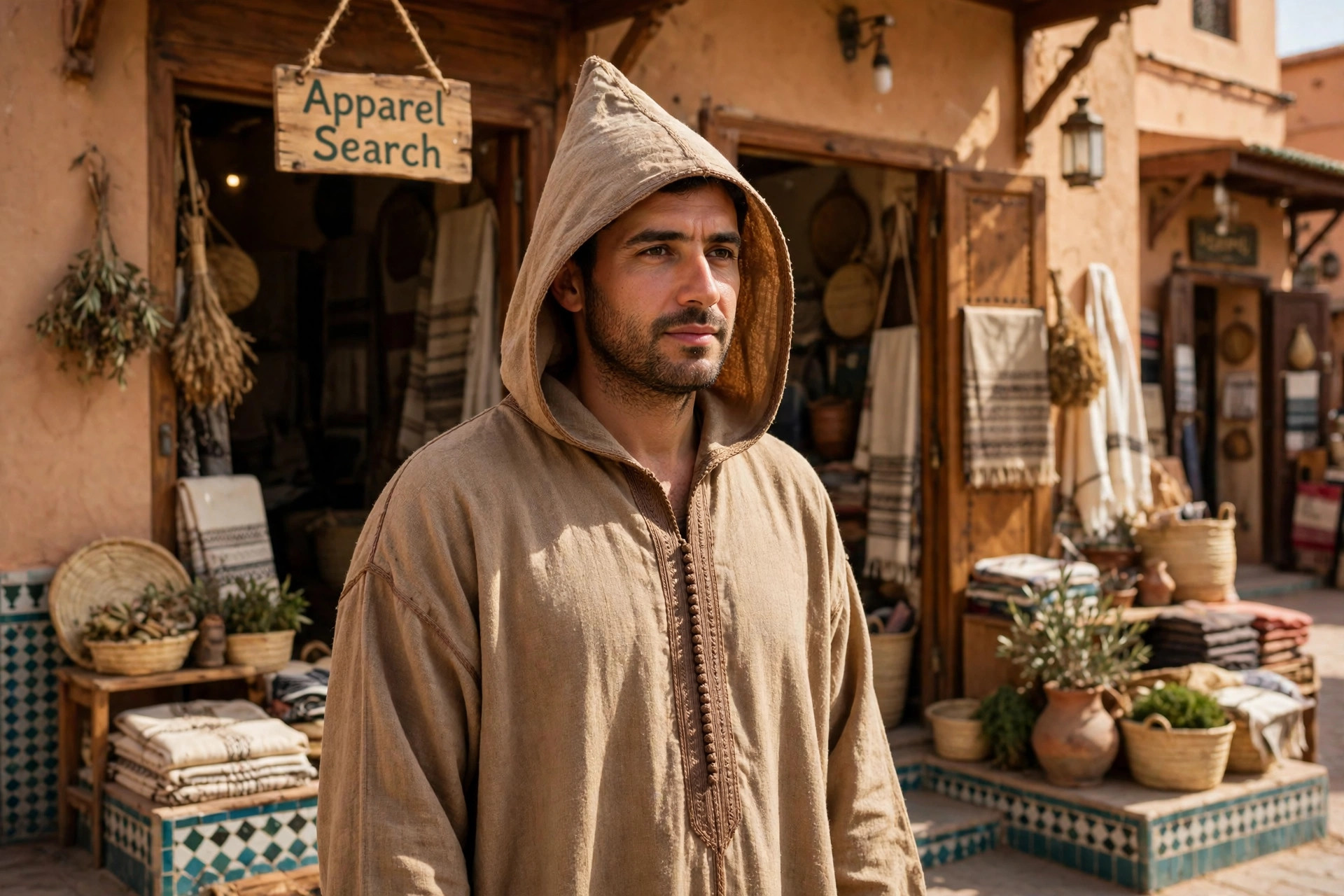
The djellaba is the long, loose robe worn by men across Morocco and much of North Africa, recognised at once by its pointed hood. It is a genuinely all-purpose garment: a man may wear a plain cotton djellaba to the market, a fine wool one to Friday prayers, and an embroidered one to a wedding. Its length protects the legs, its looseness lets air move in heat, and its hood answers sun, wind and cold in turn — a design refined over centuries of daily use in town, countryside and desert edge.
Construction and the Pointed Hood
A djellaba is cut as a long robe with full, set-in sleeves and a front opening that may button or close partway down the chest, with side slits for walking and riding. The hood, called the qob, rises to a point and is sewn into the neckline; worn up, it shades the head and neck, and worn down, it rests decoratively between the shoulders. Traditional finishing includes braided trim and small knotted buttons — sfifa and aqad work — along the front and cuffs, a craft detail that distinguishes a well-made robe. Pockets, often hidden in the seams, keep the line clean.
Fabrics by Season
Summer djellaba are light cotton, linen blends or fine rayon that breathe in heat and wash easily. Winter versions use wool and wool blends, sometimes with a subtle woven stripe, and are heavy enough to serve as a coat over other clothes. Festive djellaba add richer cloth — mlifa and fine woven fabrics — with contrasting braid and embroidery. Colour follows season and occasion: whites, creams and pale stripes for summer and formal wear; earth tones, grey, navy and deep green for winter and everyday use.
How the Djellaba Is Worn
Men wear the djellaba over a shirt and trousers or over a simpler under-robe, with leather slippers — babouches — as the classic footwear, their pointed toes echoing the hood. At weddings and religious festivals, a finer djellaba may be layered and accessorised with a sash or a leather pouch. Women's festive dress in the same region follows a different, more ornate path, explored in our women's Kaftan guide, while the djellaba remains the shared, practical robe of daily North African life for men.
Regional and Festive Variations
Details vary across Morocco and into Algeria and Tunisia: hood size, braid patterns, stripe placement and sleeve width all carry local habits, and mountain, coastal and urban tailors finish the robe differently. What does not vary is the silhouette — long, hooded and unhurried. For Eid, weddings and family celebrations, men choose their best djellaba, freshly pressed, often in white or a light colour with fine trim, worn with clean slippers and sometimes a white cap beneath the hood.
Choosing and Care
A djellaba should fall to between mid-calf and ankle, with sleeves to the wrist and enough ease to layer in winter. Judge the braid and button work first: it should be even, firmly sewn and matched at the front opening. Buy wool for cold weather and cotton for heat rather than expecting one robe to do everything. Wash cotton djellaba gently and dry them in shade; wool versions are better brushed, aired and dry-cleaned when needed. Press the hood flat from the back so its point keeps its crisp, recognisable shape.
Common Questions
What is a djellaba?
A long, loose robe with full sleeves and a distinctive pointed hood, worn by men in Morocco and across North Africa. It serves as everyday dress, work dress and festive dress depending on fabric and finish.
Why does a djellaba have a pointed hood?
The hood — the qob — protects against sun, wind, sand and cold, and can rest down the back when not needed. Its pointed shape is the djellaba's most recognisable feature.
What is the difference between a djellaba and a kaftan?
A djellaba is hooded, usually plainer and worn outdoors by men and women. A kaftan is hoodless, often more ornate and embroidered, and associated especially with women's festive dress.
Traditional & Cultural Dress Guides
Traditional and cultural dress from around the world — every guide in this cluster:
- Men's Djellaba
- Men's Achkan
- Men's Boubou & Agbada
- Men's Arkhalig
- Women's Baju Kurung
- Men's Baju Melayu
- Women's Buibui
- Men's Burnous
- Men's Chokha
- Men's Chullo
- Women's Churidar
- Women's Chut Thai
- Women's Deel
- Women's Dupatta
- Women's Huipil
- Men's Kanzu
- Women's Kebaya
- Women's Kitenge
- Men's Longyi
- Women's Patiala Salwar
- Men's Pheran
- Women's Sampot
- Women's Sinh
- Women's Songket
- Women's Terno
- Women's Hanbok
- Women's Ao Dai
- Women's Dirndl
- Women's Dashiki
- Women's Cheongsam
- Women's Salwar Kameez
- Women's Yukata
- Women's Kaftan
- Women's Abaya
- Men's Lederhosen
- Men's Thawb
- Men's Barong
- Women's Kimono
- Women's Silk Sari
- Women's Sarongs
- Men's Guayabera Shirts
Stay in North Africa for the burnous, the heavy hooded cloak worn over a robe in cold weather.
Next: Men's Burnous Guide: The heavy hooded wool cloak »Looking for Men's Clothing Stores?
This guide helps you understand and choose djellaba styles with confidence. To browse where to buy, visit our mens clothing store directory, where you can find retailers that carry them.