Women's Knit Shirts Guide
The structured end of the knit family: polo shirts, henleys and button-front knits that keep the comfort of a T-shirt and the finish of a woven shirt.
Shop Women's Knit Shirts Now
Shop Women's Knit Shirts on Amazon Shop Women's Knit Shirts on eBayThe Amazon and eBay links on this page are affiliate links. If you make a purchase through them, Apparel Search may earn a commission.
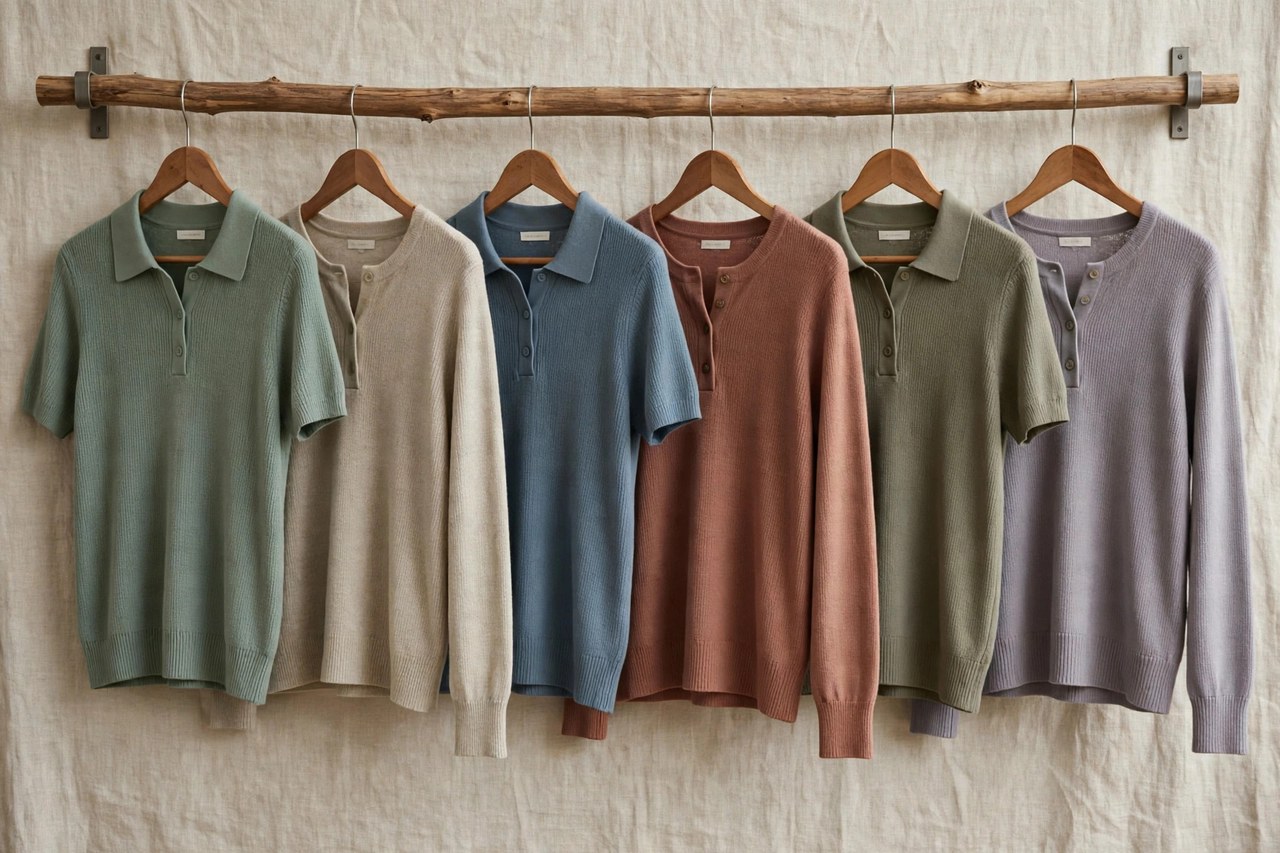
A knit shirt is a shirt made from knitted fabric, and the word shirt does real work in that definition. Knit shirts are the structured members of the knit family: they have collars, plackets, buttons or other defined finishes borrowed from woven shirting, executed in a fabric that stretches. The polo shirt is the archetype — a knitted collar, a short buttoned placket and a finished hem — but the category also covers henleys, button-front knits and knit shirts cut like camp or Oxford styles.
That structure is exactly what separates a knit shirt from a knit top, a distinction shoppers blur constantly. A knit top is any knitted upper-body garment without a woven counterpart in mind: T-shirts, camisoles, fine-gauge pullovers and casual jersey pieces. A knit shirt is defined by its details — collar, placket, cuffs, a shirt-tail or straight finished hem — and those details are what let it stand in for a blouse or woven shirt in settings where a plain top looks unfinished.
Polos, Henleys and Button Knits
The polo began as sportswear and kept its uniform neatness: a ribbed or self-fabric collar that stands or lies flat, two or three buttons, and often a slightly longer back hem. Women's polos are cut slimmer than the classic men's version and work anywhere from the golf course to a casual office, tucked or untucked. The henley is the collarless cousin — a round or scoop neck with a buttoned placket, usually in rib or waffle knit, long- or short-sleeved, and rooted in workwear and underwear rather than sport.
Button knits close the whole front with buttons, like a woven shirt or a light cardigan-shirt hybrid. They are the dressiest knit shirts, especially in fine interlock with a point or band collar, and they layer cleanly under blazers because the knit lies flatter than a sweater. Across all three styles, look at the placket first: it should lie flat with no gaping between buttons when you are seated, because a placket under strain is the detail that gives a knit shirt away.
Jersey, Interlock and Rib Fabrics
Most knit shirts are made from one of three fabrics. Jersey is the single knit of T-shirts: light, smooth on the face, with a tendency to curl at cut edges and to show what is underneath if it is thin. It suits casual polos and henleys. Interlock is a double knit with two smooth faces; it is thicker, more opaque and more stable than jersey, holds a collar's shape better, and is the fabric to choose for button knits and dressier polos that need to look finished all day.
Rib knit alternates raised and recessed columns of stitches, giving pronounced crosswise stretch and a textured surface. Rib is used for henleys, for fitted long-sleeve knit shirts, and almost universally for the collars, cuffs and hems of other knit shirts, where its recovery keeps openings snug. Piqué — the small textured weave-look knit of classic polos — deserves a mention too: its surface hides perspiration and wrinkles better than flat jersey, one reason it has survived a century of sport.
Fit and Care
Fit a knit shirt by its structure, not just its size. The collar should sit smoothly at the neck without choking or gaping; shoulder seams belong at the shoulder edge, since knit gives elsewhere but a dropped shoulder seam simply looks oversized; and the body should skim rather than cling, with enough length to stay tucked through a day of reaching. Buttons should close without the fabric pulling into horizontal lines, and sleeves — short or long — should end cleanly rather than gripping the arm.
Care follows the fabric. Cotton knit shirts wash cool and gentle and may shrink slightly in length, so buy with an inch of grace if you tumble-dry; drying flat or on low heat preserves both size and collar shape. Fold knit shirts or hang them on wide hangers — thin wire hangers leave points in knit shoulders just as they do in sweaters. Button the top button of polos in storage to help the collar keep its line, iron plackets and collars rather than the whole body, and most knit shirts will hold their structure for years.
Related Women's Guides
Photos

Looking for Women's Clothing Stores?
This guide helps you choose women's knit shirts. To browse where to buy, visit our women's clothing store directory, where you can find retailers that carry them.