Men's Patient Gowns Guide
A men's patient gown is the open-backed garment hospitals and clinics issue for examinations and stays: a loose, knee-length wrap of light cotton or cotton-polyester fabric that ties or snaps at the neck and back so clinicians can reach the body quickly while the patient stays as covered as the garment allows. This guide is about the product itself - the fabrics, closures and cuts that separate a dignified, well-made gown from a flimsy one - for patients buying their own, and for facilities choosing what to issue. It sits in this letter beside the printed medical pages, which cover the staff side of the ward.
Shop Men's Patient Gowns Now
Shop Men's Patient Gowns on Amazon Shop Men's Patient Gowns on eBayThe Amazon and eBay links on this page are affiliate links. If you make a purchase through them, Apparel Search may earn a commission.
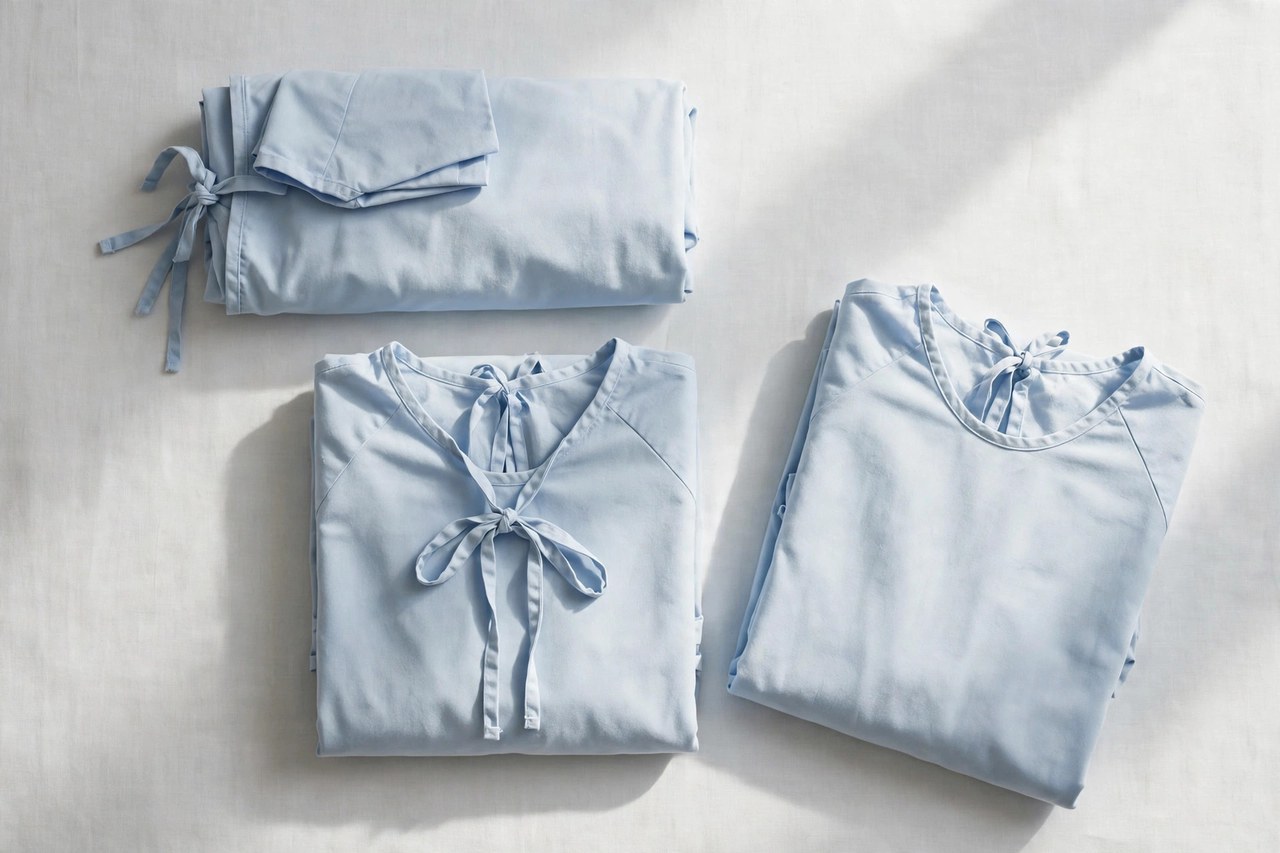
A men's patient gown is the open-backed garment hospitals and clinics issue for examinations and stays: a loose, knee-length wrap of light cotton or cotton-polyester fabric that ties or snaps at the neck and back so clinicians can reach the body quickly while the patient stays as covered as the garment allows. This guide is about the product itself - the fabrics, closures and cuts that separate a dignified, well-made gown from a flimsy one - for patients buying their own, and for facilities choosing what to issue. It sits in this letter beside the printed medical pages, which cover the staff side of the ward. This guide covers the styles worth knowing, the fit points that decide comfort, the fabrics and construction that separate a good buy from a regret, and the simple care that makes the garment last.
Panels, Closures and Coverage
Patient gowns vary more than their reputation suggests. The classic issue gown is a one-size overlap wrap in a cotton or cotton-poly blend, printed in the small sprig or stripe patterns that read as 'hospital' at a glance; heavier versions add a second overlapping panel at the back for real coverage when walking. Closure systems divide the market: ties are cheapest and most adjustable but loosen and tangle in laundry, snaps cost more, survive institutional washing, and preserve modesty better because they stay closed, and side-fastening designs borrowed from adaptive clothing open at the shoulder for lines and monitors. Better gowns add telemetry pockets, IV sleeve snaps that open the arm without undressing, and lengths below the knee. Fabric weight is the honest specification: the lightest gowns are nearly transparent and wear out in dozens of washes, while a midweight blend survives a facility's laundry and still dries fast.
Workwear is judged at the stress points, because the job finds them first: bar-tacked pocket corners and belt loops, double or triple-stitched main seams, reinforced knees, elbows and seats, and hardware - zippers, snaps, rivets - rated for daily cycling rather than occasional wear. Fabric weight is a specification, not a brag: heavier cloth resists abrasion and holds shape, lighter cloth breathes and dries, and the right answer is the one matched to the actual shift, climate and laundry the garment will live in.
Coverage Under Movement
Fit in a patient gown is coverage under movement. The gown should overlap fully at the back when the wearer stands, walks and sits - the three postures a hospital day actually contains - and the neckline should sit high enough to feel decent in a shared room without choking when the wearer lies back. Sleeve length to the elbow keeps arms free for cuffs and lines; three-quarter sleeves are the common compromise. One-size gowns fit the middle of the population and fail at both ends, so facilities serving bariatric or very tall patients need the extended sizes stocked, not improvised. For a man buying his own gown for a planned stay, choose the closure you can work one-handed and a length below the knee; dignity in a corridor is a fit feature, not a luxury.
Fit workwear in the postures of the job: reach overhead, bend, kneel, climb, sit through a charting session or a cab ride. Seams should never be the thing that stops a movement, waistbands should stay where they were put without a belt doing structural work, and lengths should clear the floor and the machinery. Work garments are sized generously by design - buy your measured size and let the cut do its job, rather than sizing down into a uniform that fights every task.
Built for the Institutional Laundry
Patient gowns live an institutional laundry: hot washes, strong detergents and high heat, repeated hundreds of times. Cotton-polyester blends exist precisely because pure cotton shrinks and fades out of that cycle quickly, while the blend holds size and dries faster. Home-bought gowns should follow the same logic gently - wash warm before first wear, expect some softening, and check ties and snaps after the first cycles, since closures fail before fabric does. Facilities judge cost per use, not cost per gown: a heavier gown that survives two hundred cycles is cheaper, and kinder, than a light one replaced at fifty. Retire gowns when the fabric thins at the shoulders and seat or when closures stop holding; a gown that fails in use fails at the worst moment.
Work garments earn a laundry system, not a laundry day: wash by the employer's or the label's hygiene rules, treat stains before heat can set them, and inspect as you fold - a pocket corner letting go, a hem fraying, a button hanging by a thread are all two-minute repairs now and garment failures next month. Keep the rotation honest: a spare set washed and ready is what makes daily laundering possible without wearing any single set to death.
Common Questions
Why do patient gowns open at the back?
For access. The open or overlapping back lets clinicians examine, monitor and treat the patient - listening to the chest and back, attaching leads, giving injections - without removing the garment entirely. Better designs overlap the panels fully or add a second panel and snaps so the opening works for staff while the gown still covers the patient when standing and walking, which is the version worth choosing.
Are snap or tie closures better on a patient gown?
Snaps, for most wearers and facilities. They stay closed under movement, preserve coverage, survive institutional laundry longer, and can be worked one-handed - which matters after surgery. Ties are cheaper and infinitely adjustable, but they loosen, knot in the wash and gap at the back. Shoulder-snap designs are the step beyond both, opening the arm and chest for IV lines and monitors without undressing.
Can a patient bring his own gown to hospital?
Usually yes for a planned stay, and many men prefer it: a privately bought gown in a heavier fabric, with snaps, full back overlap and a below-knee length, is simply a better garment than a worn issue gown. Check with the facility first - some procedures and units require their own gowns for access or hygiene - and choose a gown that opens where clinicians need, or it will be replaced by theirs anyway.
More in Men's Clothes Guide P
The Johnny Gown
This type of clothing is actually unisex — things designed to be suitable for both sexes, in a style in which men and women look and dress in a similar way — though hospital gowns can be designed with colors and print patterns to make them more appealing to different people. A hospital gown, also called a johnny gown or johnny in some regions, is a long loose piece of clothing worn in a hospital by someone doing or having an operation, and it can be used as clothing for bedridden patients. Hospital gowns worn by patients are designed so that hospital staff can easily access the part of the patient’s body being treated — and they are also worn at doctor’s offices, clinics and urgent care, not only in hospitals.
Looking for Men's Clothing Stores?
This guide explains men's patient gowns. To browse where to buy, visit our men's clothing store directory, where you can find retailers that carry them.