Apparel Search Consumer Guides
Headwear for Hair Loss
Soft head coverings explained as garments — fabrics that feel kind on a bare scalp, coverage levels from sleep caps to turbans, and how sizing and fit work when there is no hair to grip.
Most headwear is designed to sit on hair. When hair is lost — during chemotherapy, with alopecia, or for any other reason — the design brief changes completely: the covering touches skin directly, has nothing to grip, and is worn for many more hours of the day, sometimes all of them. A specialist corner of the clothing market exists for exactly this brief, and its products are proper garments with their own fabrics, constructions and sizing. This guide explains them as clothing: what the types are, which fabrics feel kind against a bare scalp, and how to get a fit that stays put. It sits within our post-surgery and medical dressing guide, and it is a natural companion to clothing for infusion and port access and the mastectomy clothing guide, whose readers are often shopping for the same appointment bag.
Fabrics First: What Touches the Scalp
On a bare scalp, fabric choice is the whole comfort question. The specialists work in soft, smooth knits — bamboo jersey, modal, cotton jersey and silk — chosen because they glide rather than drag and feel cool or neutral against skin. Construction matters as much as fibre: look for seams that are flat, placed away from the crown, or moved outside the garment altogether, and avoid rough elastic edges, scratchy lace and stiff labels sitting against the head. Our sensory-friendly clothing page is the deep reference for this way of thinking about fabric, seams and labels, and every principle on it applies here at double strength.
The Covering Types
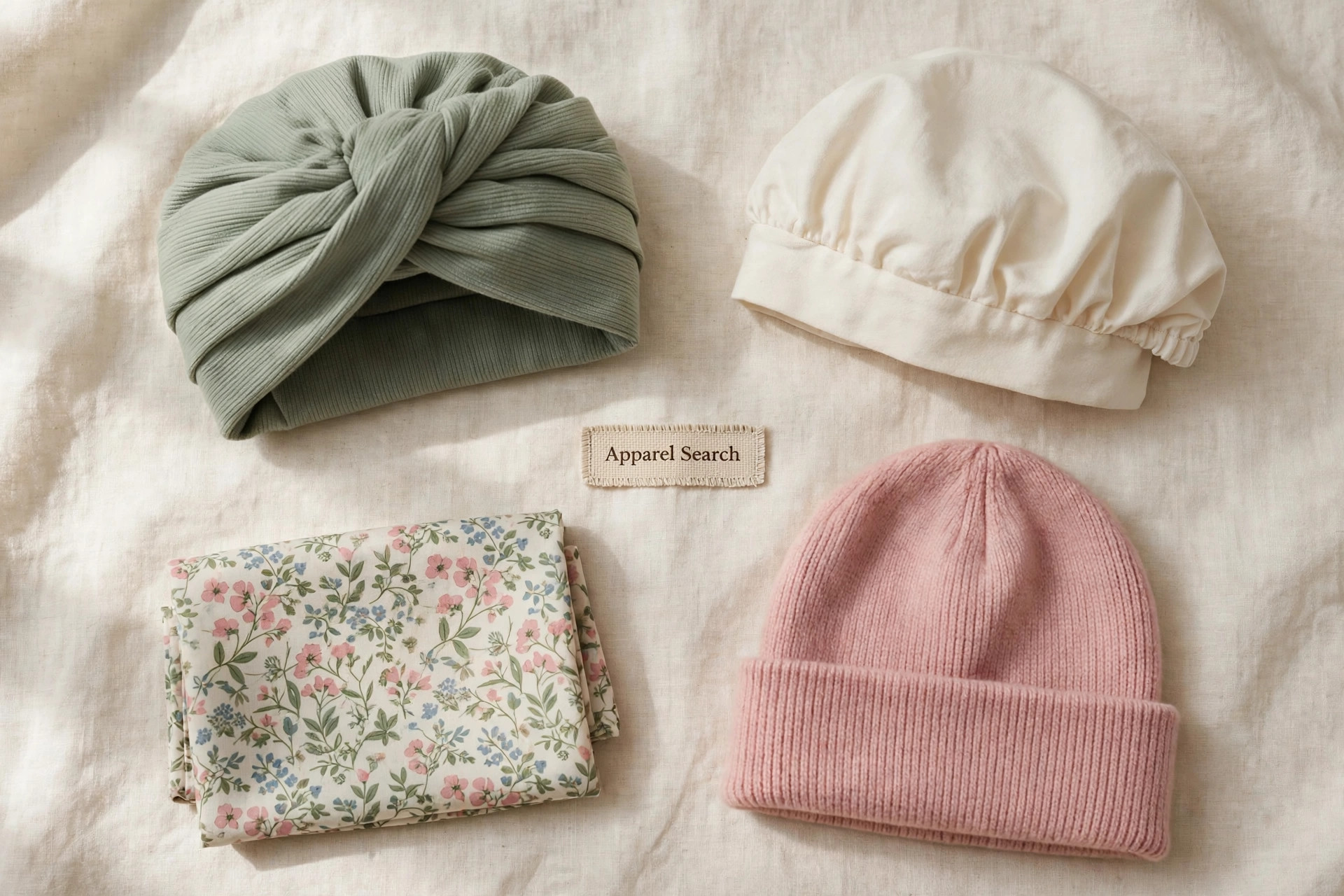
- Turbans. The tailored end of the market: pre-tied and pre-shaped styles that go on like a hat and hold a deliberate shape, and wrap styles you tie yourself for an adjustable fit. Ruched and twisted fronts give the coverage a finished, dressed look.
- Headscarves. The most flexible option — a square or oblong scarf folded and tied to the coverage you want, from full cover to a band. Silk and silk-look squares dress up; cotton and jersey squares stay put more readily. The tying techniques are the scarf skills of ordinary fashion, covered in the women’s scarf guide.
- Sleep caps. Soft, plain, close-fitting caps made purely for the night and the house — no ties, no hardware, nothing to lie on uncomfortably, and warm enough to answer the cold head that surprises many people at night.
- Soft beanies and day caps. Knitted or jersey caps, close-fitting and unstructured, for warmth and quick coverage; the casual end of the range.
- Hats with coverage. Ordinary hats sit differently without hair — sizes run smaller and grips matter — but wide-brim sun hats and soft bucket styles remain the outdoor option, sized by head measurement rather than hair-allowance.
- Wigs, at the garment level. A wig is a cap with hair attached, and its constructions are garment vocabulary: basic caps, lace fronts that finish the hairline, and monofilament tops that let the parting look natural. Wig caps and liners worn underneath give grip and a smooth layer; sizes are by head circumference, and most wigs adjust at the nape. Fit and comfort questions are clothing questions; anything beyond them belongs to the specialists who sell and fit wigs.
Sizing and Staying On
Soft coverings are sized by head circumference: measure around the head, over the ears and across the forehead where a band would sit, and shop by that figure — most ranges run in a small span of sizes or in one-size stretch knits. The fit problem unique to a bare scalp is grip: hair used to supply friction, and without it smooth fabrics travel. The garment answers are grip bands and silicone strips sewn into the band, textured cotton or jersey liners worn beneath, pre-tied styles that hold a set shape, and ties that let you set the tension yourself. If a covering is sold for this market it will usually say how it stays on — take silence on the point as a warning sign, and prefer the styles that answer it.
Building a Small Rotation
Three or four pieces cover most lives: a sleep cap for the night, a soft day covering — turban or beanie — for the house and quick errands, and a scarf or dressed turban for going out properly. Buy the sleep cap first; it is the piece nobody thinks of and everybody uses. Laundering is ordinary gentle washing — these are soft knits, and a small rotation exists partly so one set can be in the wash. For the wider wardrobe of the same period, our adaptive clothing guide covers the easy-dressing features that pair with this one, and the general women’s headwear guide covers hats and headwear as fashion in full.
A Garment Guide, Not Medical Advice
This page covers clothing: features, fit, fastenings and dressing technique. Questions about your condition, your medication or your care belong to your own doctor and care team, and their guidance outranks anything in a product description — including the ones described here.
Shop Soft Headwear on Amazon
Ready to shop? Product links are kept in one place on the Apparel Search shopping guide:
Shop Clothing on AmazonThis link opens the Apparel Search shopping guide for Amazon, where the product links are kept in one place.
Common Questions
What is the softest fabric for a sensitive scalp?
Soft, smooth knits — bamboo jersey, modal, cotton jersey and silk — with flat seams or seams moved away from the crown. On a bare scalp the construction matters as much as the fibre: avoid rough elastic edges, scratchy lace and stiff labels sitting against the skin, and choose linings that glide rather than drag.
How do I keep a scarf or turban from slipping without hair?
Hair used to supply the friction, so the garment has to replace it: grip bands or silicone strips sewn into the band, a textured cotton or jersey liner worn underneath, pre-tied turban styles that hold their shape, and ties that let you set the tension yourself. Coverings made for this market usually state how they stay on — prefer ones that do.
What size headwear do I need?
Measure your head circumference — around the head, over the ears and across the forehead where a band would sit — and shop by that figure. Soft coverings come in a small span of sizes or in one-size stretch knits; wigs are also sized by head circumference, and most adjust at the nape.
What is the difference between a sleep cap and a turban?
A sleep cap is a plain, close-fitting soft cap made for the night and the house — nothing to tie, nothing to lie on, warm enough for a head that feels the cold without hair. A turban is a dressed covering: pre-tied or wrapped, shaped and finished for wearing out, with coverage designed to look deliberate.
Back to the Post-Surgery & Medical Dressing Guide
Front closures, soft seams and step-in styles — plus the mastectomy, ostomy and compression guides.
More to Explore
Search Apparel Search
Please note: Apparel Search is a fashion and clothing guide, not a medical authority. Pages in this section describe clothing features and dressing ideas only. We make no claim that any garment or special product will improve, treat, or help with any medical condition, and descriptions of product features reflect how those products are designed and marketed, not a medical endorsement. Please check with your own doctor or care team about what is right for you.