Apparel Search Consumer Guides
Mastectomy Clothing Guide
Bras, camisoles and tops built around pockets, front closures and soft construction — what the features are and how to choose them.
After a mastectomy, a bra stops being a simple garment. The versions made for the job — sold as mastectomy bras, post-surgical bras and pocketed camisoles — are built around a set of specific clothing features: pockets that hold a breast form, closures that fasten where you can reach them, straps and bands arranged to sit softly, and construction that keeps seams and edges gentle against the skin. This page explains those features one by one, so you can read a product description and know exactly what is being offered. It is part of our post-surgery and medical dressing guide.
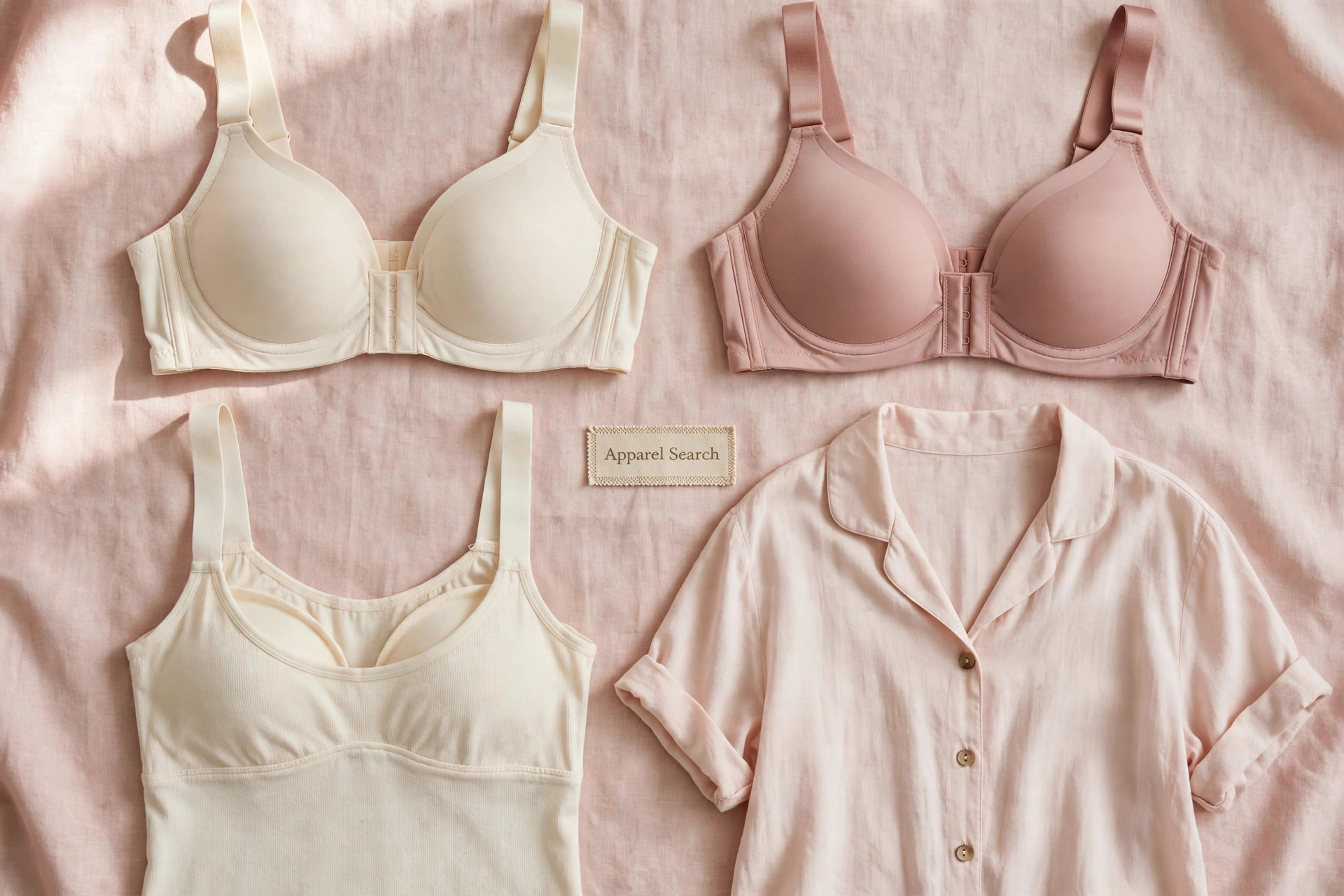
The Pocket: What It Is and Where It Sits
The defining feature is the pocket: a panel of soft fabric sewn inside the cup of a bra, or into the bodice of a camisole, swimsuit or nightdress, forming a pouch that a breast form slides into. The pocket holds the form in position through the day — it cannot drift, ride up or turn — and it keeps a layer of fabric between the form and your skin. Pockets are sold in three configurations: left cup, right cup, or both cups, so check the listing against your own situation before ordering; most ranges offer all three.
Forms themselves are garments' companions rather than garments: lightweight foam forms, sometimes called leisure forms, and silicone forms made closer to natural weight. Both are sized to match a cup size, and both are designed to sit inside the pocket — a pocketed garment and the form that fits it are a pair, and the size charts for each are usually published side by side.
Closures: Front First
Post-surgical bras fasten at the front — hook-and-eye columns, front zips, or soft hook-and-loop tabs — so the fastening happens where you can see it, with no reaching behind your back. Several rows of front hooks are common, giving adjustment as fit settles. Soft step-in bras with no fastening at all are the other early option. Everyday mastectomy bras widen the choice: once reaching behind is comfortable again, back-closure pocketed bras in ordinary styles join the range, and the pocket works exactly the same way. When you read a listing, find the closure first — it tells you which stage of dressing the garment was designed for.
Straps, Bands, Necklines and Armholes
The supporting cast matters as much as the pocket. Wider straps spread their load across the shoulder and are usually padded or lined where they sit; look for strap adjustment you can reach. A deeper underband gives the garment its stability and keeps the band from rolling. On the garment's shaping, mastectomy styles tend toward fuller cup coverage and a higher armhole than fashion cuts — design choices that keep the form secure and give a smooth line under clothes. Necklines vary from camisole-high to an ordinary bra's scoop; higher necklines and camisole styles offer the most coverage and the softest presentation, which is why the camisole is such a staple of this wardrobe.
Construction details to check in photographs: seams should be flat or placed to the outside, cup edges bound rather than elasticated tight, and labels printed or easily removed. Most post-surgical and pocketed styles are wire-free by design; if you are considering a wired style, that is a question to raise with your surgical team.
Drain Pouches and the First Garments
Some people go home from surgery with small drainage bulbs in place for a while, and a distinct group of garments is made for exactly that period: post-surgical camisoles and bras with small removable pouches, or fabric loops, positioned inside the garment to hold a bulb against the body. Worn this way, the bulb is supported and out of the way rather than pinned or left hanging. A related product is the drain belt — a soft band worn around the waist or over clothing with pouches of its own, usable with ordinary tops. Not every post-surgical garment includes the feature, and everyday pocketed styles almost never do, so check for "removable drain pouch" as a named feature in the description rather than assuming it.
Your Team's Instructions Come First
If your surgical team has given you specific guidance — about straps, bands, pressure, or which garment they want you in and when — that guidance outranks anything on this page or on a product listing. Use this guide to understand the features on offer; use their word for everything about your own situation.
Choosing a Pocketed Bra or Camisole
- Measure your band size as you are now. A tape snug around the ribcage, just under the bust, gives the band size; cup sizing for the form follows the maker's chart. Measure for the body you have today, not the one you expect later.
- Decide the closure by your reach. Front fastening while reaching behind is limited; ordinary back closures rejoin the options when that movement is comfortable.
- Match the pocket to your situation. Left, right or both cups — and check whether a camisole's pockets are the size your form needs.
- Check straps and band against comfort. Wide, adjustable straps; a deep, soft band; seams that will not sit where your skin is most tender.
- Try it as a system. Form in the pocket, your usual top over it, arms through a normal day's movements — the garment should disappear from your attention.
Shop Post-Surgical Bras & Camisoles on Amazon
Ready to shop? Product links are kept in one place on the Apparel Search shopping guide:
Shop Clothing on AmazonThis link opens the Apparel Search shopping guide for Amazon, where the product links are kept in one place.
Common Questions
What is a mastectomy bra?
It is a bra built around a specific set of features: a soft pocket sewn into each cup (or into one cup) that holds a breast form in place, wider straps and a deeper underband than fashion bras, soft fabrics with flat seams, and — in post-surgical styles — a fastening at the front. Everyday mastectomy bras look like ordinary bras; the differences are all in the construction.
Do all mastectomy camisoles have drain pouches?
No. Drain pouches are a feature of particular post-surgical lines: a camisole or bra with small removable pouches, or loops, positioned to hold drain bulbs. Many pocketed camisoles are designed for everyday wear and have no drain feature at all, so check the product description for removable pouches if that is what you need, and expect the two kinds of garment to be described differently.
Can I wear a regular bra after a mastectomy?
Many people do, once reaching behind to fasten one is comfortable again and their surgical team has no restrictions in place. The practical checks are the same as for any bra: where the band and seams sit, whether the straps dig, and how the fabric feels against your skin. If you wear a breast form, a pocketed bra or camisole keeps it placed through the day in a way a regular bra is not designed to do.
What should I look for in a post-surgical bra for the first weeks?
Front fastening you can work without reaching behind, soft breathable fabric, a wide underband, wide straps, and no underwire — early post-surgical styles are wire-free by design. A few rows of front hooks give some adjustment as you settle on a fit. Buy to your measurements as they are, and follow any specific guidance your surgical team has given you about the garment they want you wearing.
Back to the Post-Surgery & Medical Dressing Guide
Front closures, soft seams and step-in styles for the weeks after surgery — plus the ostomy and compression guides.
More to Explore
Search Apparel Search
Please note: Apparel Search is a fashion and clothing guide, not a medical authority. Pages in this section describe clothing features and dressing ideas only. We make no claim that any garment or special product will improve, treat, or help with any medical condition, and descriptions of product features reflect how those products are designed and marketed, not a medical endorsement. Please check with your own doctor or care team about what is right for you.