Apparel Search Consumer Guides
Dressing with an Ostomy
Waistband placement, support belts and wraps, and everyday clothes that sit comfortably and work around a pouch.
An ostomy rearranges one thing about getting dressed: where things sit at the waist. The pouch sits against the abdomen, attached around the stoma — the small opening on the abdomen where the pouch is worn — and every waistband, belt and fitted top now has a relationship with it. Everything else about your wardrobe, the styles and colours that are yours, stays yours. This page covers the garment questions: where a waistband can sit, what support belts and wraps are as clothing categories, how to keep a pouch comfortable and unobtrusive under clothes, and the designs that make emptying straightforward. It is part of our post-surgery and medical dressing guide.
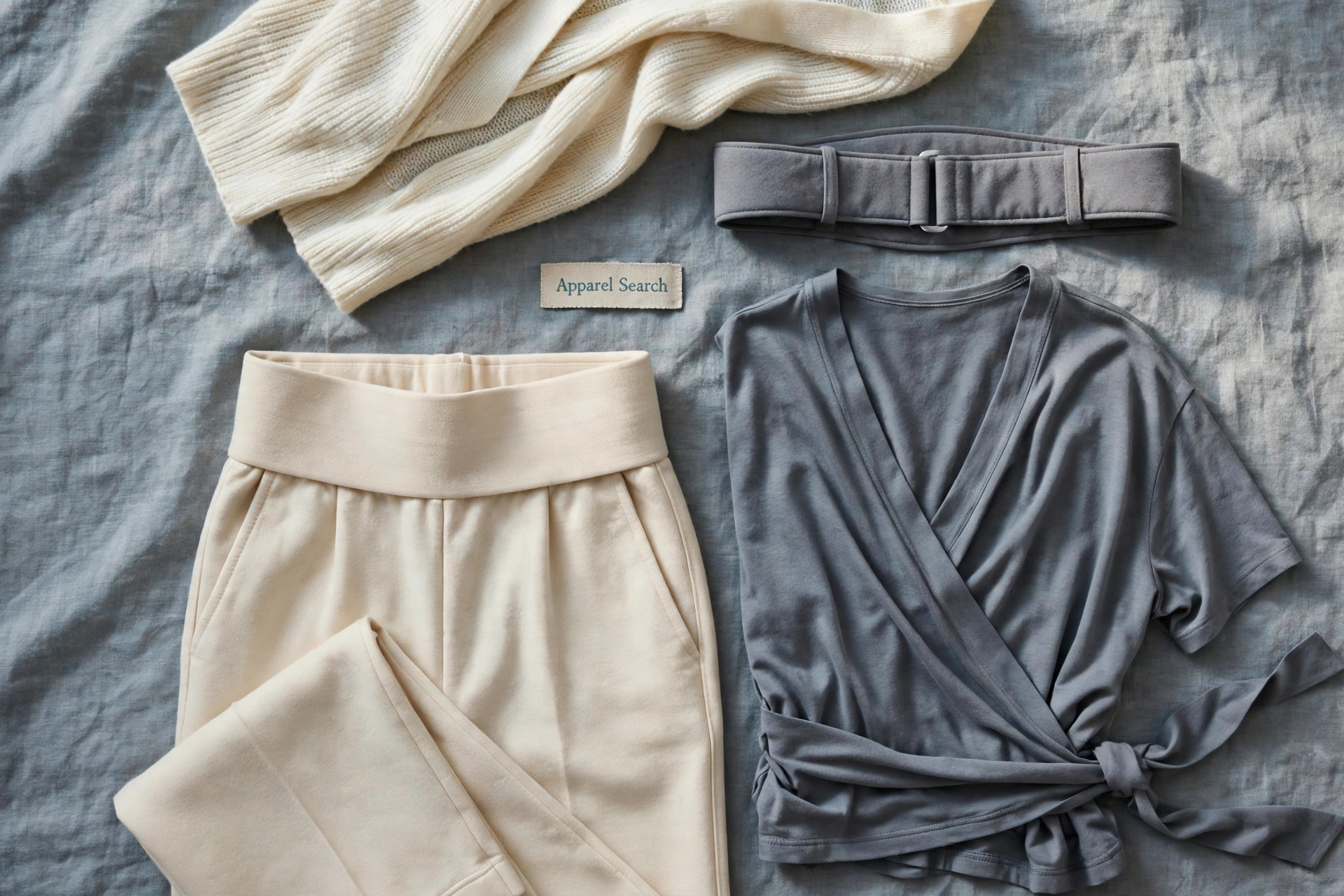
Waistbands: Three Places to Sit
Start from the stoma's position on your own abdomen, because it decides everything else. A waistband can sit below the stoma, leaving the pouch outside the garment and covered by your top — the simplest arrangement, and the one most ordinary low- and mid-rise trousers already offer. It can sit above the stoma in a high rise, so the pouch hangs inside the trousers or skirt, held by the garment's fabric; high-rise styles with a soft, stretch front panel do this most kindly. Or a wide, soft band — the deep elastic waistband of a pull-on style, or a wrap worn over the top — can cross the stoma area gently, spreading contact over a broad area instead of a narrow line.
What to avoid is narrow and rigid: a firm belt edge or a tight standard waistband crossing the stoma itself. Adjustable waists — drawstrings, elastic backs, hook-and-loop tabs — earn their place because they let you tune the fit through the day. And judge any waistband seated: the position that feels fine standing at a mirror can shift when you sit, which is how the garment will actually be worn.
Support Belts and Wraps, as Garments
The specialist category here is the ostomy support belt or wrap: a wide band of soft, stretch fabric worn around the waist, fastening with hook-and-loop so it adjusts in small steps. Makers size them by waist measurement, and the designs split into plain bands worn over the pouch, and belts with a positioned opening or inner pouch section that the pouch passes through or sits inside. Everyday wraps are the lightest version — little more than a deep, soft waistband worn as its own garment under tops. Firmer, deeper support belts are made for active days and heavier wear. Handle them as you would any sized garment: measure, match the maker's chart, and check the return policy. How much support is right for you is a question for your clinician or stoma care nurse; the clothing choice is which style of belt delivers it most comfortably.
Keeping a Pouch Comfortable and Unobtrusive
Discretion in clothing is mostly drape. A pouch under a clinging, plain, light-coloured top announces its outline; the same pouch under a patterned fabric, a textured knit, a draped wrap front or an open layer all but disappears. Longer tops that pass the waistband remove the gap problem entirely. Pouch covers — simple cotton sleeves made to slip over the pouch itself — are a small product category of their own, softening both feel against the skin and outline under clothes. One routine habit does more than any garment: emptying the pouch before it fills enough to show, so outfits are judged against a pouch at its least noticeable.
Emptying-Friendly Design
The other practical test is the bathroom one: can this outfit be managed quickly, without full undressing? Front-opening and drop-front bottoms, waistbands that lower one-handed, and tops that lift or open clear all pass it. Two-piece outfits pass it more easily than one-piece garments, and a jumpsuit wearer learns to love a front zip. Round the system out with the kit: a small, plain bag holding spare supplies and a change of underwear, kept where you keep your other everyday carry items. None of this requires specialist clothing — it is a checklist applied to ordinary clothes, one outfit at a time.
The Two-Minute Check
Before keeping any garment, run the full test: sit, stand and bend in it; check the waistband against the stoma in all three positions; then confirm you can reach and manage the pouch without removing clothing. Two minutes in the fitting room — or at home, within the returns window — is the whole quality control this wardrobe needs.
Building an Ostomy-Friendly Outfit
- Place the waistband first. Choose the bottom by where its band sits against your stoma — below, above, or softly across — and confirm it seated.
- Choose the top for drape. Pattern, texture or a wrap front for discretion; enough length to pass the waistband.
- Add an opening layer. A cardigan, overshirt or jacket adds coverage and pockets, and comes off without disturbing anything underneath.
- Check access before you leave. The emptying test, once, at home: if the outfit passes there, it will pass anywhere.
Shop Ostomy-Friendly Clothing & Support Garments on Amazon
Ready to shop? Product links are kept in one place on the Apparel Search shopping guide:
Shop Clothing on AmazonThis link opens the Apparel Search shopping guide for Amazon, where the product links are kept in one place.
Common Questions
Where should a waistband sit with an ostomy?
There are three workable positions, and the right one depends on where your stoma sits on your abdomen. A waistband can ride below the stoma, sit above it in a high rise so the pouch hangs inside the garment, or cross over it in a wide, soft band that does not press at one narrow line. Try each against your own stoma position, seated as well as standing — the position that stays comfortable in both is the one to build outfits around.
What is an ostomy support belt?
It is a garment, not a medical device in the surgical sense: a wide, soft band worn around the waist, usually fastening with hook-and-loop so its fit adjusts through the day. Some belts are plain bands; others include an opening or pouch section positioned to align with a stoma. Belts are sized by waist measurement. Everyday wraps are light and flexible; firmer support belts exist for more active wear, and how much support you need is a question for your clinician or stoma care nurse.
Can I wear my normal clothes with an ostomy?
Mostly, yes. The waistband check is the main one: trousers, skirts and underwear whose bands sit clear of the stoma, or softly over it, usually carry on working. On top, drape does the discreet work — patterns, texture, layers and slightly longer lengths soften any outline. Purpose-made ostomy clothing adds refinements such as inner pouch pockets and higher soft waistbands, but it supplements an ordinary wardrobe rather than replacing it.
What makes clothing emptying-friendly?
Speed and access without full undressing. Bottoms that open at the front or drop quickly, waistbands that can be lowered one-handed, and tops that lift or open clear of the way all help. A small kit bag — spare pouch supplies and a change of underwear in a plain pouch of its own — completes the system, and is a clothing-routine habit rather than a garment at all.
Back to the Post-Surgery & Medical Dressing Guide
Front closures, soft seams and step-in styles for dressing after surgery and around medical needs — plus the mastectomy and compression guides.
Search Apparel Search
Please note: Apparel Search is a fashion and clothing guide, not a medical authority. Pages in this section describe clothing features and dressing ideas only. We make no claim that any garment or special product will improve, treat, or help with any medical condition, and descriptions of product features reflect how those products are designed and marketed, not a medical endorsement. Please check with your own doctor or care team about what is right for you.