Apparel Search Consumer Guides
Clothing for Insulin Pumps & CGMs
Pockets, belts and bands that carry a pump through the day — and the rises, sleeves and waistbands that leave a sensor undisturbed.
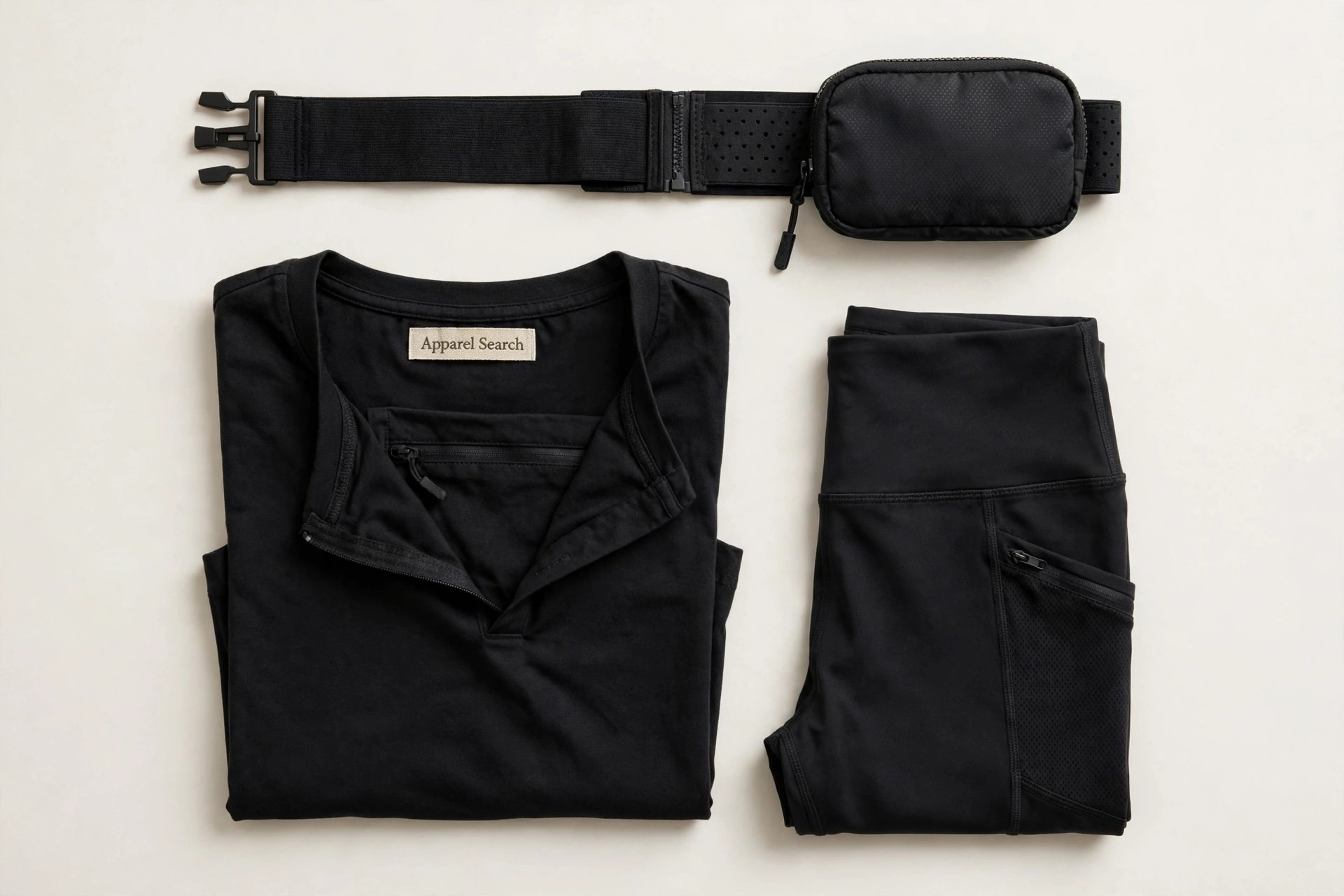
An insulin pump is a small object that has to live on the body all day and all night, and a CGM sensor is a small disc that has to be left alone for days at a time. Both are, from a clothing point of view, carrying problems — and clothing is very good at carrying problems. This guide covers the garment side of wearing them: pockets sewn into everyday clothes to hold a pump, the fabric belts and bands made for the job, waistband clips and cases, and the fits that keep waistbands and sleeves off a sensor. It is the natural companion to our diabetic socks and footwear guide — that page covers the feet; this one covers everything worn above them — and it belongs to the wider family in our adaptive clothing guide.
Pockets Built for a Device
The simplest solution is a pocket in the right place, and a small industry sews them in. Pump pockets appear inside underwear and camisoles, in the lining of bras, in T-shirts and pajama tops, and in the waistbands of leggings and shorts. What makes a pocket a pump pocket rather than just a pocket is the detail: it is sized snugly to the device so the pump does not bounce or tip, it closes — a zip, a flap, a fold of stretch fabric — and in designs for tubed pumps it has a small slot or buttonhole inside, so the tubing leaves the pocket and runs to its site while the pump stays put.
Placement is a fit decision. Waistband pockets carry the pump where a belt would; hip and thigh pockets suit dresses and leggings; a chest or underarm pocket keeps the device reachable under a buttoned shirt. Sitting comfort rules some placements out — a hard rectangle at the small of the back meets every chair — and reach rules others in. Most wearers settle on two or three placements and buy those styles repeatedly, the same rotation logic as any uniform.
Belts, Bands and Clips
Pump belts. The category’s signature product is a wide band of stretch fabric worn at the waist, with a pouch — zippered or slip-in — sized for the pump. Worn over underwear and under or over clothing, it carries the device flat against the body with nothing clipped to a waistband. Sports versions use sweat-wicking fabrics and sit tighter; sleep versions are softer, with no zips or hardware to lie on.
Bands and garters. Narrower stretch bands do the same job at the thigh — the standard solution under dresses and skirts — and slim under-clothing bands carry a pump or a receiver at the waist under a tucked shirt. Clips and cases are the third family: a hard or soft case that clips to a waistband, belt or bra strap. They are the least garment-like option and the most flexible, moving from outfit to outfit — at the cost of depending on a waistband sturdy enough to hold them.
Clothing Around a CGM Sensor
A sensor asks the opposite favor: not carrying, but clearance. The garment questions are fit questions. A sensor worn on the abdomen meets waistbands — a high, firm waistband crossing the sensor every time the wearer sits is a fit mismatch, and the fix is a rise that sits above or below the site, or a softer band. A sensor worn on the arm meets sleeves: a snug sleeve dragged over it at every dressing catches edges, where a slightly looser or stretch sleeve slides past. Adhesive overpatches — fabric or film covers sold to sit over the sensor and hold its edges down — are the product category that bridges the two, worn under the clothing rather than as part of it.
Swimwear and sportswear sharpen the same points: secure carrying matters more as fabric gets wet and slippery, and a pump belt worn under a swimsuit or rash guard is the standard arrangement described by makers. Our diabetic socks buying guide covers the rotation-and-washing arithmetic that applies to these garments too — anything worn daily against skin is bought in multiples.
Activewear and Sleep
Exercise tests carrying hardest: running bounce, gym-floor positions, sweat. The garments that pass are the snug ones — a belt that does not migrate, a pocket that grips the device, leggings whose waistband doubles as the carrier. Sleep tests the opposite quality: softness over security. Pajama tops with a sewn-in pocket, soft belts without hardware, and nightshirts that let tubing route underneath are the standard answers, and they are sold in the same ranges as the day garments.
Children and Pump Clothing
Children’s pump clothing scales the same ideas down: smaller belts and bands, pouches in bright prints, pockets in school clothes and pajamas, and carriers chosen so a child can reach the device and a teacher can find it. The buying logic is the children’s logic everywhere in this section — growth makes sizes temporary, activity makes security the first feature, and multiples make laundry manageable.
A Garment Guide, Not Medical Advice
This page covers clothing: how the garments are designed, organized, fitted and worn. It describes what products are made of and how they are put together — nothing here is a claim about what any garment does for a medical condition, and questions about your own situation belong to your own doctor or care team, whose guidance outranks any product description — including the ones described here.
Shop Adaptive Clothing on Amazon
Ready to shop? Product links are kept in one place on the Apparel Search shopping guide:
Shop Clothing on AmazonThis link opens the Apparel Search shopping guide for Amazon, where the product links are kept in one place.
Common Questions
How do you wear an insulin pump with normal clothes?
By giving it a carrier: a pocket sewn into the garment — in underwear, a camisole, a T-shirt, leggings or pajamas — a fabric pump belt worn at the waist, a stretch band at the waist or thigh, or a case clipped to a waistband. The pump itself does not change; the clothing is chosen or bought so the device sits snug, reachable and still.
What is a pump belt?
A wide band of stretch fabric worn around the waist, with a pouch — usually zippered or slip-in — sized to hold an insulin pump flat against the body. Belts are worn over underwear and under or over outer clothing; sports versions use sweat-wicking fabric and a firmer fit, and sleep versions drop the zips and hardware.
Can a pump pocket hold the tubing too?
The pocket holds the pump; the tubing leaves it. Pockets designed for tubed pumps include a small slot or buttonhole inside, so the tube runs from the pump, out of the pocket, and under the clothing to its site while the pump stays secured. Pocket placement — waistband, hip, thigh or chest — decides how long and how tidy that run is.
What clothing works over a CGM sensor?
Clothing that leaves the sensor’s site alone: a waistband rise that sits above or below an abdomen-worn sensor rather than crossing it, and sleeves loose or stretchy enough to slide over an arm-worn sensor instead of catching its edge. Adhesive overpatches, sold to hold a sensor’s edges down, handle the border where fabric meets sensor.
More to Explore
Search Apparel Search
Please note: Apparel Search is a fashion and clothing guide, not a medical authority. Pages in this section describe clothing features and dressing ideas only. We make no claim that any garment or special product will improve, treat, or help with any medical condition, and descriptions of product features reflect how those products are designed and marketed, not a medical endorsement. Please check with your own doctor or care team about what is right for you.