Apparel Search Consumer Guides
Short Stature Style & Proportion
Line, scale and waist placement — the proportion strategies that make a finished outfit read balanced on a short-stature frame.
Fit decides whether a garment can be worn; proportion decides how it reads. The two are cousins — our short stature fit and alterations guide covers the measurements and the tailor's bench, and our little people clothing guide covers the sources — while this page covers the dressing itself: the strategies of line, scale and placement that make an outfit look composed on a body whose proportions differ from the average pattern. None of it is camouflage and none of it is rules for their own sake. It is the same proportion thinking behind our dress for your body type guides, applied to length and scale instead of shape — and it works for women and men alike.
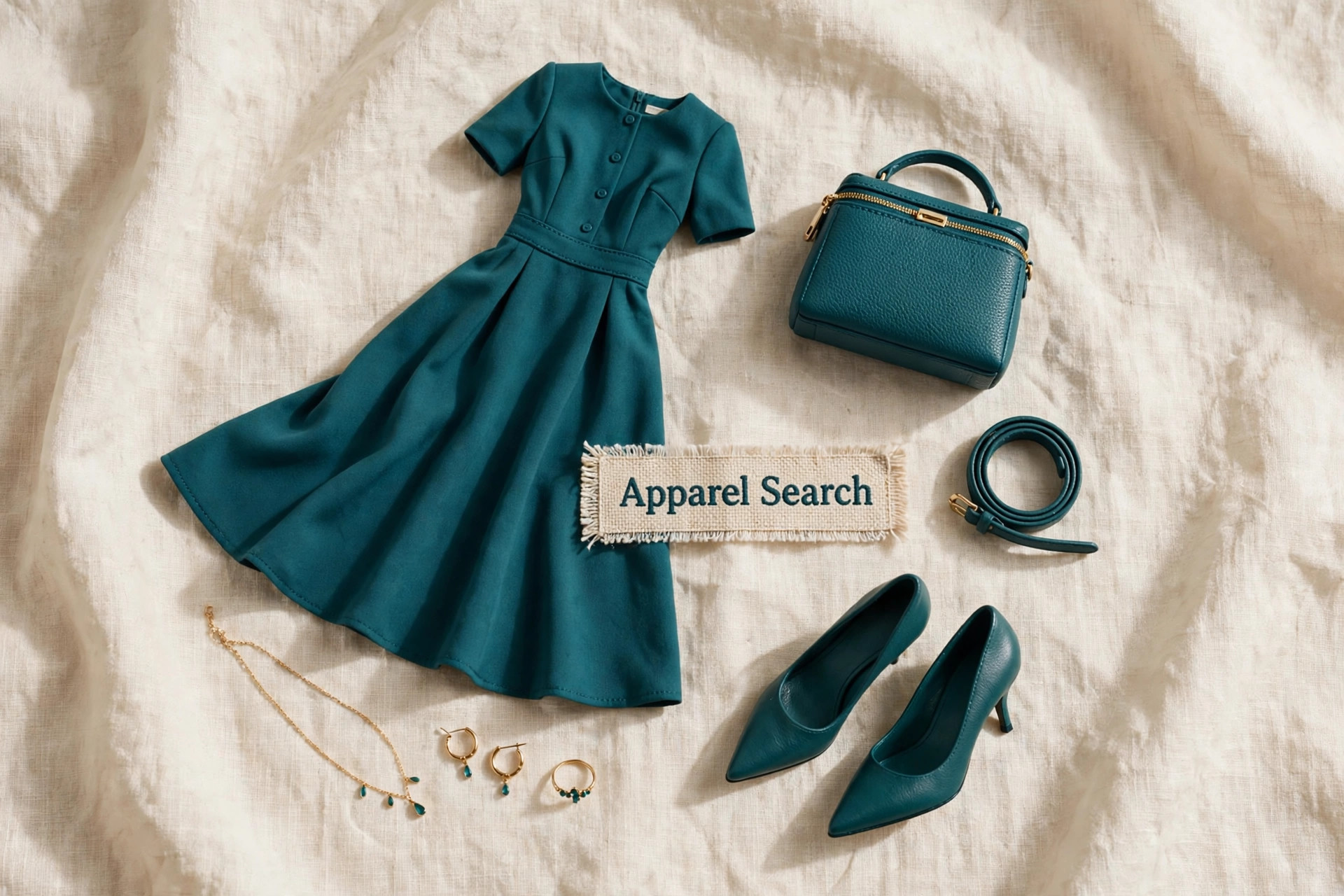
Line: Keep the Eye Moving Vertically
The eye reads an outfit as a set of horizontal interruptions. Every strong horizontal line — a contrasting belt, a colour change, a hem, a cuff — divides the figure at that point, and on a shorter frame each division costs proportionally more. The counter-strategy is the column: outfits built on one colour family top to bottom, or tones close enough that the eye travels without stopping. Trousers and shoes in the same tone extend the leg; a top tucked or cropped to meet the waistband keeps the column unbroken; vertical details — a placket, a pinstripe, an open cardigan's two edges — reinforce the direction. None of this forbids contrast; it asks that contrast be placed deliberately, at points you choose, rather than at every boundary a standard garment happens to have.
Scale: Prints, Patterns and Details
Scale is the proportion rule with the widest reach. A print reads correctly when its motifs are sized to the wearer: small-to-medium motifs, closely set, behave as texture, while oversized motifs overwhelm a smaller frame and date the garment to somebody else's body. The same test applies to the garment's own details — pocket size and placement, lapel width, collar depth, cuff depth, button size, the width of a stripe or a check. When you alter a garment, ask the tailor to respect scale as well as length: a shortened jacket keeps its original deep cuffs only at the cost of looking borrowed. Accessories follow the same law, which is why our jewellery sizing and wearing guide and the handbags for body types guide are worth reading with scale in mind: a bag, necklace or frame sized to the body reads as chosen; an oversized one reads as carried.
Waist Placement and Hemlines
The waist is the outfit's main horizontal landmark, and it must sit at your waist — the point the fit guide's back-waist measurement identifies — not where a standard pattern parks it. A waistband, belt or dress waist that lands at the natural waist divides the figure at its true ratio, lengthening the leg below and balancing the torso above; one that lands low does the opposite twice over. Hemlines follow: skirts and dresses read best at lengths chosen against the leg itself (just above, at, or below the knee each give a different division), trousers hemmed cleanly to the shoe with no pooling — the break principles in our trouser break and pant length guide apply unchanged, with the numbers scaled to the leg in question.
Footwear Proportions
Shoes set the base the whole column stands on. A pointed or almond toe extends the foot's line where a very round toe shortens it; a low-cut vamp shows more of the foot and lengthens the leg in skirts and dresses; heavy, chunky soles add visual weight at exactly the point where the eye stops. A modest heel is a tool, not a requirement — fit and comfort come first, and the shoe fit guide covers the small-size and width questions that matter more. Where trousers are concerned, hem to the shoe you actually wear most, and let that pairing be consistent.
For Women
Dresses are the strongest single garment here: one unbroken column, with the waist placed by the dressmaker rather than negotiated between separates — which is why the waist-placement point above matters so much when choosing one. Fitted and semi-fitted shapes read more composed than voluminous ones at this scale, sleeves that end at a deliberate point (bracelet length is a friend) keep arms in proportion, and necklines that open vertically — a V, a deep scoop, an open shirt collar — extend the line the column builds. The shape side of these decisions is covered garment by garment in the body type guides; if you have not yet identified yours, start with find your body type.
For Men
The men's version of the column is the suit and its casual descendants: jacket length that covers the seat and no more, trousers with a clean, minimal break, and a shirt whose cuffs show the correct sliver beyond the jacket sleeve. Tie width and lapel width should agree with each other and with the frame; a shorter tie length, or a tuck for the back blade, keeps the front clean. The detailed fit points live in our suit fit guide — every one of them applies; only the measurements are yours rather than the chart's. Casual dressing follows the same logic: shorter rise trousers worn at the natural waist, knitwear that ends at the hip bone rather than below it, and layers kept thin so the column is built by line rather than bulk.
Proportion, Not Disguise
Nothing on this page is about looking taller than you are. It is about an outfit whose parts agree with the body wearing them — the same standard of dressing well that applies at any height, including at the other end of the scale in our tall women's fashion guide. When the proportions of the clothes match the proportions of the person, the result simply reads as well dressed.
Common Questions
What is the most effective proportion strategy for short stature?
Protect the vertical line and place the waist where your waist actually is. A defined, correctly placed waist plus an unbroken column of colour does more for proportion than any single garment choice — it lets the eye read length where your body puts it, instead of where a standard pattern assumed it would be.
Should little people avoid large prints?
Avoid large scale, not print itself. A print whose motifs are small relative to your frame reads as texture; one whose motifs approach the size of your hand or larger starts to wear you. The same scale rule applies to pockets, lapels, cuffs, bags and jewellery.
Do heels help, and are they required?
A modest heel lengthens the leg line and can help trousers clear the ground at a natural length, but nothing in proportion dressing requires one. A pointed toe, a shoe that shows some of the foot, and trousers hemmed to the shoe you actually wear achieve most of the same line in flats.
Does body type advice apply to short stature?
Yes — shape and stature are separate questions. Your body type describes where your width sits; your stature describes your proportions of length. Use the body type guides for shape decisions, and this guide for length and scale decisions, and the two combine without conflict.
Back to the Little People & Short Stature Clothing Guide
The fit problem, the sources, and the footwear notes — the full picture.