Women's Petite Clothing Collection Guide
A petite clothing collection is a retailer's complete range for women 5'4" and under — this guide shows how to judge a collection's depth, fit consistency and value across every category.
Shop Women's Petite Clothing Collection Now
Shop Women's Petite Clothing Collection on Amazon Shop Women's Petite Clothing Collection on eBayThe Amazon and eBay links on this page are affiliate links. If you make a purchase through them, Apparel Search may earn a commission.
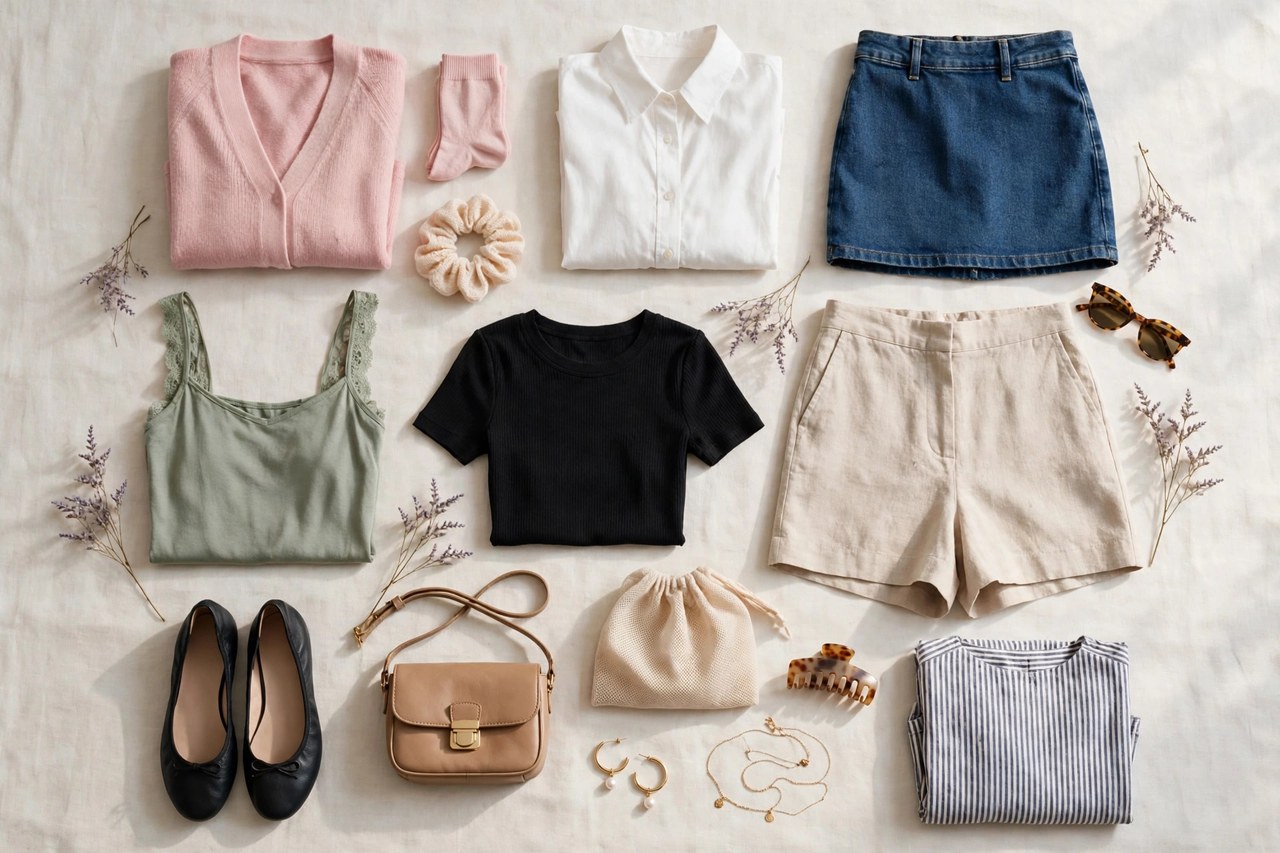
A clothing collection, in retail language, is the full range a brand or store offers for a season or a category — and a petite clothing collection is that range built entirely around women 5'4" and under. Where the petite apparel guide explains what petite sizing means garment by garment, this guide is about the range as a whole: how to judge whether a retailer's petite collection is a serious, fully proportioned line or a token rail of shortened regular styles, and how to shop a good collection so the pieces work together as a wardrobe.
That distinction matters because petite shoppers are often offered fragments — three dresses and a pair of jeans labeled petite among hundreds of regular styles. A real collection covers the wardrobe systematically, with consistent petite grading from piece to piece, so a size that fits in its trousers predicts the fit of its blazers and dresses. Learning to read a collection saves seasons of trial and error and concentrates your spending where fit is guaranteed to repeat.
What a Complete Petite Collection Contains
A complete petite collection spans the wardrobe's structure: bottoms in several leg shapes and lengths, dresses for day and occasion wear, tailoring including blazers and suits, outerwear from light jackets to winter coats, knitwear and tops, and the supporting categories of skirts, shorts, denim, sleepwear and swimwear in season. Depth within categories matters as much as breadth: a collection with one petite jean in one wash is a gesture, while a range of rises, leg shapes and washes in consistent petite sizing is a tool.
Fabric and color coordination is the collection's other promise. Pieces are designed to combine — the blazer matches the trouser's fabric, the knitwear palette repeats across tops and cardigans, and prints are scaled once, consistently, across dresses and blouses. For a petite shopper this coordination multiplies value, because every piece is already guaranteed to fit in proportion, and the collection's own styling shows combinations at petite length rather than on taller models whose proportions you must mentally translate.
Judging Fit Consistency and True Petite Grading
Test a collection's grading with its hardest garments. A truly petite-graded collection shortens rise, torso and sleeve, narrows shoulders and scales pockets, buttons and prints — not just hems. Compare two categories in your size: if the dresses fit your waist placement and the trousers fit your rise, the block is consistent and you can order across the collection with confidence. If only hems are shorter while waists and rises remain regular, the label is marketing, and you should shop the collection piece by piece with full fit checks.
Size consistency is the practical payoff. Keep a record of your size in each collection you use, since petite grading varies between brands, and note any category where a brand runs long or short for you. Check the collection's published measurements for inseam, sleeve and back length against your own four key figures — inseam, rise, sleeve and back waist length. Retailers who publish petite-specific measurements, rather than reusing the regular chart, are signaling a real petite block, and their collections reward loyalty with predictable fit season after season.
Shopping a Collection: Wardrobe Planning
Shop a petite collection as a system, not as isolated bargains. Start each season with the structural gaps in your wardrobe — the trouser, dress or coat in correct proportions that everything else must work with — and buy those from the collection first, while sizes are complete. Then add the collection's coordinating pieces that extend them: the blouse scaled to the suit, the knit that matches the skirt's palette. Because fit is consistent, collection pieces combine more successfully than the same number of unrelated items, and cost per wear falls accordingly.
Use collection launches and lookbooks critically. Styled photographs show proportion relationships — where hems, waists and layers land — that transfer to your frame when the model is genuinely petite; ask or check whether they are. Build gradually toward a core collection wardrobe in neutral, repeatable colors, then use each new season's collection for one or two current pieces in its accent colors or prints, confident they will layer over the core at the right lengths. Sign up for petite-range alerts where offered, since petite collections sell through core sizes faster than regular ranges restock them.
Value, Gaps and Care Across the Range
Judge value by fit-adjusted cost: a slightly dearer collection piece that needs no alteration is cheaper than a bargain that needs its waist moved, and a consistent collection reduces both alteration bills and returns. Note a collection's gaps as carefully as its strengths — many petite ranges still under-serve occasion wear, maternity, activewear and extended sizes within petite — and keep a short list of specialist retailers for those categories rather than forcing a poor fit from a favorite brand's incomplete line.
Care for a collection wardrobe by fabric, as with any clothing, but store it to protect the proportions you paid for: narrow hangers for tailored shoulders, trousers hung by the hem to preserve the shorter crease, knitwear folded so sleeves are not stretched long again. Review the wardrobe each season against the collections you trust, replace worn structural pieces from the same block while it is available, and your petite clothing stops being a series of lucky finds. A good collection makes it a system — every piece proportioned, coordinated and ready to wear together.
Related Women's Guides
Why Petite Sizing Is Its Own Pattern
Average women’s sizing is designed for a woman at least 165 cm (5 ft 5 in) tall, and it will not properly fit a woman of significantly shorter height. Even if the bust, waist and hip circumferences are appropriate, the sleeve lengths, leg inseam lengths and vertical torso measurements — such as the back length and bust-waist length — will most likely need to be altered significantly to fit well.
Simply shortening a regular garment rarely works: non-petite dresses cannot easily be altered to produce the equivalent petite size, because the critical torso measurements cannot be shortened without introducing an unsightly seam, and significant torso errors make a well-fitted look impossible — bust-point darts can be off by as much as three inches. A true petite garment is tailored for a 4′11″ to 5′4″ frame, with shortened sleeve, inseam and torso, styled for flattery and constructed for comfort; design details such as vertical stripes and princess seams are sometimes added to give a longer, slimmer look.
That last point is also where petite ends. A true petite pattern is an average-proportioned pattern scaled down evenly — the right answer for a shorter woman of average proportions. It is not designed for proportions that differ in themselves, which is the fit situation of little people and adults of short stature: there, the torso and the limbs need different adjustments, not a uniform scale. Apparel Search covers that subject separately, as fit expertise: the Little People & Short Stature Clothing Guide explains the proportions and the sources of clothing, and Short Stature Fit & Alterations details the measurements and what a tailor can and cannot change.
More to Explore on Apparel Search
Looking for Women's Clothing Stores?
This guide helps you choose women's petite clothing collection. To browse where to buy, visit our women's clothing store directory, where you can find retailers that carry them.