Women's Petite Apparel Guide
Petite apparel is the umbrella term for all clothing proportioned for women 5'4" and under — not smaller all over, but rebalanced in rise, torso, sleeve and shoulder for a shorter frame.
Shop Women's Petite Apparel Now
Shop Women's Petite Apparel on Amazon Shop Women's Petite Apparel on eBayThe Amazon and eBay links on this page are affiliate links. If you make a purchase through them, Apparel Search may earn a commission.
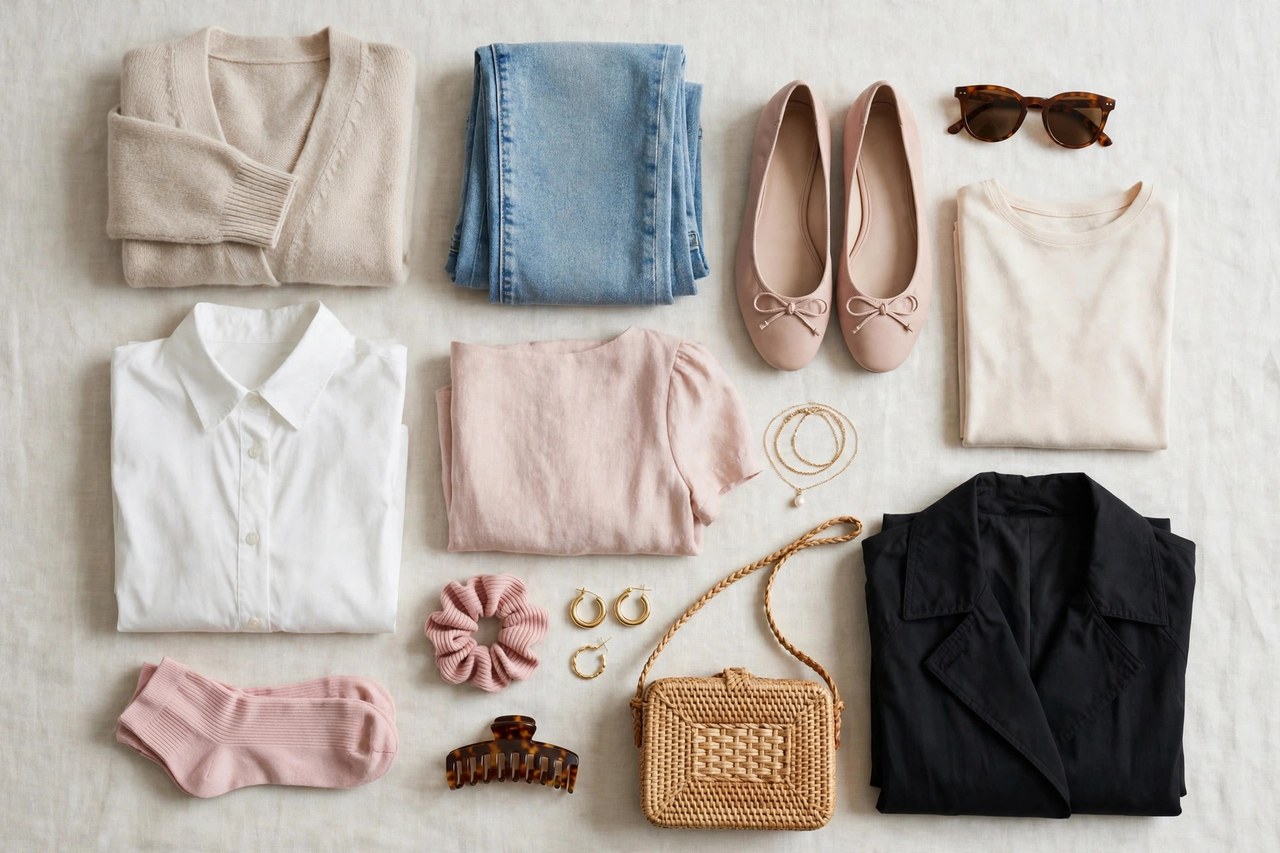
Apparel is the general word for clothing, and petite apparel means clothing of every kind that has been proportioned for women 5'4" and under. That definition turns on height and proportion, not on dress size: petite apparel comes in the full range of numeric and plus sizes, because a size 16 woman who is 5'2" needs exactly the same shorter rise, shorter sleeve and narrower shoulder as a size 4 woman of the same height. Petite is a length and proportion category, never a synonym for slim.
This umbrella guide explains how petite apparel differs from regular apparel piece by piece, how the sizing labels work, and how to build a wardrobe from petite ranges with confidence. Later guides in this section go deep on single garments — jeans, dresses, coats and more — but everything in them rests on the principles set out here: measure your proportions, buy for the hardest fit points first, and treat hemming as a finish, not a substitute for a petite cut.
How Petite Proportions Differ
A true petite pattern adjusts many points at once. Compared with a regular pattern in the same size, expect roughly one to two inches less in trouser inseam and rise, about an inch less in sleeve length and torso length, a narrower shoulder, a higher waistline placement on dresses and tops, a raised knee and elbow position, and smaller-scale pockets, buttons, prints and details. Armholes are cut slightly higher and smaller, which is why petite jackets and blouses allow freer arm movement instead of binding across the back.
Crucially, the bust, waist and hip circumferences in a given size stay close to regular sizing — it is the vertical and shoulder dimensions that shrink. That is why simply buying a smaller regular size fails: it tightens the body without fixing the rise, sleeve or shoulder, and usually still leaves lengths wrong. It is also why a taller woman with a short torso sometimes shops petite tops, and a petite woman with long legs sometimes mixes petite tops with regular bottoms. Proportion, not the label, is the guide.
The Main Petite Apparel Categories
Petite apparel spans the whole wardrobe. Bottoms — pants, jeans, skirts and shorts — show the biggest gains, because inseam and rise cannot be faked. Dresses and tops gain correct waist placement, neckline depth and sleeve length. Tailoring and outerwear — blazers, suits and coats — gain narrower shoulders, correctly placed buttons and pockets, and sleeves that show the hand. Intimates, sleepwear and swimwear in petite cuts adjust strap length, torso length and cup placement.
Not every brand petites every category equally, so availability varies: bottoms and dresses are widely offered, while petite shoes, gloves and maternity lines are specialist finds. Seasonal categories matter too. A petite winter coat with scaled quilting channels and a shorter body keeps insulation evenly distributed, while a petite sundress places its waist seam, straps and hem in balance. When a category lacks a petite option, prioritize alteration-friendly construction — plain hems, movable buttons and uncuffed sleeves.
Reading Petite Sizes and Taking Measurements
Petite sizes are usually labeled with a P — 8P, 12P, or PS, PM, PL for petite small, medium and large. Height guidance on charts typically centers on 4'11" to 5'4", but your individual measurements decide the fit. The four that matter most are your inseam to the ankle bone, your front rise on a well-fitting trouser, your sleeve length from shoulder point to wrist with the arm slightly bent, and your back waist length from neck to natural waist.
Compare those four against a brand's petite chart before ordering, especially online, because petite grading is not fully standardized between brands. Keep the numbers in your phone alongside your usual size; they transfer across categories and make sale and second-hand buying far more reliable. If you fall between petite and regular on one measure — long arms are the common case — choose by the garment: petite for bottoms and waisted dresses, regular or tall-sleeve options where sleeve length dominates.
Building a Petite Wardrobe and Buying Tips
Build in the order of fit difficulty. Start with trousers, jeans and structured jackets, where petite cutting saves real tailoring money, then waisted dresses and coats, then tops and knitwear, where regular sizes are most forgiving. Prints and details deserve a scale check at every step: a bold print that is charming at regular scale can overwhelm a petite frame, while petite ranges scale motifs, stripes and pocket sizes down in balance with the garment, which quietly makes the whole outfit look deliberate.
Budget for small alterations even within petite ranges — a half-inch hem or a moved button is normal fitting, not failure — but refuse the big ones, like narrowing shoulders or recutting a rise, which cost more than the garment is worth. Wash and care for petite apparel by its fabric labels as usual, and store structured pieces on narrow or petite hangers so shoulders are not stretched out of shape. Shopped by proportion, petite apparel stops being a limited corner of the store and becomes simply your size, in everything.
Related Women's Guides
Looking for Women's Clothing Stores?
This guide helps you choose women's petite apparel. To browse where to buy, visit our women's clothing store directory, where you can find retailers that carry them.