Women's Petite Outfits Guide
A petite outfit is a coordinated look built on a shorter frame — matched sets and planned combinations where every length, break point and proportion is chosen so nothing needs rolling, pinning or apology.
Shop Women's Petite Outfits Now
Shop Women's Petite Outfits on Amazon Shop Women's Petite Outfits on eBayThe Amazon and eBay links on this page are affiliate links. If you make a purchase through them, Apparel Search may earn a commission.
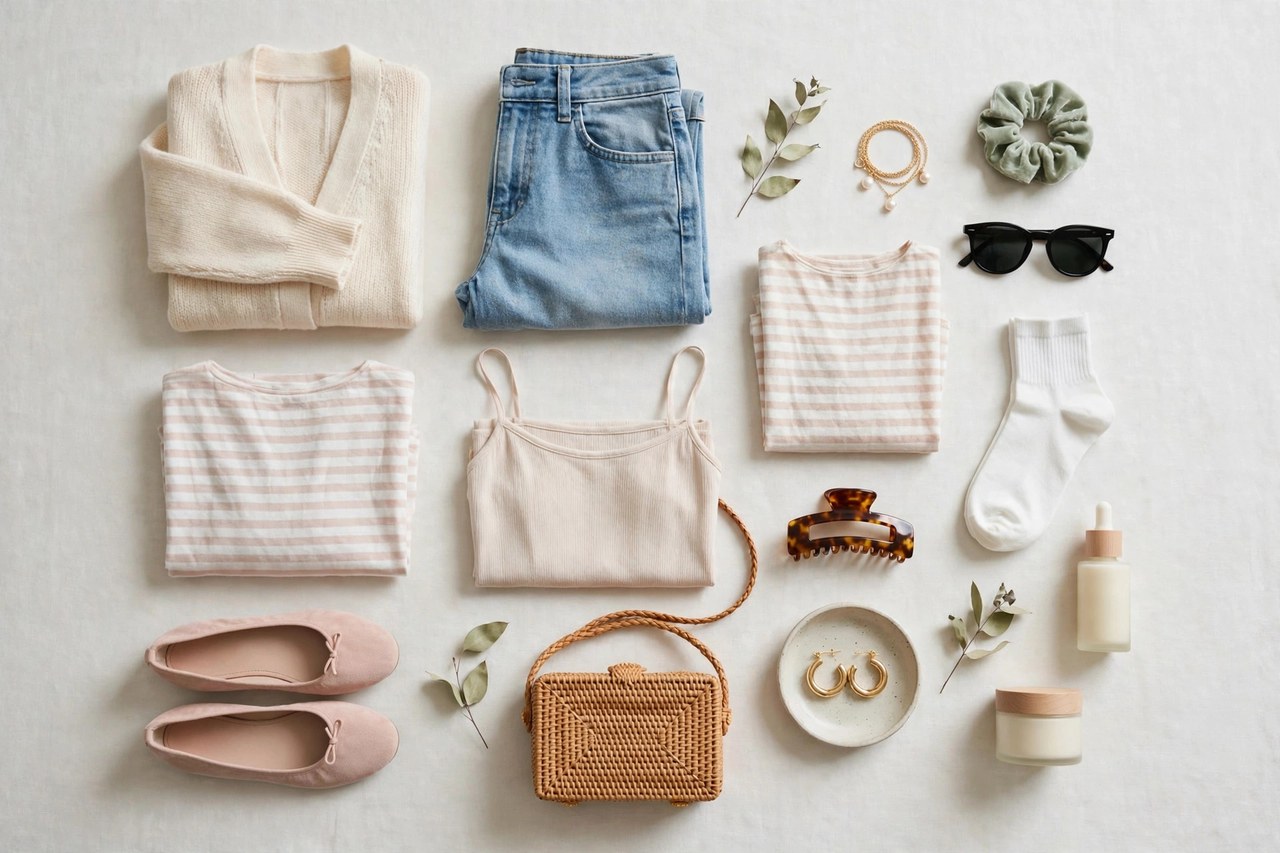
An outfit is clothing chosen as a coordinated whole rather than as separate pieces, and petite outfits are planned around the proportions of a woman 5'4" and under. The challenge is rarely any single garment; it is the interaction — where a top ends against a pant rise, where a hem falls against a boot, how a jacket's length divides the body. Petite outfit building is the skill of managing those break points deliberately so the total look reads balanced and intentional.
Retailers increasingly sell the shortcut: two-piece petite sets, co-ords and matched suiting where top and bottom are graded together. But most outfits are assembled from separates, which is where proportion rules earn their keep. This guide covers the core principles — the rule of thirds, column dressing and scale — then applies them to work, casual and occasion looks, and ends with a capsule approach that makes daily dressing faster.
Proportion Rules for a Shorter Frame
The most useful rule is the rule of thirds: an outfit looks balanced when it divides the body roughly one-third to two-thirds rather than in half. For petite women that usually means a shorter top over a longer bottom line — a tucked or cropped petite top with high-rise petite pants or a midi skirt — which lengthens the leg line. A long top over long bottoms, both regular-cut, does the opposite, cutting the frame into heavy blocks. Petite-cut pieces make thirds easy because their hems and rises land where the rule assumes.
Column dressing is the second tool: wearing one color or tonal family head to toe creates an unbroken vertical line that reads taller. Petite sets are sold in matching colors for exactly this reason. Scale is the third: prints, stripes, bags, belts and jewelry sized to the frame. A wide belt can erase a short waist; a narrow one defines it. Small-to-medium prints keep their pattern legible, while oversized motifs designed for taller bodies overwhelm. None of these rules is a law — they are defaults to break knowingly rather than accidentally.
Work, Casual and Occasion Outfits
Work outfits in petite sizing start with anchor pieces that fit without alteration: a petite blazer ending at the hip bone, trousers with a 27- to 29-inch inseam hemmed to the shoe, and a tucked blouse with sleeves at the wrist. Matching petite suiting — jacket and pant or skirt bought as a set — guarantees the proportions agree. Casual outfits lean on petite jeans with fitted or cropped tops, shorter shirttails that can stay untucked without becoming tunics, and jackets that end at the waist or high hip to keep the leg line long.
Occasion outfits — a petite cocktail dress with the right heel height, or a two-piece evening set — succeed on hem placement: a knee-length dress should truly end at the knee, and a midi at mid-calf, not at the ankle where it reads as a failed maxi. For photos and events, monochrome or single-column looks photograph longest. Across all three categories, shoes are part of the outfit's math: a low-vamp shoe or a boot that meets the hem extends the leg, while a heavy ankle strap cuts it.
Sets, Co-Ords and Matching Pieces
Two-piece petite sets — knit top and pant, matching shirt and short, or a coordinated blazer and trouser — remove the guesswork because the manufacturer has already solved the break points. They also multiply: worn together they make one outfit, worn apart each piece pairs with the rest of the wardrobe. When buying sets, verify both pieces are genuinely petite-graded rather than a regular top bundled with petite bottoms, and check that the top's length works untucked as designed.
Building your own matching combinations takes slightly more planning. Buy bottoms in a tight color family — black, navy, denim, stone — in correct petite lengths, then add tops that share tones so any top meets any bottom. Keep one accent layer, a petite jacket or cardigan of the right cropped length, that completes several combinations. The aim is a wardrobe where outfits assemble themselves because the proportions were settled at purchase, not negotiated in front of the mirror each morning.
Building a Petite Capsule and Buying Tips
A workable petite capsule runs to roughly a dozen fitted pieces: two petite pants, one petite jean, one skirt, four tops that tuck cleanly, one blazer, one knit set, one dress and one coat, all in a shared palette. The non-negotiable is that every bottom is the right inseam and every jacket the right body length — capsule math collapses when two pieces need the tailor before they can be worn together. Fill gaps by outfit, not by item: if three tops lack a bottom that works, the bottom is the purchase.
Shop with outfits in mind by trying pieces together in the fitting room, photographing combinations, and keeping a phone note of what pairs with what. Prioritize petite retailers for the proportion-critical pieces — pants, blazers, dresses, coats — and buy accessories anywhere, since scarves, jewelry and bags scale freely. When a regular-size piece is irresistible, budget its alteration honestly: hemming is cheap, but raising a waist, shortening a torso or moving pockets often costs more than the garment, and no tailor can shrink a print.
Related Women's Guides
More to Explore on Apparel Search
Looking for Women's Clothing Stores?
This guide helps you choose women's petite outfits. To browse where to buy, visit our women's clothing store directory, where you can find retailers that carry them.