Women's Petite Suits Guide
A petite suit is tailored in proportion — narrower shoulders, a shorter jacket, scaled lapels and a trouser or skirt hemmed to the petite leg — so the tailoring sharpens a 5'4"-and-under frame instead of swamping it.
Shop Women's Petite Suits Now
Shop Women's Petite Suits on Amazon Shop Women's Petite Suits on eBayThe Amazon and eBay links on this page are affiliate links. If you make a purchase through them, Apparel Search may earn a commission.
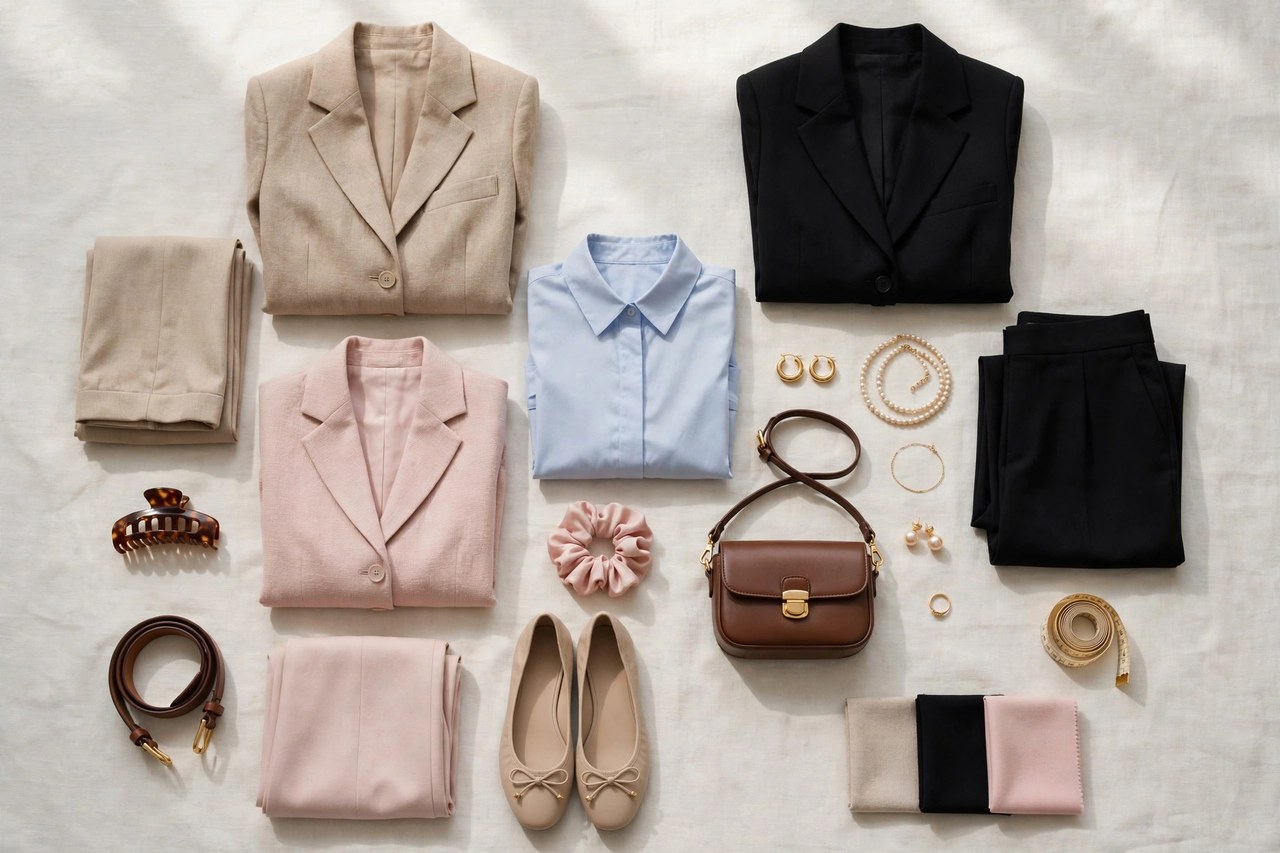
A suit is a matching jacket and bottom — trousers, a skirt or both — cut from the same fabric and designed to be worn together. More than any other garment, a suit depends on proportion, and more than any other garment, it punishes a petite woman when the proportions are regular. A standard jacket is too long in the body and sleeve, its waist suppression lands at the hip, its lapels and pockets are scaled for a longer torso, and the trousers pool over the shoes. The overall effect reads as borrowed, however expensive the cloth.
Petite suits are patterned from a petite block: shoulders narrower, jacket body shorter by roughly one to two inches, sleeves shortened, the button stance and waist shaping raised to the petite natural waist, lapels and pockets reduced, and bottoms cut with a shorter rise and inseam or a true petite skirt length. For women 5'4" and under, that is the difference between tailoring that lends authority and tailoring that drowns it. This guide covers petite jacket proportions, trouser and skirt bottoms, suiting fabrics, and the alterations and care that keep a petite suit sharp.
The Petite Jacket: Length, Shoulders, Lapels and Buttons
Jacket length is the first petite check. A classic petite suit jacket typically ends around mid-hip, covering the seat partially without reaching the thigh; on most petite women that means a back length several inches shorter than the regular version of the same style. The shoulder must end at the shoulder point — petite shoulders are narrower, and a wide, padded regular shoulder cannot be altered economically. Sleeves should end at the wrist bone, showing a quarter to half inch of shirt cuff when worn with a long-sleeve blouse or shirt.
Scale shows in the details. Lapels on petite jackets are narrower, in keeping with a shorter torso; very wide lapels overwhelm it. The button stance — where the jacket closes — sits higher, at the petite natural waist, so a single-button jacket creates a long, flattering V above it rather than closing at the hip. Pockets are smaller and placed higher: a regular jacket's hip pocket can land at a petite woman's upper thigh. Two-button and single-button jackets both work for petites; three-button styles shorten the V and suit fewer short torsos.
Petite Suit Bottoms: Trousers and Skirts
Petite suit trousers combine a shorter rise with a shorter inseam, so the waistband sits at the true waist, the front lies flat and the hem breaks correctly over the shoe. Straight and tapered legs are the most lengthening on a petite frame; wide-leg suit trousers work when the fabric is fluid and the hem is exact, but excess width plus excess length is the combination to avoid.
Suit skirts in petite ranges are usually pencil or A-line styles ending at or just above the knee, with the waist-to-hip shaping compressed so the skirt sits at the natural waist and the vent is placed for a shorter leg. A skirt suit reads slightly more formal than a trouser suit in conservative settings and can be the cooler summer option in a light suiting.
Suiting Fabrics, Colors and Construction
Wool and wool blends remain the standard for petite suits: they tailor crisply, resist wrinkling, breathe across seasons and hold a trouser crease. Tropical and lightweight wools suit summer; flannel suits winter but its softer surface reads less formal. Stretch suiting with a small elastane content improves comfort for long sitting days and travel, provided the base cloth is substantial. Linen and cotton suits are summer and casual-business options that crease characteristically.
Color strategy for a first petite suit is conservative for a reason: navy and charcoal fit the most settings, pair with the widest range of petite blouses and shirts, and do not date. Black is dressier and less versatile in daylight; light grey, camel and soft colors make excellent second suits. Construction quality shows in a jacket that is at least half-lined with a canvas or quality fused front, trousers with a structured waistband and finished hems, and patterns matched at the center back and pockets.
Alterations, Care and Buying Tips
Even a petite suit usually benefits from small alterations: hemming trousers or a skirt, shortening sleeves, and nipping the jacket waist are routine and inexpensive. What cannot be fixed well are shoulders, jacket length through the armhole, and lapel size — so never buy a regular suit planning to alter it into a petite one; the economics and the result both fail. Buy the petite suit that fits the shoulders and bust, then tailor the rest.
Care preserves the investment. Rest a suit at least a day between wears on a shaped hanger, brush wool after wearing, and dry clean sparingly — a few times a season rather than after every wear — cleaning both pieces together so they age at the same rate. Press trousers to restore the crease, and steam rather than iron shiny-prone fabrics. Buy in this order: one navy or charcoal trouser suit in a year-round wool blend, the matching skirt if offered, then a second suit in a seasonal or lighter fabric.
Related Women's Guides
More to Explore on Apparel Search
Looking for Women's Clothing Stores?
This guide helps you choose women's petite suits. To browse where to buy, visit our women's clothing store directory, where you can find retailers that carry them.