Women's Petite Pants Guide
Petite pants fix the measurements hemming cannot — inseams of 25 to 29 inches, a shortened rise, raised pockets and a waist that sits where a 5'4"-and-under waist actually is.
Shop Women's Petite Pants Now
Shop Women's Petite Pants on Amazon Shop Women's Petite Pants on eBayThe Amazon and eBay links on this page are affiliate links. If you make a purchase through them, Apparel Search may earn a commission.
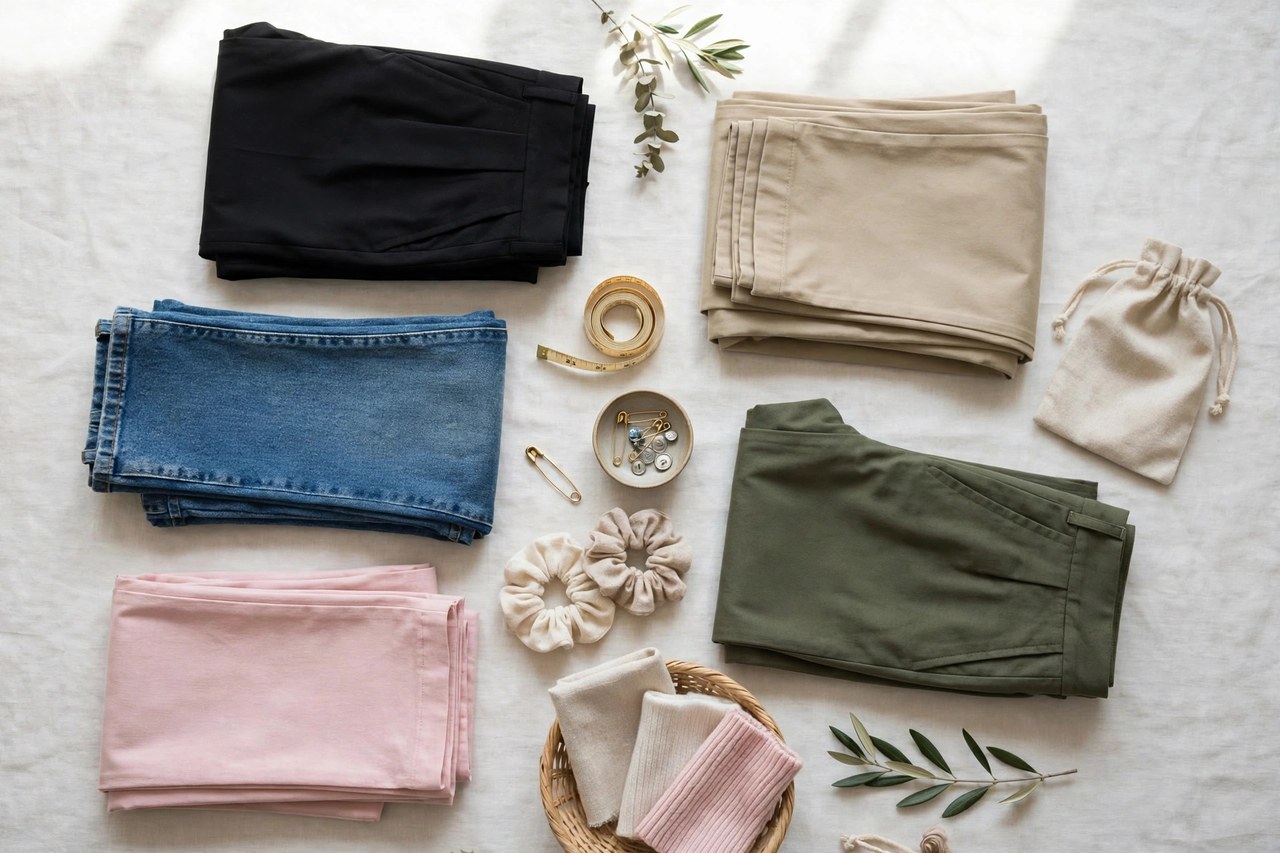
Pants are where petite sizing matters most, because a pant is a system of lengths that must all agree: inseam, rise, outseam, knee placement and pocket position. Women 5'4" and under wearing regular pants face the familiar stack of failures — hems pooling over shoes, a rise so long the waistband sits at the ribs or folds over, knees that bag below the actual knee, and back pockets hanging halfway down the thigh. Petite pants re-grade every one of those measurements.
Petite inseams typically run 25 to 29 inches depending on style, against 30 to 32 in regular ranges, and the rise is shortened in proportion so the waistband lands at the natural waist. This guide covers the main petite pant styles, the fit vocabulary that lets you shop by number rather than by hope, the waist-to-hip solutions built for shorter frames, and the fabrics and care that keep a good pair good.
Petite Pant Styles: Trousers, Wide-Leg, Cropped and Skinny
Tailored petite trousers are the work staple: flat-front or single-pleat, in straight or tapered legs, with the crease and knee break positioned for a shorter leg. Wide-leg and palazzo petite pants take more care — the width is slightly reduced and the length exact, since a wide leg even an inch too long drags and overwhelms, while a correct one sweeps cleanly. Cropped and ankle pants are the petite gift style: designed to end above the ankle, they need no hemming and show footwear properly.
Skinny and straight-leg petite pants follow the leg closely, so their shorter inseam simply has to be right. Bootcut petite pants are graded so the flare begins below a shorter knee rather than at it. Chinos, cords and ponte knit pants round out the casual and work rotation. Across styles, the pattern tells are consistent: front pockets that open at the right height, a coin pocket you can actually reach, and belt loops spaced for a shorter waist-to-hip distance.
Rise, Inseam and the Numbers to Know
Know three numbers before shopping: your inseam for flats, your inseam for heels, and your preferred rise. Petite full-length pants for flats usually need 27 to 29 inches; a heel adds one to two inches of requirement. Rise — the distance from crotch seam to waistband — runs shorter in petite cuts across low, mid and high styles, which is why a petite high-rise sits at the waist while a regular high-rise can reach the ribs on a short torso.
Check the knee and the pocket. On a correctly graded petite pant, the knee shaping and any crease align with your knee when standing, and back pockets center on the seat rather than sagging below it. Sit, climb a step and bend in the fitting room: the shortened rise should let the waistband stay put without a belt doing structural work. If a brand lists only a dress size with no inseam, treat its petite claim cautiously — real petite pants publish their lengths.
Waist-to-Hip Fit and Fabrics
The classic fit problem — pants that fit the hip and gap at the back waist — is sharper on petite frames with a short waist-to-hip distance. Curvy petite fits and contoured waistbands, cut higher at the back with a shaped band, close most of that gap without tailoring. A small amount of elastane, one or two percent, helps the waistband recover through a day of sitting. If a gap remains, a tailor taking in the back waist of a petite pant is a cheap, standard alteration — unlike shortening a rise, which is effectively a rebuild.
Fabrics follow job: wool blends and ponte for work trousers, cotton twill and chino cloth for casual pairs, denim for jeans, and crepe or satin for evening styles. Substantial fabrics hold the shorter crease lines better and resist bagging at a petite knee, which sits at a different flex point. Lined work trousers hang smoother but add dry cleaning; unlined ponte and twill wash at home. Whatever the fabric, proportion details — slimmer belt loops, smaller buttons, finer stitching scale — keep the pant reading tailored rather than shrunken.
Hemming, Care and Buying Tips
Even petite pants sometimes need a hem, because shoe height changes everything: keep one pair hemmed for flats and, if you wear heels often, one for heels, rather than compromising both. Hemming a petite pant is safe precisely because the rise and knee are already right — you are adjusting the one measurement that varies by shoe. Ask the tailor to keep the original hem on jeans and to preserve any ankle taper on slim styles.
Care follows fabric: cotton casuals wash warm and soften, wool trousers want rest days, brushing and occasional dry cleaning, and ponte knits wash cool and hang dry to protect elastane. Hang tailored petite pants from clamp hangers by the hem so the shorter leg's crease falls true. Buy by your largest measurement and tailor the waist, keep your inseam numbers in your phone, and a petite pants wardrobe becomes the most reliable part of getting dressed — no cuffs rolled, no hems stepped on, no rise folded over.
Related Women's Guides
More to Explore on Apparel Search
Looking for Women's Clothing Stores?
This guide helps you choose women's petite pants. To browse where to buy, visit our women's clothing store directory, where you can find retailers that carry them.