Women's Petite Capris Guide
Petite capris end at the slim mid-calf point on a shorter leg, with a shorter rise and inseam — not regular capris rolling past the ankle, and not long pants cut off at the wrong place.
Shop Women's Petite Capris Now
Shop Women's Petite Capris on Amazon Shop Women's Petite Capris on eBayThe Amazon and eBay links on this page are affiliate links. If you make a purchase through them, Apparel Search may earn a commission.
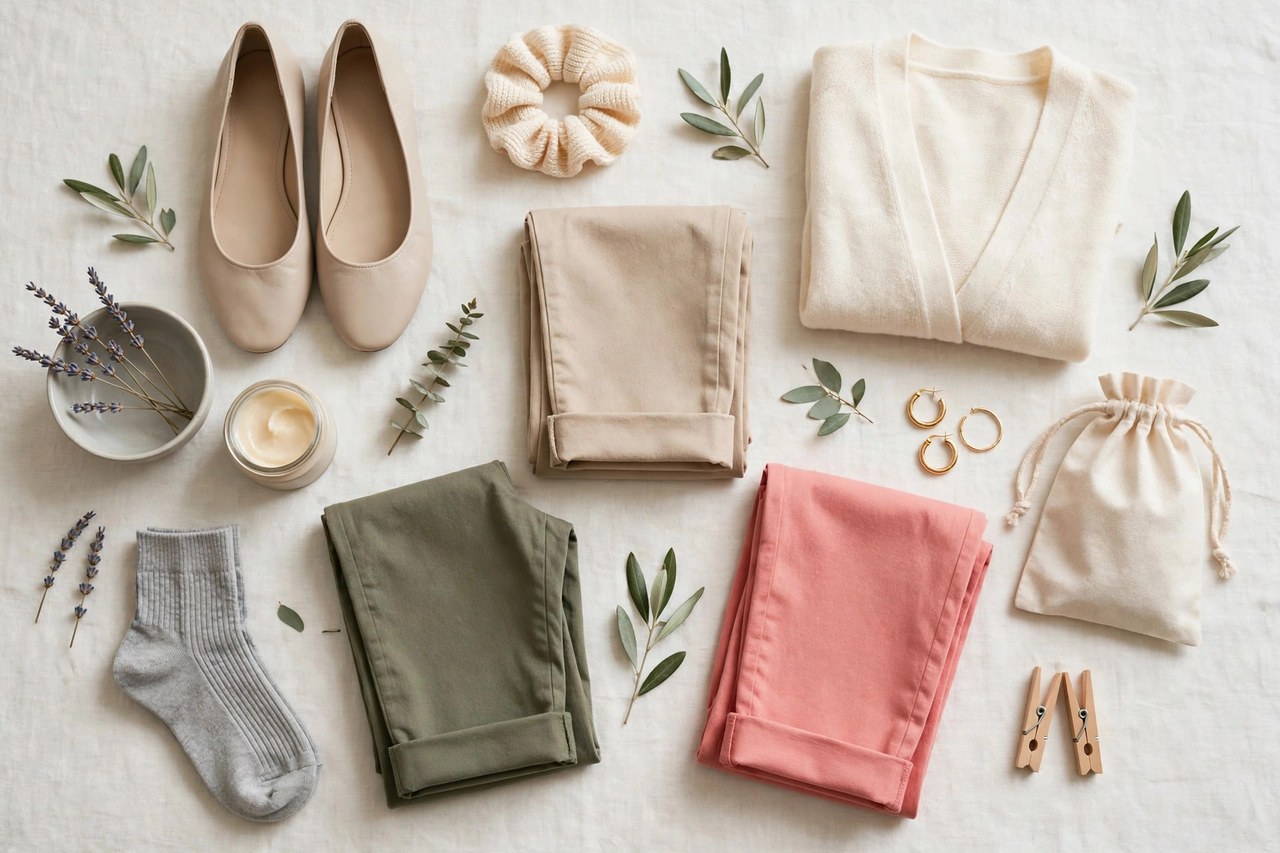
Capris are cropped pants ending between the knee and the ankle, and they are the garment where petite cutting changes the entire identity of the piece. A regular capri is designed to end at mid-calf on an average leg; on a petite woman the same pair ends at the ankle and reads simply as a too-short trouser, with its rise too long and its taper in the wrong place. A petite capri, made for women 5'4" and under, restores the design: the hem lands at the slim point of a shorter calf and the proportions above it follow.
This guide explains petite capri inseams and where the hem should fall, the related cropped styles from pedal pushers to clam diggers, the fabrics and details that suit a shorter leg, and how to style capris so they lengthen rather than divide the leg. Capris have a reputation for being unforgiving on petite frames; that reputation belongs to regular capris worn by petite women, not to the petite version of the garment itself.
Petite Inseam and the Calf Rule
Petite capris typically carry an inseam of about 19 to 22 inches, against 23 to 26 inches in regular ranges, and the target is anatomical rather than numerical: the hem should end at the narrowest point of the calf, below the calf muscle's fullest curve and well above the ankle bone. A hem that stops exactly at the widest point of the calf widens the leg visually at that point, which is the single most common reason capris disappoint petite wearers. Measure your own leg to that slim point and compare it with the listed inseam before buying.
The rise shortens with the inseam, by roughly three-quarters of an inch, so the waistband and crotch sit correctly and the cropped leg does not hang from a low seat. The taper is re-drawn for a shorter leg: the knee sits higher, the leg narrows sooner, and the hem circumference is reduced so it lies close to a smaller calf instead of flaring. Side vents and notches, a classic capri detail, are placed at the petite hem where they open with movement rather than several inches up the shin.
Styles: Classic Capris, Pedal Pushers and Crops
The classic petite capri is a clean, slim cropped trouser in twill, denim or ponte, ending mid-calf with a plain or vented hem — the most versatile version, working with flats, loafers and low sandals from spring through early fall. Pedal pushers are the shorter, snugger cousin, ending just below the knee; in petite sizes they clear a shorter knee correctly and suit cycling-inspired casual wear. Clam diggers sit between the two, ending below the calf's curve with a looser leg, and need petite scaling most, since their relaxed cut easily overwhelms.
The wider family includes cropped wide-leg and culotte styles, which in petite cuts reduce both length and hem volume so the silhouette stays balanced, and ankle pants, the longest crop, which in petite sizes end at the ankle bone as intended instead of pooling. Gaucho and relaxed crops follow the same rule: the design point is a proportion of the leg, and only a petite pattern places it correctly. If a cropped style lists no inseam, treat that as a warning and measure the garment or choose a retailer that publishes petite specifications.
Fabrics, Details and Construction
Cotton twill and stretch chino give the classic capri its crisp, washable practicality. Denim capris, from dark tailored washes to cuffed casual pairs, are summer staples; on petites, keep cuffs narrow or skip them, since a deep cuff shortens the visible leg twice — once at the hem and once at the fold. Ponte and double-knit capris offer pull-on comfort with enough structure to hold the cropped line at work, and linen blends trade creasing for coolness in heat.
Details should scale down with the garment. Pockets sit higher and smaller, decorative buttons at the hem are petite-sized, and drawstring or elastic details do not add bulk at a shorter waist. Check that the hem hangs level, that vents lie flat and do not twist, and that the waistband is contoured against back gaping, a common fault when a regular rise is forced onto a petite waist. A capri is a simple garment, which means its few seams and edges are all visible — neat finishing is the quality signal.
Styling, Fit Checks and Care
Style petite capris to keep the leg line long: shoes in a tone close to your skin or the pant, with a low vamp that shows the top of the foot, extend the line below the hem; ankle straps and heavy dark shoes cut it at its shortest point. Tuck or shorten tops to end at or above the waistband, since a long top over a cropped pant leaves only a few visible inches of leg. A slim, straight capri with a neat top is the lengthening formula; volume on both halves is the shortening one.
Fit checks: waistband level, rise comfortable seated, knee free when climbing a step, hem at the calf's slim point and clearing the ankle by a clear margin. If the hem grazes the ankle bone, the pair is a regular cut or the wrong size, whatever the label claims. Wash capris inside out in cool water, reshape the hem while damp, and press vents flat; store folded to protect the cropped edge. In the correct petite inseam, capris stop being a compromise and become what they were designed to be: the coolest tailored pant a shorter leg can wear.
Related Women's Guides
More to Explore on Apparel Search
Looking for Women's Clothing Stores?
This guide helps you choose women's petite capris. To browse where to buy, visit our women's clothing store directory, where you can find retailers that carry them.